A banner can be beautifully printed and still fail if it is too small to read, too large for its mounting surface, or poorly proportioned for the message. Knowing how to choose banner size starts with three practical facts: where it will hang, how far away viewers will be, and how much information they must absorb while passing.
The right dimensions are not simply the biggest size that fits. A useful banner balances visibility, installation requirements, material, and design. This guide gives Portland-area business and operations teams a clear process for sizing banners for buildings, fences, and events.
How to choose banner size in five steps
To choose a banner size, measure the usable display area, estimate the main viewing distance, identify the viewing angle, simplify the message, and confirm installation conditions. These five inputs determine whether the banner will be readable, properly supported, and visually balanced in its setting.
- Measure the usable area. Record width and height, then subtract space needed around edges, doors, windows, hardware, landscaping, and other obstructions.
- Estimate viewing distance. A banner viewed across a parking lot needs larger lettering and usually more overall area than one read from a nearby walkway.
- Consider viewer movement. Drivers have less time to read than pedestrians. Faster viewing calls for fewer words and a clearer focal point.
- Define one message goal. A short announcement, directional instruction, or brand statement can work at a distance. Detailed information belongs closer to the viewer.
- Confirm mounting and exposure. Wind, attachment points, surface condition, and installation access influence material and safe finished dimensions.
Start with actual measurements rather than a standard size from a product list. APM PrintWorks offers custom sizes, including seamless single-sided banners up to 150 feet, so the display can be planned around the real site instead of forcing the site to fit a preset option.
What size banner works best on a building?
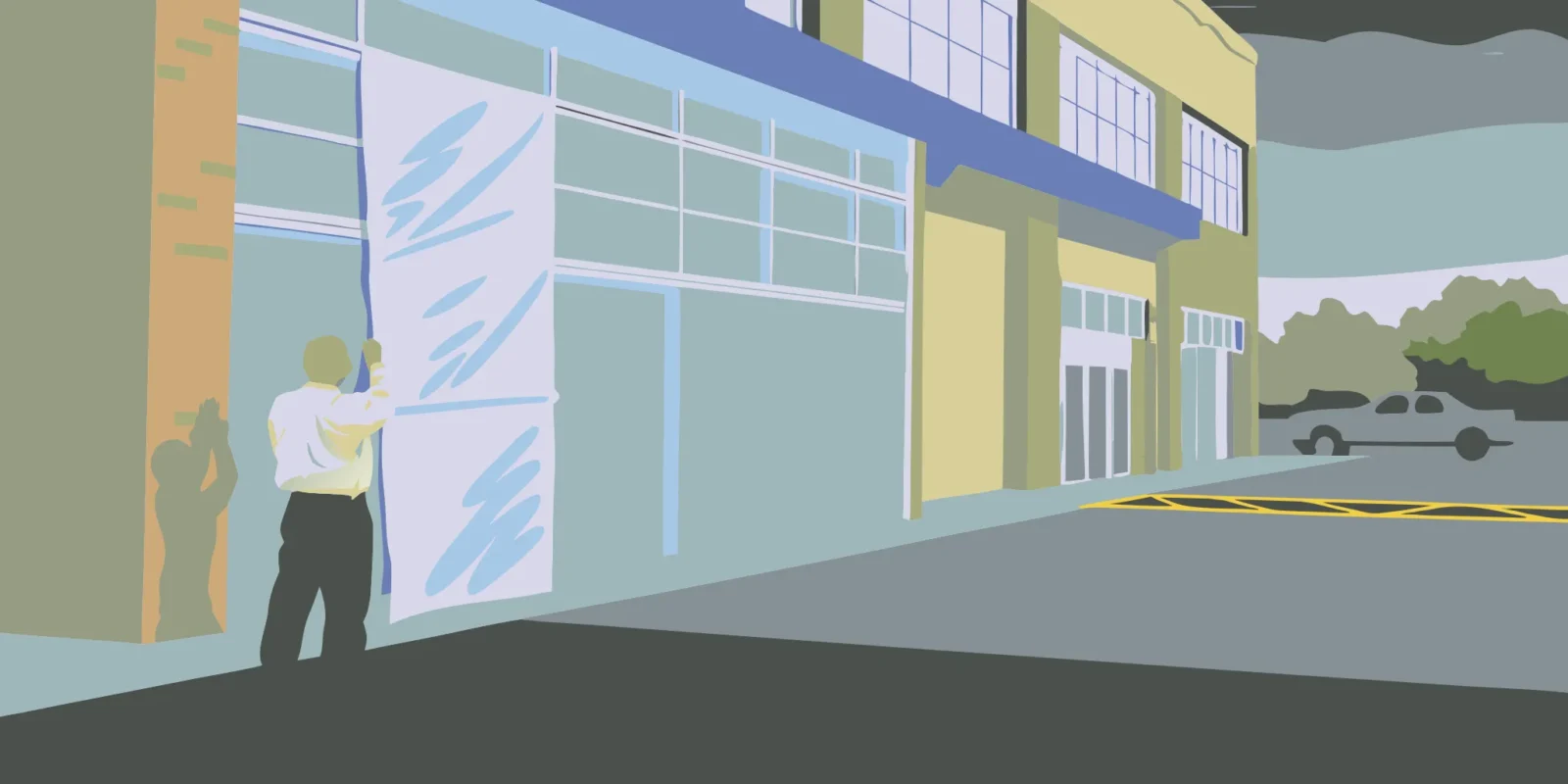
A building banner should be large enough to read from the primary approach while leaving visible space around its edges. Its proportions should follow the available facade area, and its design should reserve most of the surface for one short message with strong visual contrast.
Measure the usable facade, not the whole wall
Begin with the wall section where the banner will actually hang. Measure between architectural features and identify any windows, lighting, vents, doors, or signs that must remain unobstructed. Note the exact locations of possible attachment points. A wide, shallow area often favors a horizontal banner, while a tall facade section may support a vertical layout.
Leave breathing room around the banner. A display that nearly touches every edge can feel crowded and may compete with the building rather than complement it. A smaller banner with a clean border of open wall often appears more intentional.
Size the message for the approach
Stand at the point where most viewers will first notice the building. If the audience approaches from a roadway or a distant parking entrance, prioritize a large headline and remove secondary details. If the display faces a pedestrian area, the design can support a smaller second line or clear call to action.
APM PrintWorks can help connect facade measurements to layout, material, and installation planning. For especially large exterior placements, review the capabilities of large outdoor banner printing before finalizing dimensions.
How should you size a banner for a fence?
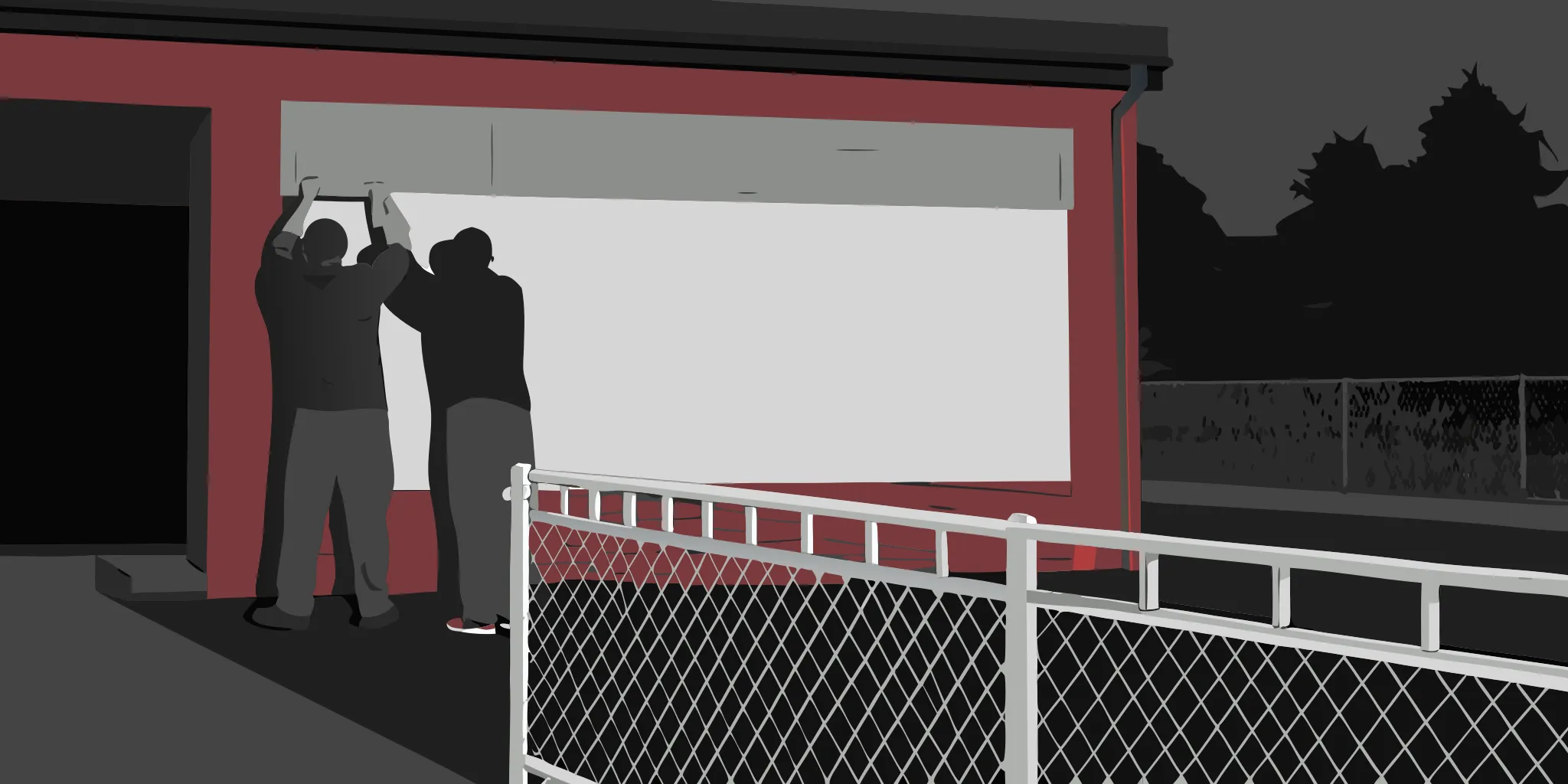
A fence banner should fit within one clearly measured section, remain above ground-level obstacles, and account for wind passing through the structure. The best dimensions preserve enough clearance for secure attachment while giving the message the largest readable area that the fence can support.
Measure each fence section separately
Do not assume a long fence is level or uniform. Measure the width and height of the intended section, along with post spacing and the position of gates. Plan a gap below the banner if vegetation, curbs, or uneven ground could interfere. A banner that crosses a gate or unsupported span may sag, wrinkle, or make access difficult.
Account for wind before increasing size
A fence presents different exposure than a solid wall. Larger surface area catches more wind, so attachment conditions and material choice matter as size increases. In an exposed location, a mesh banner can reduce wind load while preserving a strong printed display. APM PrintWorks offers mesh options with different printable-area and airflow ratios for challenging outdoor conditions.
Avoid treating wind as a design detail to solve after ordering. Share fence type, location, banner duration, and exposure with the production team before approving the size.
Banner size guide for events and temporary displays
Event banner size depends on the job the display must perform. Entry and stage banners need broad visibility, directional banners need immediate clarity, and close-range displays should fit comfortably within the assigned footprint without interrupting traffic or sightlines.
| Display purpose | Starting size range | Primary sizing question |
|---|---|---|
| Check-in or welcome area | 3 x 6 ft to 4 x 8 ft | Can guests see it above nearby activity? |
| Stage or presentation backdrop | 8 x 10 ft and larger | Does it fill the camera and audience sightline? |
| Fence or crowd-control barrier | 2 x 6 ft to 3 x 8 ft | Does it fit one supported section? |
| Close-range freestanding display | 2 x 6 ft to 3 x 8 ft | Does it fit the floor space and viewing angle? |
| Large outdoor event entrance | 4 x 10 ft and larger | Can arriving visitors identify the entrance early? |
These ranges are starting points, not fixed specifications. Venue rules, support structures, viewing distance, and design all affect the final recommendation. Ask the venue for exact display dimensions and installation restrictions before artwork is prepared.
Choose size by function
A welcome banner should establish place and identity. A directional banner should be read in a moment. A stage backdrop must work for people in the room and for photography. When one banner is asked to do every job, the result often becomes crowded. Multiple purpose-built displays can be clearer than one oversized layout.
Plan for transport and setup
Temporary banners must move through doors, vehicles, loading areas, and setup schedules. Large banners may require more people or specialized support. When portability matters most, a banner stand offers a compact freestanding option. For tall outdoor visibility near an entrance, feather banners can help draw attention without requiring a broad mounting surface.
Send APM PrintWorks your venue footprint and display goal for a practical size recommendation.
How viewing distance changes banner dimensions
As viewing distance increases, the message must become larger and simpler. Banner dimensions matter, but readability depends just as much on letter height, contrast, spacing, and the number of words. A large banner filled with small text can be less effective than a smaller, focused display.
Design for the first readable moment
Identify where viewers should be able to understand the main message, not merely notice color. A person standing nearby can pause and read. A driver or cyclist has only seconds, so the headline and visual hierarchy must communicate immediately.
A practical planning rule is to increase letter height as viewing distance grows. Use that rule as a starting point, then test a scaled layout from the expected angle. Long words, narrow typefaces, weak contrast, and busy backgrounds can all reduce readability even when the letters seem large enough on a screen.
Match information density to attention time
- Distant or moving viewers: one headline, one supporting visual, and one simple action.
- Mid-range viewers: a headline, short supporting line, and a clear directional or contact cue.
- Close-range viewers: a concise message with limited supporting details that can be read while standing nearby.
Keep essential content away from the outer edges so hems, grommets, and installation tension do not crowd it. The banner printing format guide can help the design team prepare files for large-format output.
Match banner material and finishing to size
Banner size and material must be planned together. A larger outdoor display places greater demands on the substrate, finishing, hardware, and mounting surface. Indoor displays prioritize presentation and portability, while exposed exterior installations prioritize airflow, durability, and secure attachment.
Single-sided and double-sided displays
A single-sided banner is a practical choice when viewers approach from one direction or the banner sits against a wall. When both directions matter, a double-sided banner can provide visibility on each side. The structure and installation method must support the added material and exposure.
Specialized outdoor installations
Pole-mounted and over-the-street banners have specific hardware and weather considerations. They should not be sized by appearance alone. APM PrintWorks produces heavy-duty pole banners and over-the-street banners designed for these applications. Share site details early so dimensions, finishing, and installation can be considered as one system.
What to confirm before ordering a large-format banner
Before ordering, confirm finished width and height, viewing distance, mounting surface, exposure, material, finishing, artwork proportions, installation responsibility, timeline, and venue rules. A final review of these details prevents the most common sizing and setup problems.
- Finished banner width and height
- Usable mounting area and measured clearances
- Primary viewing position, angle, and viewer movement
- Indoor or outdoor use and expected display duration
- Wind exposure and the need for mesh or specialized hardware
- Single-sided or double-sided visibility
- Hems, grommets, pole pockets, or other finishing needs
- Artwork dimensions and safe space around key content
- Installation plan, access, and responsible party
- Production deadline and required delivery date
Take clear photos of the display location and include nearby reference points. Photos help APM PrintWorks understand sightlines, obstacles, and mounting conditions that measurements alone may not reveal. For projects requiring a custom quote, accurate site information also makes the recommendation more useful.
Frequently Asked Questions
What is the most common banner size?
There is no single best size for every application. Sizes such as 3 x 6 feet and 4 x 8 feet are useful starting points, but the correct choice depends on the mounting area, viewing distance, message, and installation conditions. Custom sizing is often the better fit for a specific building, fence, or event space.
How big should letters be on a banner?
Letter size should increase with viewing distance and decrease with message length. Start by identifying where the main headline must become readable, then use large, high-contrast type and test the layout from that distance. Moving viewers need a much shorter message than people standing close to the display.
Should a fence banner use mesh?
Mesh is worth considering when a fence is exposed to wind or when reducing wind load is important. The right choice depends on banner dimensions, fence type, exposure, display duration, and attachment method. APM PrintWorks can recommend an appropriate mesh option after reviewing the site conditions.
Can APM PrintWorks produce custom banner sizes?
Yes. APM PrintWorks produces custom large-format banners and can help determine suitable dimensions, material, finishing, and installation needs. Single-sided banners can be produced seamlessly up to 150 feet, making custom planning practical for both standard displays and large installations.
Plan the right banner size with APM PrintWorks
The best banner dimensions come from the real display environment, not a generic size chart. APM PrintWorks combines large-format production expertise, custom options, fast turnaround, and installation planning to help Portland-area organizations create displays that fit and communicate clearly.
Contact APM PrintWorks to share your measurements, viewing conditions, and project idea.