
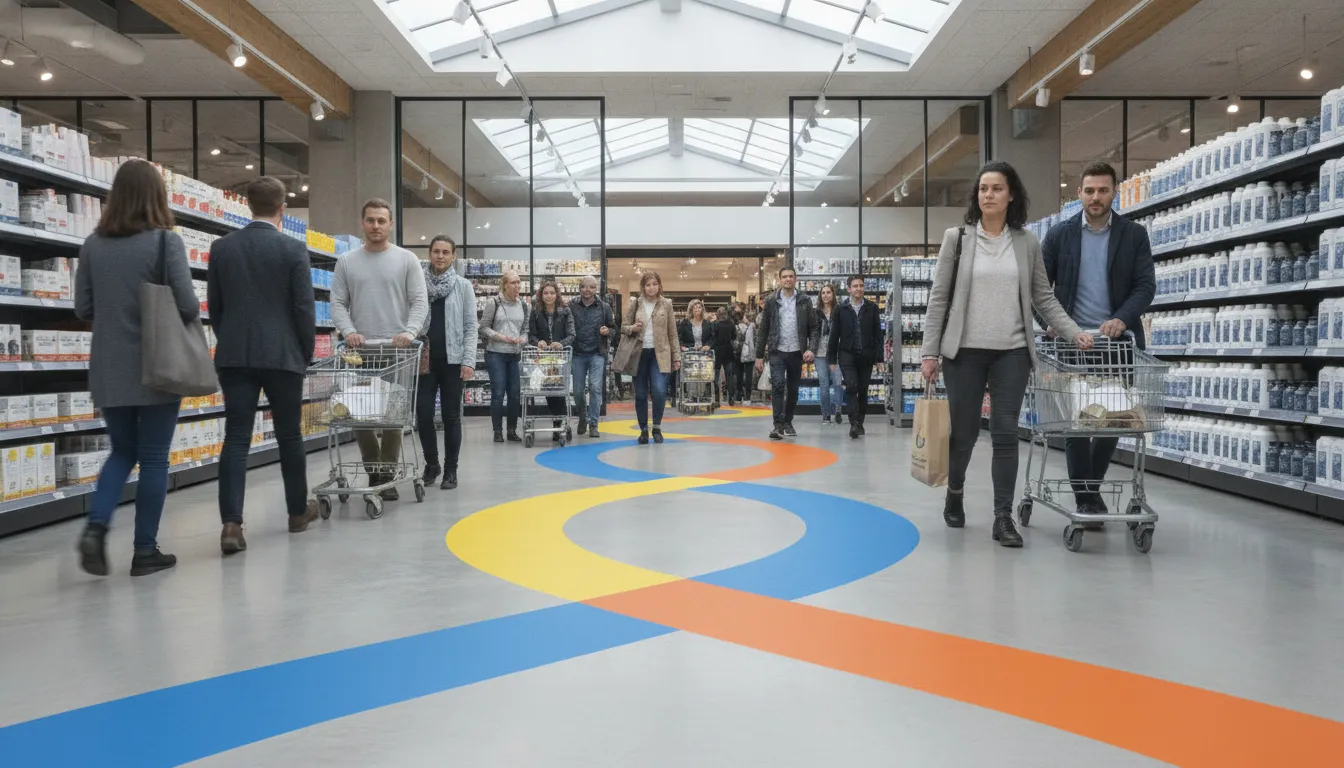
Floor graphics can turn an otherwise overlooked surface into a wayfinding aid, promotional feature, or branded customer touchpoint. In a commercial space, however, every step, cleaning cycle, and surface condition affects how long the finished graphic looks sharp and stays secure.
Talk to Portland’s print experts about the right floor graphic material for your space.
In general, how long do floor graphics last depends on the application, but a practical planning range is about six months to three years. High foot traffic, outdoor exposure, aggressive cleaning, poor surface preparation, and the wrong adhesive can shorten that range, while purpose-built materials and protective laminate can help extend it.
That range is not a promise for every project. Material choice plays a major role in durability. And industry guidance distinguishes short-term graphics lasting days or weeks from medium-term and long-term applications measured in months or years (Vanderbilt University). For Portland-area businesses, the right starting point is to match the graphic to its setting, traffic pattern, and replacement goals before selecting the material.
How Long Do Floor Graphics Last in Commercial Spaces?
Most commercial floor graphics last somewhere from about six months to three years, but that range is a planning guide, not a guarantee. Foot traffic, moisture, sunlight, cleaning routines, floor condition, adhesive, and protective laminate all affect the result. A graphic in a lightly used indoor lobby may remain presentable far longer than one placed at a busy entrance where grit and constant foot traffic wear the surface every day. For a closer look at how long do floor graphics last, start with the intended use and expected replacement schedule.
Short-term graphics for promotions and temporary messages
Short-term floor graphics are designed for days or weeks. They work well when a business needs a temporary directional message, seasonal promotion, event-related branding, or a campaign that will change quickly. Choosing a removable material and adhesive can make installation and removal more practical, especially when the underlying floor finish must be protected.
This approach is not simply a lower-quality version of a permanent graphic. It is a deliberate match between the material and the duration of the message. Vanderbilt’s large-format guidance groups temporary installations in the days-to-weeks category, with adhesive type and lamination helping determine whether the media fits the environment. Review the source guidance on media selection and installation duration before approving a short campaign.
Medium-term graphics for months of everyday use
Medium-term graphics are rated for months and are often a practical choice for retail wayfinding, workplace messaging, hospitality environments, and recurring promotions. They need more resistance to scuffing and cleaning than a brief promotional installation, but they may not require the same material strategy as a multi-year brand marker.
Traffic patterns matter as much as the calendar. A graphic near a doorway, checkout, elevator, or queue line may show wear sooner than one in a low-traffic corridor. The surface also needs to be compatible with the selected adhesive, and it must be cleaned properly before installation. Vanderbilt identifies material choice as a major influence on how long a large-format graphic behaves and lasts. While NIST notes that durability depends heavily on maintenance programs and environmental conditions. NIST’s flooring durability resource provides useful context for evaluating the maintenance side of the decision.
Long-term graphics for years of brand visibility
Long-term floor graphics are rated for years and are intended for more permanent brand installations or established wayfinding systems. Reaching that category depends on more than ordering a thicker vinyl. The vinyl, adhesive, laminate, substrate, installation method, and surrounding conditions must work together. Vanderbilt describes lifespan as a balance between design objective, substrate, environment, and media selection, including the protective laminate used.
Before specifying a multi-year installation, confirm whether the graphic will be indoors or exposed to outdoor sunlight and weather. How often the floor is scrubbed, and whether the laminate provides appropriate slip resistance. Inspect the edges periodically as well. Peeling, lifting, severe scuffing, or loss of adhesion can create a maintenance or safety concern before the printed image itself looks fully worn.
For Portland businesses, APM PrintWorks can help match a floor graphic solution to the space, traffic level, surface, and replacement plan rather than promising one universal lifespan. That upfront fit is what makes the six-month-to-three-year range useful in real-world planning.
What Factors Decide How Long Floor Graphics Last
Four practical variables shape the service life of a floor graphic: how many people walk across it. What it is installed on, where it is placed, and how the surface is cleaned. Material choice matters as well. Large-format guidance from Vanderbilt University notes that the selected media affects how a graphic behaves, looks, and lasts.
Foot traffic and placement
Floor graphics experience direct contact, scuffing, grit, rolling loads, and repeated friction, so they face more wear than wall graphics. They also need adhesive properties designed for floors rather than a wall-film adhesive. A busy retail entrance, checkout lane, airport corridor, or venue concourse will usually wear a graphic faster than a lightly used hallway. High-traffic areas call for durable adhesive vinyl and a protective finish selected for the application, not simply the lowest-cost media. The available media and adhesive options should match the intended duration, traffic level, and removal requirements.
Floor material and surface preparation
Concrete, sealed vinyl, tile, polished flooring, and asphalt each present different adhesion conditions. The graphic should be matched to the environment and substrate before production. The floor must be clean, dry, sound, and free of dust, wax, grease, and incompatible treatments. Poor cleaning or an incompatible substrate can lead to adhesive failure, lifting edges, or premature peeling. Proper preparation and installation are therefore as important as the printed material itself.
Indoor versus outdoor exposure
Indoor graphics generally avoid much of the ultraviolet radiation, rain, temperature fluctuation, and wind that affect outdoor applications. Outdoor floor graphics on asphalt or concrete can therefore have a shorter useful life, especially when weather and direct sun are combined with heavy traffic. Vanderbilt’s guidance specifically identifies surface conditions and exposure to wind and weather as factors in media selection. A Portland project placed outside should be planned around local moisture, seasonal conditions, and the expected replacement cycle rather than an indoor performance assumption.
Cleaning routine
Cleaning frequency also affects durability. Frequent mopping, scrubbing, or aggressive mechanical cleaning creates more contact with the graphic, while unsuitable chemicals can damage the adhesive or laminate. NIST identifies maintenance programs and environmental conditions as important considerations in flooring durability, and New York State’s floor-care guidance emphasizes using appropriate cleaning methods and products. Review the cleaning schedule with the printer so the chosen laminate and adhesive can tolerate real operating conditions.
For retail planning, reviewing the durability of retail floor graphics can help align the design, material, placement, and maintenance plan before installation.
How Foot Traffic and Indoor Versus Outdoor Exposure Change Floor Graphic Lifespan
Foot traffic is one of the clearest reasons two otherwise similar floor graphics can have very different service lives. Every shoe, cart, tracked-in grain of dirt, cleaning pass, and rolling load adds a small amount of abrasion. A graphic placed in a busy retail entrance therefore faces a much tougher duty cycle than one installed beside a quiet office wall. Commercial floor applications also experience wear that wall graphics do not, so the media and adhesive must be chosen for the surface and environment. Material selection and application conditions are central to the result.
High-traffic and low-traffic locations
As a planning range, indoor floor graphics installed correctly may last about three to six months in high-traffic areas. That is a reference point, not a promise. A retail doorway, hotel lobby, restaurant queue, or venue concourse may show scuffing and edge wear sooner than a protected graphic in a quiet area. A premium adhesive vinyl and heavy-duty laminate can help manage frequent contact, but they cannot eliminate the effect of constant use. F004 and F028 support matching durable media and protective laminate to demanding commercial conditions.
- Higher traffic: Retail entrances, checkout queues, hotel lobbies, restaurant service lines, transit platforms, and venue concourses.
- Lower traffic: Private offices, lightly used corridors, meeting areas, and display zones away from entrances and queues.
Lower traffic generally reduces abrasion and the frequency of direct contact, which can help a graphic remain presentable longer. However, cleaning frequency, carts, furniture movement, moisture, and the condition of the floor still matter. A quiet office graphic can fail early if the substrate is dusty, the adhesive is incompatible, or cleaning chemicals attack the laminate.
Why outdoor graphics usually wear faster
Outdoor floor graphics installed on asphalt or concrete face a broader set of stresses than indoor graphics. Ultraviolet light can fade printed color, while rain, temperature swings, wind-driven grit, and surface moisture can challenge adhesion and protective layers. Vanderbilt’s guidance identifies asphalt, concrete, and outdoor weather exposure as conditions that must be considered when matching media to an application. These factors support the general expectation in F009 that outdoor floor graphics have a shorter life than comparable indoor work.
Indoor graphics typically degrade more slowly because a controlled setting reduces direct UV exposure and severe weather. That advantage disappears in sunlit storefronts, open-air walkways, or spaces where water and grit are regularly tracked inside. If you are evaluating how long do floor graphics last, start with a realistic exposure profile rather than a single calendar estimate. Portland’s local printer, APM PrintWorks, can help match the graphic, laminate, and installation approach to the traffic pattern and placement so the design performs as intended.
Installation, Surface Prep, and Materials That Prolong Floor Graphics
A durable floor graphic starts before the first piece of vinyl touches the floor. The vinyl substrate, adhesive, installation method, and protective laminate must work together for the location, traffic level, cleaning routine, and planned campaign length. Material choice plays a major role in how a large-format graphic performs and how long it lasts, according to Vanderbilt’s roll media guidance.
Prepare the substrate before applying the vinyl
Installation quality is one of the most important variables in floor graphic performance. The surface should be sound, dry, smooth enough for the selected media, and free from dust, grease, wax, loose coatings, and cleaning residue. Proper installation and substrate preparation are critical because the adhesive needs a clean, compatible surface to form a reliable bond. Flooring standards also emphasize surface cleanliness before adhesive materials are installed.
Different floors call for different approaches. A smooth sealed concrete floor may accept a standard floor-rated adhesive film, while a painted floor requires attention to the condition and cure of the coating. Textured or uneven surfaces can prevent full contact between the adhesive and substrate, so they may require a specialized heavy-duty film or a different placement plan. Media should be matched to the environment and surface, whether the application is smooth concrete, painted flooring, asphalt, or another substrate. APM PrintWorks can help evaluate those conditions as part of its floor graphic installation and maintenance guidance.
Choose vinyl and adhesive for the actual environment
Floor graphics experience abrasion, rolling loads, moisture, and repeated cleaning that wall graphics typically avoid. That makes the adhesive specification especially important. An adhesive that works well for a short indoor promotion may not be appropriate for a long-term wayfinding installation or a busy entry area. Incompatible substrates and poor initial cleaning are common causes of adhesive failure, including lifting edges and premature peeling.
When planning a project, share the expected duration, indoor or outdoor location, floor finish, foot traffic, and removal requirements with your printer. Temporary, medium-term, and long-term applications may need different media and adhesive properties. This planning avoids paying for a material that cannot withstand the environment, or over-specifying a product when a shorter campaign is all that is needed.
Use laminate for protection and safer footing
A high-quality laminate adds a protective barrier over the printed vinyl. It helps shield the ink and face film from scuffing, abrasion, moisture, and routine wear. Which can extend the useful life of a graphic when the laminate is suitable for the setting. Busy commercial areas may need a more durable laminate than a lightly used interior location.
Safety belongs in the material decision as well. Floor laminate should be selected with slip resistance in mind, especially in entrances, public buildings, retail aisles, and other areas where people may encounter moisture. The finish should support traction without undermining the graphic’s readability or cleanability. Professional installation helps the laminate and vinyl sit flat, seals vulnerable edges, and reduces the risk that a corner will catch, peel, or become a tripping concern. Inspect the completed installation before opening the area to traffic, then monitor it as part of routine floor care.
Floor Graphic Maintenance That Extends Their Life
A practical maintenance routine protects both the printed surface and the floor beneath it. How often a commercial floor is mopped or scrubbed affects durability, while an unsuitable cleaner can damage the adhesive or laminate. Maintenance is one of the variables that helps determine how long do floor graphics last in a real workplace, retail store, or venue.
Follow the facility’s regular cleaning schedule
Keep routine dust removal and damp mopping on the same schedule as the surrounding floor. In busy areas, more frequent cleaning may be necessary because tracked-in grit can act like sandpaper under foot traffic. At the same time, avoid aggressive scrubbing or abrasive tools directly over the graphic unless the material and cleaning program are approved for that use. NIST identifies maintenance programs and cleaning frequency as important factors in flooring durability, including the way repeated mopping and scrubbing affect service life. Read the NIST guidance on flooring durability and maintenance.
Use compatible cleaning products
Do not assume that a cleaner suitable for the surrounding floor is automatically suitable for a graphic. Check the product guidance for the floor finish, adhesive film, and protective laminate before use. Avoid unapproved solvents, harsh degreasers, and concentrated chemicals that may cloud the laminate, weaken its bond, or leave residue at the edges. The New York Office of General Services emphasizes using the correct cleaning chemicals as part of a floor care program. Which helps prevent chemical damage to floor materials and applied surfaces. Review the NY OGS floor care reference.
Clean spills promptly and carefully
Remove food, beverage, oil, and other spills before they are ground into the graphic or tracked across its edges. Blot or wipe with the recommended solution rather than flooding the area. Excess moisture can work into a lifting edge, especially where the substrate, installation, or adhesive is not a good match for the environment.
Inspect the graphic during routine walkthroughs
Look for lifted corners, bubbling, scuffing, fading, cracking, slippery areas, or sections that no longer lie flat. Pay extra attention to doorways, turns, queue lines, transitions, and other high-traffic locations. Regular monitoring gives facility teams a chance to repair or replace a worn graphic before it becomes a tripping hazard, as noted in the supplied floor-graphic research. Do not wait for a visible failure if the graphic is serving a safety or wayfinding purpose.
Record wear and plan replacement
Note the installation date, location, cleaning conditions, and inspection findings. This simple record helps compare performance across areas and informs the next material choice. APM PrintWorks, Portland’s local printer for large-format graphics, can help select a floor graphic and maintenance approach suited to your traffic, surface, and campaign timeline.
Planning Floor Graphic Replacement Cycles in Commercial Spaces
Replacement planning is easier when you treat a floor graphic as a working surface, not a permanent sign. The right schedule depends on traffic, cleaning, substrate, and the quality of the vinyl, adhesive, and protective laminate selected for the installation. Those three material choices work together to determine performance, so a premium specification may be worthwhile in a busy public area. See how long do floor graphics last for more on choosing a solution for your space.
Retail stores
Retail graphics near entrances, checkout areas, fitting rooms, and promotional displays typically receive constant foot traffic, cart contact, and frequent cleaning. Plan an initial inspection at 90 days, then review the graphics monthly. In high-traffic retail areas, a practical expectation window is approximately three to six months, although a durable, well-installed and laminated graphic may perform longer in a lighter-use location. Coordinate replacements with seasonal merchandising updates so worn edges do not remain in a customer pathway. For more application-specific guidance, review the durability of retail floor graphics.
Restaurants and hospitality spaces
Restaurants, hotels, and other hospitality spaces combine steady traffic with spills, moisture, carts, and aggressive cleaning routines. Inspect graphics weekly during opening or closing checks, especially around entrances, service counters, elevators, and dining areas. A graphic that is fading but still firmly bonded may be a branding concern, while lifting corners, bubbles, curling edges, or exposed adhesive require faster action. Confirm that the selected laminate provides appropriate slip resistance before installation, and make sure cleaning staff know which chemicals and equipment are approved.
Venues and events
Temporary event graphics may be designed for days or weeks, while a permanent brand installation can last for years, depending on the media and environment. That range is why venue teams should set a removal or replacement date before installation rather than waiting for visible failure. Inspect before each event, after setup and teardown, and whenever equipment or furniture moves across the graphic. Outdoor placements need more conservative planning because sunlight and weather can shorten service life.
Workplaces and offices
Graphics in offices, schools, and lower-traffic venues often experience less abrasion than retail or restaurant applications. With quality materials, suitable surface preparation, and lamination, lighter-use indoor graphics may remain serviceable for one to three years. Still, inspect quarterly and after major floor-care changes. Replace any graphic when it becomes slippery, severely scuffed, discolored, or detached at the edge. Regular monitoring helps teams remove worn graphics before they become a tripping hazard. APM PrintWorks is Portland’s local printer, ready to help commercial teams specify and schedule floor graphic replacements for the demands of their space.
Floor Graphic Lifespan by Venue and Use: A Quick Comparison
There is no single answer to how long do floor graphics last. A practical planning range depends on traffic, cleaning frequency, surface conditions, material, and whether the graphic is installed indoors or outdoors. The ranges below are estimates, not guarantees. Short-term graphics may serve for days or weeks, medium-term graphics for months, and long-term installations for years, depending on the adhesive and laminate selected. Vanderbilt’s large-format guidance also emphasizes matching the media to the application and environment.
| Venue / Use. | Typical Lifespan Range. | Key Limiting Factor. |
|---|---|---|
| High-traffic retail entry and aisles. | About 3 to 6 months. | Constant foot traffic, rolling carts, grit, and frequent cleaning. |
| Restaurant and hospitality floors. | About 3 to 9 months. | Spills, grease, aggressive cleaning, and concentrated traffic near counters. |
| Event and conference venues. | A few days to several weeks. | Temporary campaign schedule, setup and teardown activity, and heavy event traffic. |
| Corporate office lobbies. | About 1 to 3 years. | Lower traffic and controlled indoor exposure, with wear at entrances. |
| Outdoor sidewalk and asphalt placements. | Shorter than comparable indoor graphics; often weeks to a few months. | UV exposure, rain, temperature changes, dirt, and weather-driven wear. |
Indoor placements generally degrade more slowly because they receive less direct ultraviolet exposure, while asphalt and concrete applications face UV and weather conditions that shorten service life. Vanderbilt notes this indoor-versus-outdoor distinction. For a specific Portland installation, select the expected replacement window with the traffic pattern, cleaning program, and campaign length in mind. Temporary event graphics align with the days-or-weeks category, while permanent brand installations may be planned on a multi-year cycle when the substrate and materials are appropriate. Matching the media to the expected lifespan is the practical way to plan a floor graphic that performs as intended.
Talk to Portland’s print experts about a floor graphic that fits your space, traffic, and budget.
Frequently Asked Questions
How long do floor graphics typically last?
There is no single service life for every application. Commercial floor graphics may be planned for short-term use lasting days or weeks. Medium-term use lasting months, or long-term use lasting years, depending on the media, adhesive, laminate, traffic, and environment. For a specific installation, choose the expected replacement schedule before selecting materials. Vanderbilt’s large-format guidance distinguishes these short-, medium-, and long-term applications.
What factors affect the lifespan of floor graphics?
Foot traffic, rolling loads, moisture, sunlight, floor texture, cleaning frequency, and the compatibility of the adhesive with the substrate all affect durability. A clean, smooth, properly prepared surface gives the adhesive a better bond, while aggressive scrubbing or incompatible cleaning chemicals can shorten the life of the laminate and adhesive. Material selection should match the space and its maintenance routine.
Can floor graphics be used outdoors?
Yes, but outdoor floor graphics require media and adhesives designed for the surface and exposure. Graphics installed on concrete or asphalt generally face more UV, moisture, temperature changes, and weather than indoor graphics, so they may need earlier replacement. Ask for an application-specific recommendation rather than applying an indoor product outside. Vanderbilt’s media guidance identifies concrete, asphalt, and weather exposure as important selection considerations.
How does foot traffic impact floor graphic durability?
High-traffic entrances, aisles, queue lines, and transit areas wear faster than low-traffic zones because more shoes, carts, and cleaning passes contact the graphic. Plan inspections around busy periods and replace a graphic when edges lift, the surface becomes slippery, or the image is too worn to serve its purpose. Early replacement also helps avoid a peeling edge becoming a trip hazard.
Are there ways to extend the life of floor graphics?
Use a floor-rated material, prepare and dry the substrate carefully, and select a protective laminate with appropriate slip resistance. Follow the facility’s approved cleaning program, use compatible products, and avoid harsh tools that can damage the graphic. Regular monitoring and maintenance are linked to flooring durability, as noted by NIST.
Ready to Plan Your Floor Graphic Project?
The right material, laminate, and replacement approach can help your floor graphics stay effective in a busy commercial space while supporting a clean, professional visitor experience. APM PrintWorks is Portland’s local printer, ready to help you match the application to your environment and maintenance needs.