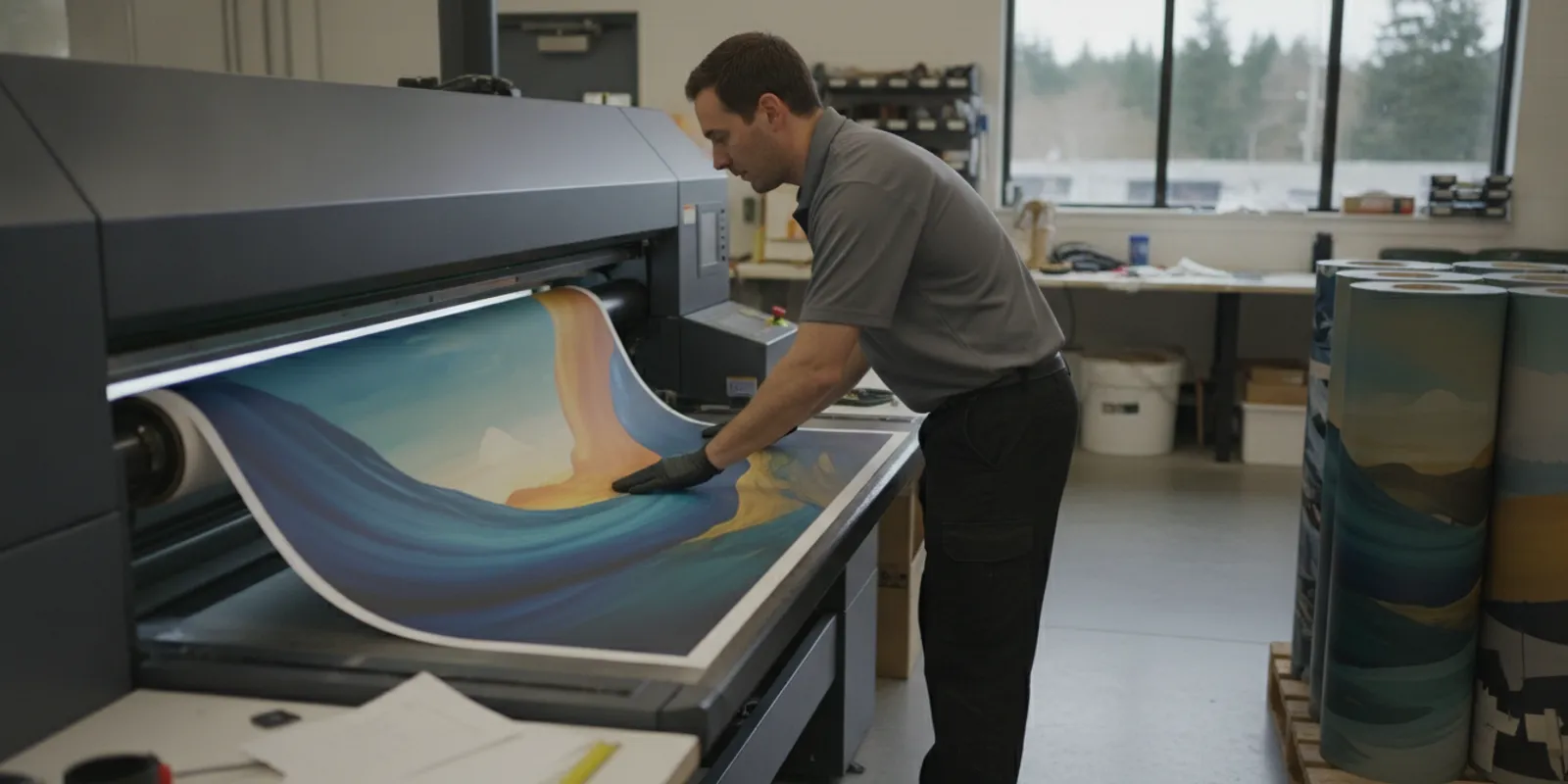
OOH advertising printing turns a campaign idea into physical graphics people encounter beyond a screen or building interior. The right production plan starts with where the message will appear, how people will see it, and what the site requires. For organizations in the Portland metro area, matching format, artwork, material, and installation early can prevent avoidable revisions and help keep the campaign on schedule.
Discuss your OOH printing project
APM PrintWorks is Portland’s local printer, based in Beaverton, and provides high-quality printing with fast turnaround across large-format advertising and media solutions. This guide focuses on the production decisions behind out-of-home graphics. It is not a media-buying plan: the goal is to help a team prepare a clear, buildable print project and understand what to confirm before requesting a quote.
What Should OOH Advertising Printing Include?
Out-of-home (OOH) advertising is a broad label for messages placed in public or shared environments, such as on buildings, at events, in transit settings, or on vehicles. Printing is one part of that work. The finished result depends on a chain of decisions: the campaign placement, the physical format, the viewing distance, the artwork, the substrate, finishing, delivery, and installation.
That chain matters because one design cannot automatically serve every location. A graphic intended for a close pedestrian view may need different detail from a message seen across a road. A banner mounted outdoors faces different conditions from a sign in a protected interior. A campaign that runs across several sites may need consistent color and sizing while also accommodating different mounting surfaces.
Start by recording the purpose of the placement rather than starting with a product name. Is the graphic meant to announce an event, identify a location, direct people, or reinforce a brand? Who will see it, from what direction, and for how long? Answers shape the readable message, physical scale, material choice, and production schedule. OOH media planning is commonly discussed as part of a coordinated integrated marketing communications campaign; an academic discussion of OOH media planning and integration provides useful context for treating placements as connected campaign elements.
How Do You Select a Format for the Placement?
Choose the format around the actual site and viewing conditions, not simply the largest size available. A format has to fit its location, mounting method, exposure, and intended viewing distance. Consider whether the graphic is permanent or temporary, viewed from one side or several, and placed on a wall, fence, window, vehicle, or other surface.
| Format | Potential fit | Production details to confirm |
|---|---|---|
| Large outdoor sign | Identification, wayfinding, or a message at a fixed site | Exact dimensions, viewing direction, mounting structure, site rules, and exposure |
| Banner | Temporary promotion, event messaging, or a long horizontal placement | Mounting points, wind exposure, finishing, viewing distance, and installation access |
| Transit or vehicle graphic | A campaign attached to a vehicle or transit environment | Vehicle or placement specifications, surface contours, access windows, and install coordination |
| Window graphic | A public-facing message on glazing | Glass dimensions, inside or outside application, visibility needs, and removal expectations |
| Flag or pole banner | Vertical messaging at a venue or along an approved route | Pole or hardware dimensions, wind conditions, orientation, and local permissions |
This table is a starting point, not a substitute for site measurements. For instance, banners can be designed for different placements and construction needs; review APM PrintWorks banner printing options as you determine the project scope. Signs may require a different approach when the graphic must identify a property or guide visitors. See the custom signs page and the specific site sign options for relevant examples.
For transit placements, define the actual advertising surface and project responsibilities before choosing a format. Production needs can differ when graphics must fit a vehicle or a transit-authority program. APM PrintWorks describes its transit authority printing solutions; use the project conversation to clarify the current specifications, access, and installation plan. A campaign involving vehicles can also reference vehicle wraps and graphics. Do not assume that a format or material used for one placement will suit another.
What Artwork Details Should Be Ready Before Production?
Good production begins with usable files and reliable specifications. Before submitting artwork, gather the final dimensions, the intended orientation, the finished quantity, and the output requirements for every placement. If the campaign includes several sizes, label each version clearly. A single master design may need separate layouts so that essential content remains legible and correctly positioned in each format.
Build the layout for its real viewing distance. Keep the main message concise, give important elements clear visual priority, and avoid relying on fine detail that will disappear when seen from farther away. Leave appropriate room at edges for finishing or mounting. If a graphic wraps around a contour, overlaps a frame, or is installed near an obstruction, make sure the artwork accounts for that physical condition instead of treating the printable area as an uninterrupted rectangle.
Supply high-resolution assets appropriate to the final output dimensions. Resolution needs depend on the viewing distance and production method, so do not use a universal pixel-per-inch number without checking the printer’s specifications. Keep logos and other supplied brand elements in their approved form. Identify fonts and linked assets, and confirm that all content is approved before production. A proof is a chance to inspect layout, spelling, dimensions, and intended color; it is not a replacement for the customer’s final approval of content. Check that the proof reflects the finished dimensions rather than only the artboard dimensions. Verify safe areas, crop or bleed expectations, orientation, and any areas reserved for seams, hems, pockets, or mounting hardware. If a placement has a nonstandard shape, provide a template or measured drawing and have the production team confirm how it will be interpreted. These checks are useful before the final file is approved, when changes are easier to make than after production begins.
Assign one person to collect feedback and return a consolidated revision list. Multiple reviewers sending conflicting corrections can create avoidable rounds and make it unclear which file is approved. Mark each revision with a date or version, and explicitly identify the approved final file. For a campaign with many locations, maintain a simple proof tracker with columns for placement, file version, reviewer, approval status, and date. That gives the production team a clear handoff and helps the organization track what is ready to print.
For multiple sites, create a placement schedule that ties each artwork file to a location, format, size, quantity, and installation date. Use unambiguous file names, for example, campaign-location-format-revision. Record whether a revision changes only copy or also changes dimensions. This simple discipline helps prevent the wrong design version from being produced for a site.
If artwork is not ready, discuss design assistance and project planning before assuming a file can go directly to press. APM PrintWorks offers creative services as part of its broader print capabilities. Share what is final, what remains open, and who has approval authority. The creative services information can help frame that conversation.
How Do Color and Scale Affect the Finished Graphic?
Color on a monitor is not a dependable preview of color on every printed material. Screens emit light; printed graphics reflect it. Material color, surface finish, lighting, printer settings, and the artwork itself all affect how a color appears. For a campaign that needs related graphics to look consistent, communicate the color expectations before production and identify which pieces are most important to match.
Use supplied brand color values where available, but understand that a numeric value does not guarantee an identical visual result across unlike substrates. A color on a smooth sign material may appear different from one on a textured or translucent surface. If a precise visual match is essential, tell the production team which reference is authoritative and ask what proofing or review options are appropriate. Avoid approving color only from an uncalibrated phone or laptop display.
Scale also changes how artwork behaves. At large output sizes, small layout decisions become visible: line thickness, spacing, image sharpness, edge placement, and the relative size of the message. Review the artwork at an appropriate scale, and ask for a production proof or scaled preview when it will help confirm placement. Check the design from the expected viewing distance as well as on screen. An element that seems balanced while zoomed in may be difficult to recognize across a street.
Where the campaign spans formats, prioritize repeatable visual rules rather than forcing every placement into an identical layout. Keep the core message, color approach, and brand hierarchy consistent, then adapt the composition to the physical format. That preserves campaign recognition without making a design too crowded for a particular site.
Which Materials and Site Conditions Need Review?
Material selection begins with conditions, not a generic claim that one substrate is best. Identify whether the graphic will be indoors or outdoors, how long it needs to remain in place, what it will attach to, and whether it may face moisture, sunlight, wind, abrasion, or frequent handling. Note whether the surface is flat, curved, porous, painted, glass, or otherwise unusual. Those details help a printer recommend a suitable construction and finishing approach.
For a banner, confirm how it will be secured and whether the location is exposed to wind. For a sign, determine what structure supports it and whether it must be installed by a contractor or site team. For a window graphic, explain whether visibility through the glass matters, whether the graphic is applied inside or outside, and whether removal is expected. A flag or pole banner needs compatible hardware and a plan for the conditions where it will be displayed. APM’s custom flag information is one useful format reference.
Do not treat an installer’s access as an afterthought. Confirm who controls the site, when the team can enter, whether lifts or other equipment are needed, what surfaces must be ready, and who can approve the finished placement. For a multi-location project, ask whether installation should happen in one coordinated window or in separate phases. These operational facts may affect material choices, production sequencing, and delivery.
Before approving a surface for installation, make sure it is accessible and in the condition the chosen attachment method requires. Tell the printer about fresh paint, uneven surfaces, existing graphics, unusual textures, or any restrictions on adhesives or fasteners. If the site team expects the graphic to be removed later, state that at the outset; removal expectations can affect the recommendation. Do not assume a graphic can be installed safely simply because its dimensions fit the available area. Access, mounting conditions, weather exposure, and property requirements all need a practical review.
Document any required site acceptance process as well. Some organizations need a facilities contact to approve placement, while a property manager may control access or mounting. Confirm those approvals before scheduling a crew. A short pre-install checklist can record the correct graphic and location, site contact, arrival window, access instructions, installation responsibility, and who will confirm completion. For a campaign with staggered locations, track these items for each site instead of relying on one general project note.
Also establish who is responsible for permits, property permission, and compliance with local placement rules. Requirements vary by location and use; this article cannot determine what is allowed at a specific site. The organization commissioning the campaign should identify the responsible party and obtain approvals before production or installation is scheduled.
How Should Installation Be Coordinated?
Installation coordination starts with a complete placement record. For each location, document the address or site name, contact person, placement surface, measurements, access hours, restrictions, and the date the graphic must be installed. Include photographs that show the full surface and close details such as edges, hardware, obstructions, and existing conditions. Measurements should be confirmed at the site rather than estimated from a photograph.
Separate print completion from installation completion in the schedule. A finished graphic still needs packing, transport, site access, and a prepared mounting surface. If another vendor or property team is involved, assign a point person and make responsibilities explicit. For example: who supplies hardware, who clears the area, who confirms measurements, and who signs off after installation? Clear ownership reduces the chance that printed work arrives before the site is ready.
For a campaign with multiple formats, group work by location, required date, and installation dependency. A banner that can be installed as soon as it arrives may not share the same schedule as a vehicle graphic that needs a specific service window. Confirm whether each piece should be delivered to the print facility, a central office, or a site. Ask how finished graphics will be labeled and protected during delivery, especially when several versions look similar.
APM PrintWorks provides large-format printing and installation capabilities for projects, with the appropriate scope confirmed during planning. Share site photos and access information early, then confirm the final sequence and any handoffs in writing. The production conversation should settle what is being printed, what is being installed, where, by whom, and by what agreed date.
What Affects OOH Advertising Printing Cost and Timing?
There is no responsible one-size-fits-all price range for OOH advertising printing in the information available for this project. APM PrintWorks quotes custom work, and the final amount depends on the actual specifications. Ask for a project quote rather than relying on an unrelated per-unit figure. The more complete the brief, the easier it is to understand what the quote covers and compare options on equal terms.
Common cost variables include:
- Format and finished dimensions: the physical size and construction of each graphic.
- Material and finishing: the substrate, edge treatment, mounting features, and any special requirements.
- Quantity and version count: the number of copies and whether locations require different artwork or sizes.
- Artwork readiness: whether supplied files meet the specifications or need design preparation and revisions.
- Delivery and installation: site access, travel, equipment, installation scope, and coordination needs.
- Schedule: the requested deadline and whether the project can be produced and installed in the available window.
Turnaround is likewise project-specific. A clear schedule should distinguish artwork approval, production, delivery, and installation rather than using one vague completion date. APM PrintWorks emphasizes fast turnaround, but no fixed number of days can be promised without reviewing the format, files, quantities, materials, and site requirements. Provide the date the graphic must be in place, and ask the team to confirm a realistic production and installation timeline before approving the project.
To obtain a useful quote, send the number of placements, dimensions, artwork status, preferred material if known, installation needs, delivery locations, and target date. Ask for any assumptions to be written down. If you need alternate options, identify what can change: material, size, quantity, or installation scope. Comparing clearly defined alternatives is more helpful than comparing totals that cover different work.
What Should You Include in a Project Brief?
A compact, complete brief is often the simplest way to move from concept toward production. Include:
- Campaign purpose: what the graphic should communicate and who needs to notice it.
- Placement details: location, surface, viewing direction, approximate viewing distance, exposure, and photographs.
- Format and dimensions: desired format if known, confirmed measurements, orientation, and quantity by site.
- Artwork status: final files or a note about design support, brand references, and the person approving proofs.
- Material considerations: indoor or outdoor use, expected display period, surface conditions, and removal needs.
- Installation plan: site contact, access windows, equipment or hardware needs, permissions, and responsibility for each task.
- Schedule and budget: the in-place deadline, any fixed milestones, and the budget parameters to guide recommendations.
Then review the response against the brief. Are the dimensions and quantities correct? Does the scope include finishing, packaging, delivery, and installation if needed? Are artwork preparation and proof approval accounted for? Is the proposed schedule tied to the final approval and site access? Is it clear which options affect cost? This review is especially useful when one campaign uses several types of graphics.
APM PrintWorks works through projects using a consultative Dream, Plan, Create approach: discuss the vision, assess the requirements and budget, then move into production. Share the brief and ask questions before artwork and materials are finalized. For related campaign needs, you can also explore window graphics and yard sign printing as examples of different physical placements. Choosing a coordinated print partner for multiple formats can help keep project details in one planning conversation.
Request an OOH printing project review
Frequently Asked Questions
What does OOH advertising printing mean?
It is the production of printed graphics intended for out-of-home placements, such as signs, banners, transit or vehicle graphics, window graphics, and other large-format displays. The exact product and production requirements depend on where the message will appear.
What should I send to get a quote?
Send placement locations, confirmed dimensions, formats and quantities, artwork status, material conditions, installation needs, delivery details, and the date the graphics need to be in place. If some details are undecided, label them as open questions rather than guessing.
How long does OOH advertising printing take?
Timing depends on artwork readiness, format, quantity, material, approvals, production capacity, delivery, and installation access. APM PrintWorks focuses on fast turnaround, but the schedule should be confirmed for the specific project before approval.
Can one campaign use several printed formats?
Yes. A campaign can use different physical formats when they suit each placement. Plan the core message and visual identity together, then adapt artwork, dimensions, materials, and installation details to each site.
Does every OOH project need installation?
No. Some organizations arrange installation themselves, while other projects need professional coordination. Confirm who handles mounting, site access, hardware, and final placement before requesting a quote so the scope is clear.
Start planning your OOH advertising graphics
A well-prepared brief gives the print team the information needed to recommend a format, confirm production details, and establish a realistic quote and schedule for your campaign.