A banner stretched above a busy Portland street has seconds to communicate, but its success depends on more than a striking graphic. Wind exposure, pole connections, traffic clearance, permits, material selection, and installation all affect whether the finished display is safe, durable, and readable.
Contact APM PrintWorks to discuss your banner project.
For Portland businesses and organizations, over the street banners require coordinated design, weather-resistant production, compliant hardware, and professional installation. Planning these details together helps create a high-visibility display that performs in changing outdoor conditions.
Before choosing artwork or hardware, it helps to define what makes this large-format display different from a standard banner and how its location shapes every production decision.
What Are Over-the-Street Banners?
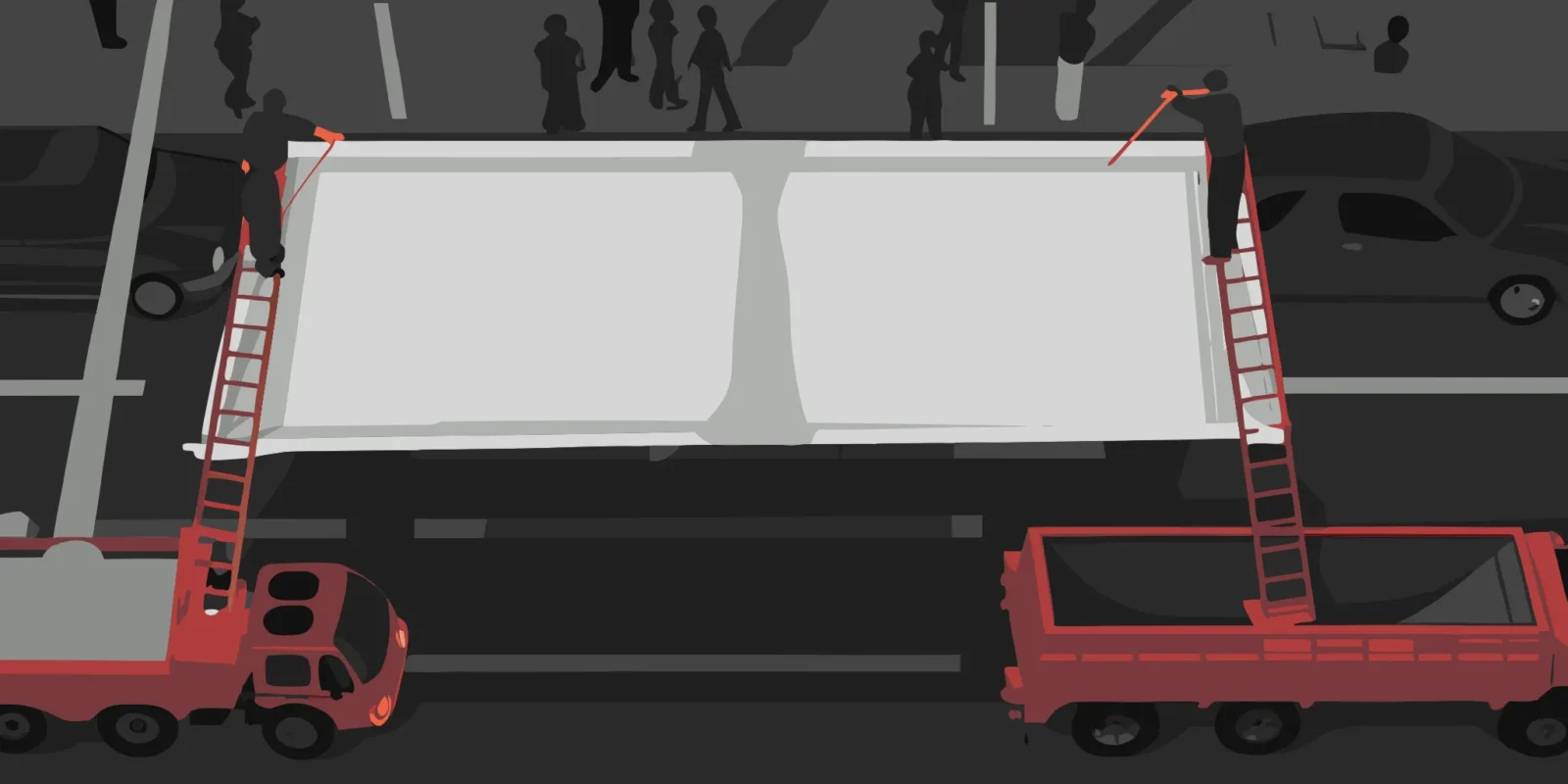
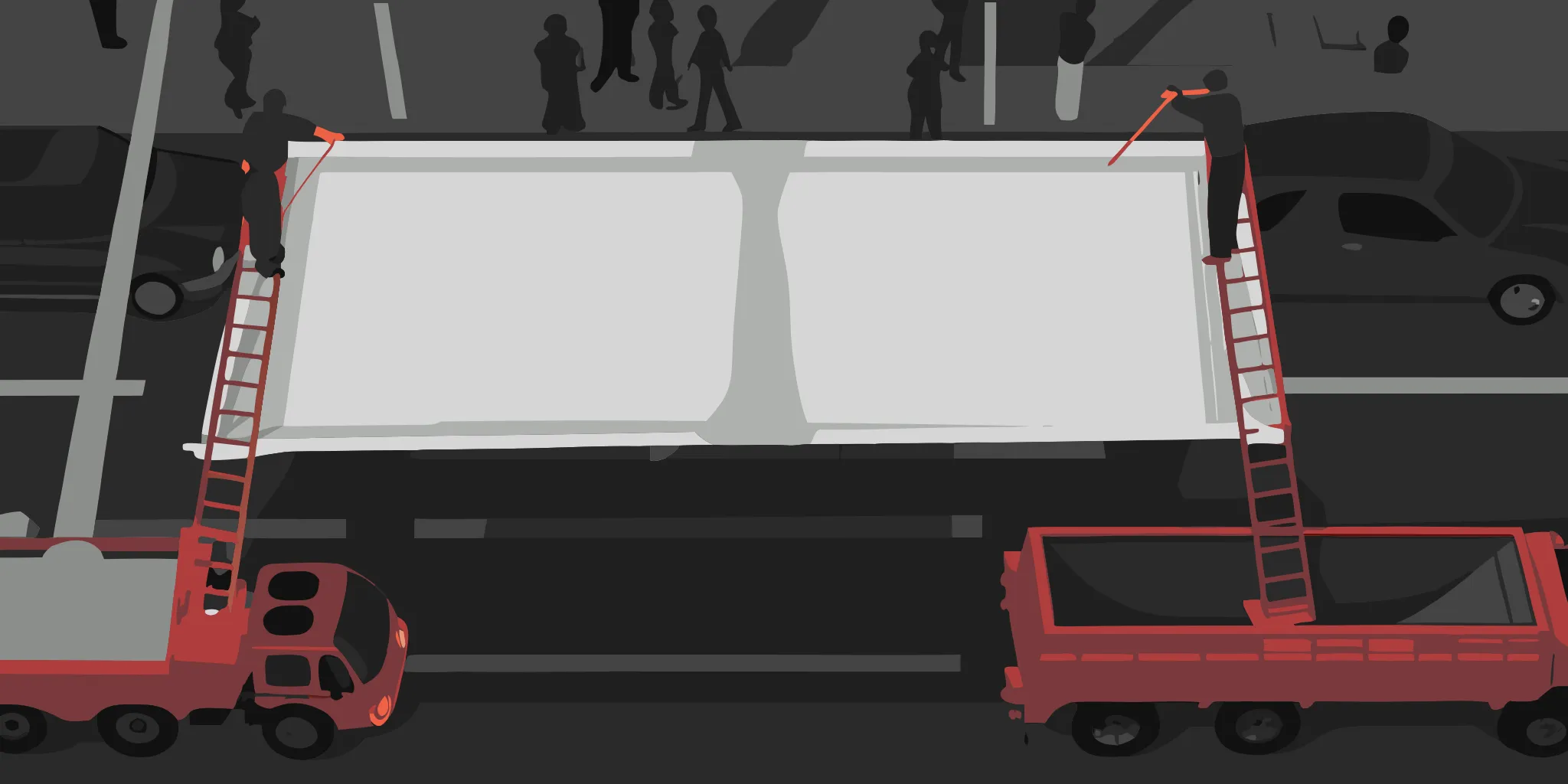
Over-the-street banners are large-format graphics suspended above a roadway between two mounting points, usually poles or other engineered supports on opposite sides of the street. Unlike a wall banner or a storefront sign, the banner must remain secure while spanning an active travel lane. Maintain required clearance, and present a message that drivers and pedestrians can understand quickly.
In practical terms, the banner is part of a larger installation system. The design must account for the banner, cable or rope, pole connections, attachment hardware, tension, clearance, and the condition of the supporting infrastructure. For that reason, these projects require more planning than ordinary banner production.
Typical dimensions are substantial. One published street-banner specification lists widths from 120 to 600 inches and heights from 24 to 60 inches. Although the appropriate size depends on the roadway, mounting points, viewing distance, and local requirements. The banner should be scaled to the street rather than selected solely for available artwork or production convenience.
Common uses include city events, civic celebrations, nonprofit programs, and other public promotions intended for broad community awareness. However, a public right-of-way is not automatically available for commercial messaging. Many jurisdictions limit overhead banner permits to events that are open to the public and sponsored by nonprofit or community organizations, while prohibiting private advertising. Requirements vary by municipality, so organizers should confirm eligibility before finalizing creative or scheduling production.
Over-the-street banners also differ from pole banners. Pole banners attach to individual light poles or utility poles and repeat along a corridor. Overhead banners cross the roadway and typically require coordinated supports, clearance review, permitting, and professional installation. In Portland, APM PrintWorks brings local knowledge to the design, production, and installation planning process. Helping organizations develop a banner that suits the message, location, and municipal review process.
For overhead installations, support locations matter as much as the artwork. Guidance from the Los Angeles County Department of Public Works specifies that attachment poles should be directly across from each other so the banner sits perpendicular to the street centerline. That illustrates why a site review and technical plan should come before production.
Key Design Considerations for Over-the-Street Banners
Artwork for a banner suspended above a roadway has to work at a glance. Drivers may see it from a distance and for only a few seconds, so the design should communicate one clear message without competing details.
Prioritize distance legibility
Use bold, simple artwork and strong contrast between the background and lettering. Large sans-serif fonts are generally easier to recognize quickly than decorative typefaces, particularly when the banner is viewed from a moving vehicle. Keep the wording concise, and scale font size and stroke width to the expected traffic speed. Faster traffic requires larger, more readily recognized letterforms.
Before approving the final proof, review it at a reduced size or from a distance. If the main message, event name, or date disappears when the design is viewed small, the artwork needs to be simplified. The goal is not to fill every part of the banner. It is to make the most important information immediately understandable.
Keep the composition focused
A busy background, multiple competing messages, or excessive text can reduce readability and create an unnecessary distraction for drivers. Use one dominant visual element and establish a clear reading order. Limit supporting information to what motorists genuinely need, such as a short event name, a brief call to action, or a date. Logos and secondary details should remain subordinate to the primary message.
APM PrintWorks can help translate an existing campaign into artwork that suits a wide street span, viewing distance, and installation location. This design review is especially useful when several stakeholders are contributing copy or graphics and the original layout contains more information than the roadway audience can process.
Select materials for the installation environment
Outdoor UV exposure can cause low-quality graphics to fade, so specify fade-resistant inks and weather-resistant materials for a longer-lasting presentation. For locations that experience significant wind, ask about mesh banner material. Its construction can be appropriate where reducing wind pressure is an important part of the material decision, subject to the requirements of the installation plan.
When motorists approach from both directions, double-sided banners can provide a message on each viewing face. The final choice should account for the mounting system, sightlines, artwork needs, and local approval requirements rather than treating the material as an afterthought.
Comparing Common Banner Materials
| Material | Best Use | Wind Performance | UV Resistance |
|---|---|---|---|
| Heavy-weight blockout vinyl (16-20 oz) | Double-sided banners, long-term outdoor display | Good with wind slits above 60 sq ft | Excellent with fade-resistant inks |
| Mesh vinyl (8 oz) | Single-sided banners in high-wind locations | Excellent; perforated material reduces wind pressure | Good with fade-resistant inks |
With a focused message, high-contrast artwork, traffic-appropriate typography, and materials selected for local conditions, an over-the-street banner can remain readable and visually effective without overwhelming the roadway.
Wind Loads and Structural Requirements
Over-the-street banners are elevated structures, not simply oversized signs. Their safety depends on the banner, attachment hardware, support poles, cables, and connection points functioning as one engineered system. Before production or installation, confirm the site requirements with the approving authority and qualified professionals.
Need help planning a safe banner system? Contact APM PrintWorks to discuss your project.
The total assembly must withstand the wind forces expected at the site, including the loads transferred through the poles and connections. Public-works guidance may require engineering calculations showing that the complete system remains within allowable stress limits for wind loads of 60 mph in standard areas and 90 mph in high-wind areas. Depending on the banner size, pole selection, and connection complexity, certification from a registered civil or structural engineer may also be required. Review the overhead-banner engineering guidance for an example of the documentation authorities may request.
Account for the complete support system
Structural review should cover more than the fabric. The system includes the banner, cable or rope, pole connections, and the objects that receive those connections. APM PrintWorks commonly specifies components such as aircraft cable, turnbuckles, snap hooks, and cable clamps for banner installations. Each component must be selected and installed to maintain reliable tension while avoiding damage to poles, facades, utility structures, or other infrastructure.
- Wind relief: Wind slits are required for banner areas exceeding 60 square feet under the cited public-works guidance. These openings reduce wind pressure on the banner and its supports.
- Connection strength: Cables, clamps, hooks, and turnbuckles must be compatible with the expected loads and secured against loosening.
- Infrastructure protection: Attachment hardware must hold consistent tension without crushing, cutting, or otherwise weakening the supporting structure.
- Engineering documentation: Provide calculations or professional certification when the authority, site conditions, or system design requires it.
Consistent tension is important after installation as well. A loose side can flap, while an over-tightened connection can transfer unnecessary force into the poles or mounting points. For Portland-area organizations planning over-the-street banners, a professional review of the span, hardware, clearance, and wind-load requirements helps establish a safer path from design through installation.
Over-the-Street Banner Permitting Requirements and Timeline
Permitting is an essential part of planning over-the-street banners in Portland and other municipalities. Public agencies review the proposed location, message, artwork, insurance, structural details, and installation schedule before authorizing a banner over a public roadway. Starting early helps prevent a permit delay from becoming a production or event-schedule problem.
The exact rules vary by city, so confirm requirements with the relevant planning or public works department before finalizing artwork. Many municipal programs are intended for public events and nonprofit-sponsored activities, rather than private advertising. Some public banner programs also prohibit corporate logos or other business identifiers on the banner. Treat content compliance as a design requirement, not a last-minute administrative detail.
- Check with city planning or public works. Confirm that the proposed street, poles, event, sponsor, and display dates qualify for the local banner program. Ask whether the pole locations are available, because availability may be first-come, first-served. Also request the application checklist, required clearances, insurance limits, artwork specifications, and any map or location documentation. Municipal guidance commonly requires poles to support a banner across the roadway, so the site must be evaluated before production begins. Review an example of public overhead-banner requirements.
- Prepare the complete permit package. Assemble the banner graphics, full message, proposed dimensions, installation and removal dates, location map, structural or attachment details, and proof of liability insurance. The municipality may need to be named as an additional insured. Graphics must be submitted with the application so officials can review them for content compliance. If the application lacks required graphics, insurance, or other supporting documents, it may not be considered complete.
- Submit at least 20 working days before installation. A complete application package should be submitted a minimum of 20 working days before the planned installation date. Build in additional time for corrections, site questions, holidays, and scheduling. This lead time is a permitting minimum, not a guarantee that production can begin immediately.
- Await public works review and approval. Public works officials typically review the permit package and graphics before production or permit issuance. Do not release the banner for production based only on an informal conversation. If the agency requests revisions, update the artwork or documentation and resubmit promptly.
- Install according to the approved specifications. Once approved, installation should follow the permitted dimensions, clearances, hardware, dates, and locations. A professional team can coordinate production and installation so the finished banner matches the approved package. For a clearer view of how a local project moves from planning through completion, see this professional banner installation timeline.
APM PrintWorks can help Portland-area organizations plan the graphics, documentation, production schedule, and installation details before submission. Confirming municipal requirements early gives your project the best chance of meeting its event date without avoidable revisions.
Professional Installation Best Practices for Over-the-Street Banners
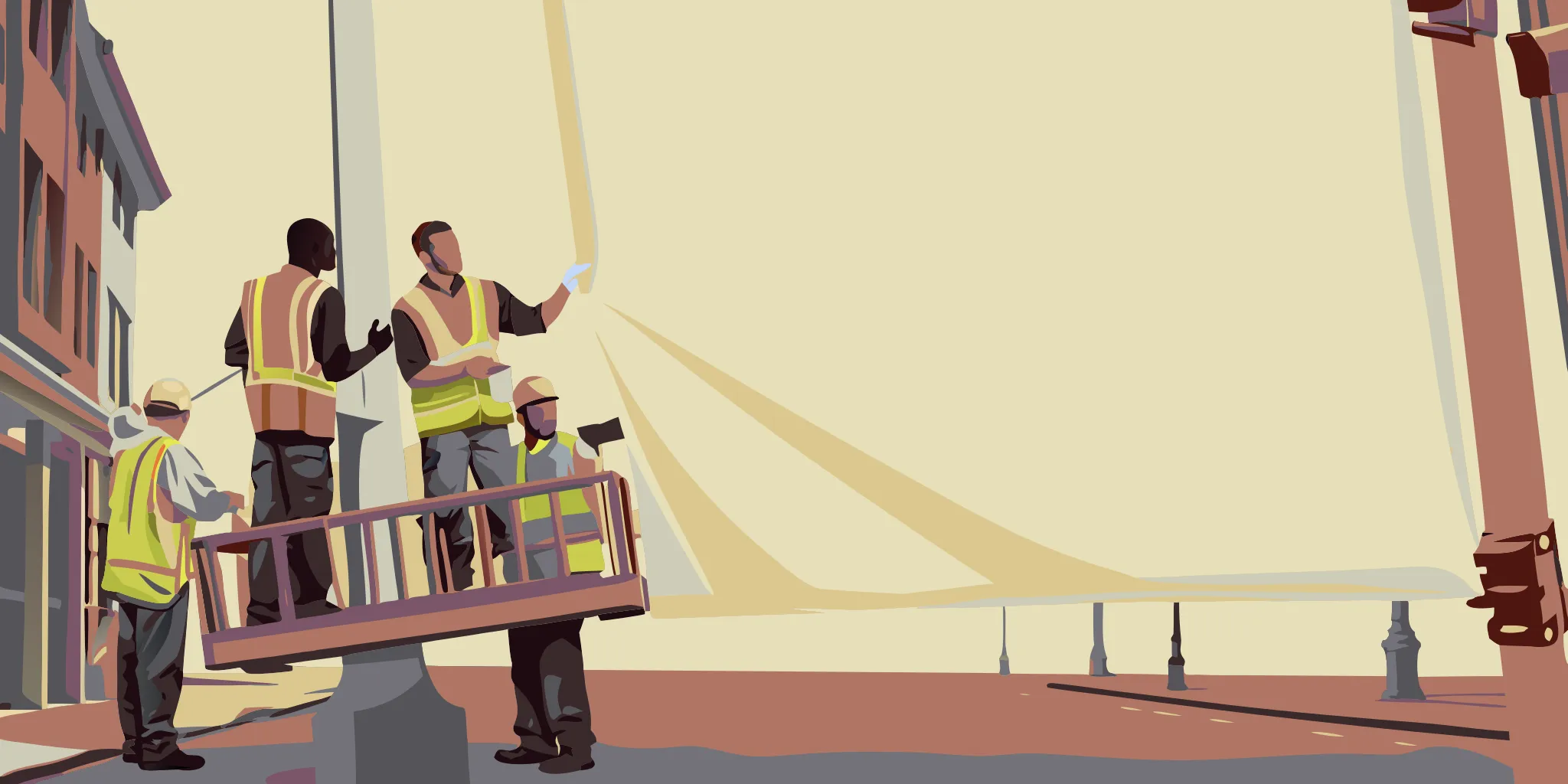
Installing a banner across a public street requires more than securing fabric between two poles. The placement, clearance, attachment hardware, tension, and permit documentation all affect public safety and the banner’s service life. A professional crew evaluates the complete installation system before anyone climbs a lift or begins attaching cable.
Start by confirming that the support poles are directly across from each other and positioned perpendicular to the street centerline. This alignment helps the banner span the roadway evenly instead of pulling at an angle. The installation plan should also document the exact locations with maps, as required in many permit applications. See the overhead banner guidance for examples of the location and installation details authorities may request.
Protect clearance and infrastructure
Before installation, verify the required vertical clearance for every vehicle that uses the roadway, including tall commercial trucks. A banner that looks properly positioned from the sidewalk may still create a clearance problem if the street’s vehicle profile is not considered. The cable, rope, pole connections, and supporting hardware should be treated as one structural system, with attachment methods that maintain tension without damaging public infrastructure.
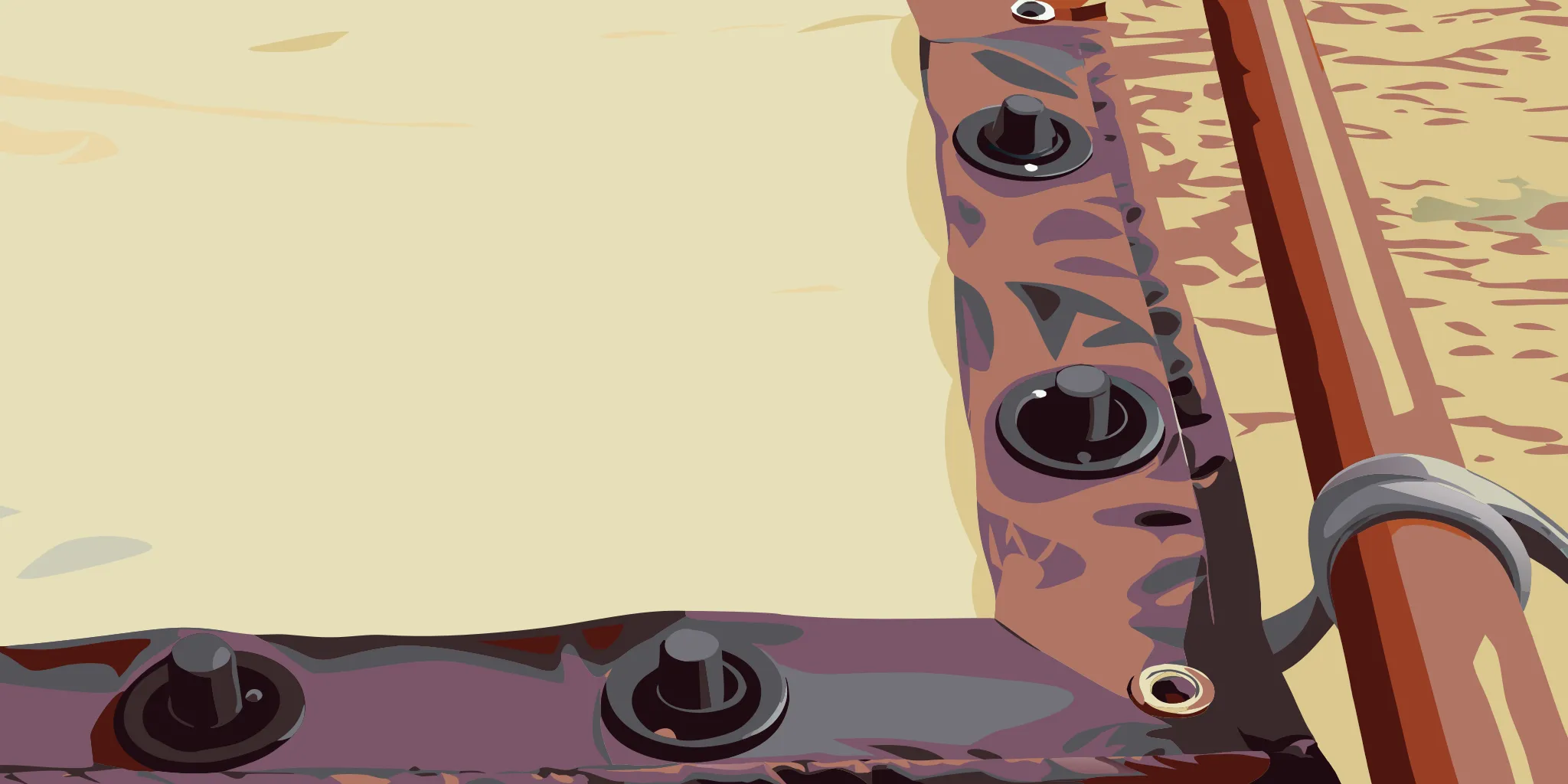
Apply even tension across the span
Uniform tension is essential. Uneven pulling can create concentrated stress, wrinkles, premature wear, or tearing at the corners and attachment points. Experienced installers check the banner after initial attachment, adjust the hardware, and inspect the finished span from multiple angles. Professional installation is recommended where safety codes, elevated work, public traffic, or municipal requirements are involved.
Coordinate installation and removal dates
The permit should state both the proposed installation date and the removal date. Scheduling removal in advance helps prevent a banner from remaining in place after the event or permit period ends. It also gives the crew time to plan equipment, traffic considerations, and a safe return visit.
APM PrintWorks brings Portland-area organizations an in-house team that can coordinate production details with professional banner installation. That local, end-to-end approach helps keep the banner, hardware, permit requirements, and schedule aligned from planning through removal.
Frequently Asked Questions
What materials are best for over-the-street banners?
Choose a durable, weather-resistant banner material designed to handle sustained tension across a roadway. Fade-resistant inks also help preserve color during prolonged outdoor UV exposure. The final material should match the banner size, attachment method, expected display period, and local approval requirements.
Are there wind load requirements for over-the-street banners?
Yes. The complete system, including the banner, cables or ropes, poles, and connections, must be evaluated for wind forces. For example. Some public-works requirements call for wind slits on banners larger than 60 square feet and may require a registered engineer’s calculations for 60 to 90 mph wind loads. See the public-works guidance for an example of these requirements.
How do you install over-the-street banners safely?
First confirm that the support poles are directly across from one another and that the planned banner provides required clearance for vehicles, including tall commercial trucks. Installers should use properly rated connection hardware, maintain even tension, and protect the poles and surrounding infrastructure. Professional installation is recommended when the project involves roadway clearance, structural requirements, or permitted public infrastructure.
Do I need a permit for an over-the-street banner installation?
Often, yes, especially when the banner spans a public right-of-way. Requirements vary by jurisdiction, but applications may include the graphics, installation and removal dates, location maps, liability insurance, and structural details. Some agencies require a complete package at least 20 working days before installation, so confirm requirements and pole availability early.
How can I ensure artwork legibility on large banners?
Keep the message concise, use large sans-serif lettering, and create strong contrast between the text and background. Avoid busy artwork and excessive copy because drivers need to understand the message quickly from a distance. Scale font size and stroke width to the viewing distance and traffic speed, then review the design at its intended display size.
Ready to Plan Your Over-the-Street Banner?
A well-planned banner project helps align artwork, materials, permitting, and installation before production begins. APM PrintWorks can help you move from concept to a practical plan for your Portland-area project. Request a project quote for your over-the-street banner design, production, and installation needs.