When comparing perforated window vinyl vs window cling, start with the job the glass needs to do. Perforated vinyl is the stronger choice for a long-term exterior storefront graphic that preserves an inside-to-outside view. Window cling is better for a short-term, indoor message that staff can remove, store, and reposition.
Request a window graphics quote from APM PrintWorks to match the material, artwork, and installation plan to your Portland-area location.
The materials may look similar in a product sample, but they behave differently on a real window. Adhesion, viewing distance, lighting, glass condition, installation surface, and campaign length all affect the result. This guide explains those differences and gives facilities, marketing, and operations teams a practical way to choose.
Perforated window vinyl vs window cling at a glance
Perforated window vinyl uses adhesive and a pattern of small holes to display an exterior-facing image while preserving some visibility from inside. Window cling uses no adhesive, attaches to smooth glass by static attraction, and is most useful for short-term indoor applications that need easy removal.
| Decision factor. | Perforated window vinyl. | Window cling. |
|---|---|---|
| How it attaches. | Pressure-sensitive adhesive. | Static attraction, no adhesive. |
| Typical placement. | Exterior-facing glass and other approved applications. | Clean, smooth indoor glass. |
| View through glass. | Preserves an inside-to-outside view in the right lighting. | Clear or opaque film, but not a one-way perforated view. |
| Best campaign type. | Longer-term branding and large window coverage. | Short-term promotions and frequently changed notices. |
| Weather resistance. | Better suited to outdoor exposure when properly specified. | Best protected indoors. |
| Removal and reuse. | Usually removed and replaced, not reused. | Can often be removed, stored flat, and reused. |
The choice is not simply permanent versus temporary. A week-long exterior campaign still needs a material that will stay secure outside. A year-round interior message may need a different solution if it must look crisp at arm’s length. APM PrintWorks can also recommend alternatives from its window graphics services, including frosted vinyl and double-sided decals, when neither option fully fits.
When is perforated window vinyl the better choice?
Choose perforated window vinyl when the graphic must cover a large glass area, face outdoor conditions, and still allow people inside to see out. It is especially useful for street-facing storefronts, service centers, and vehicle windows where the exterior image needs more visual impact than a small temporary message.
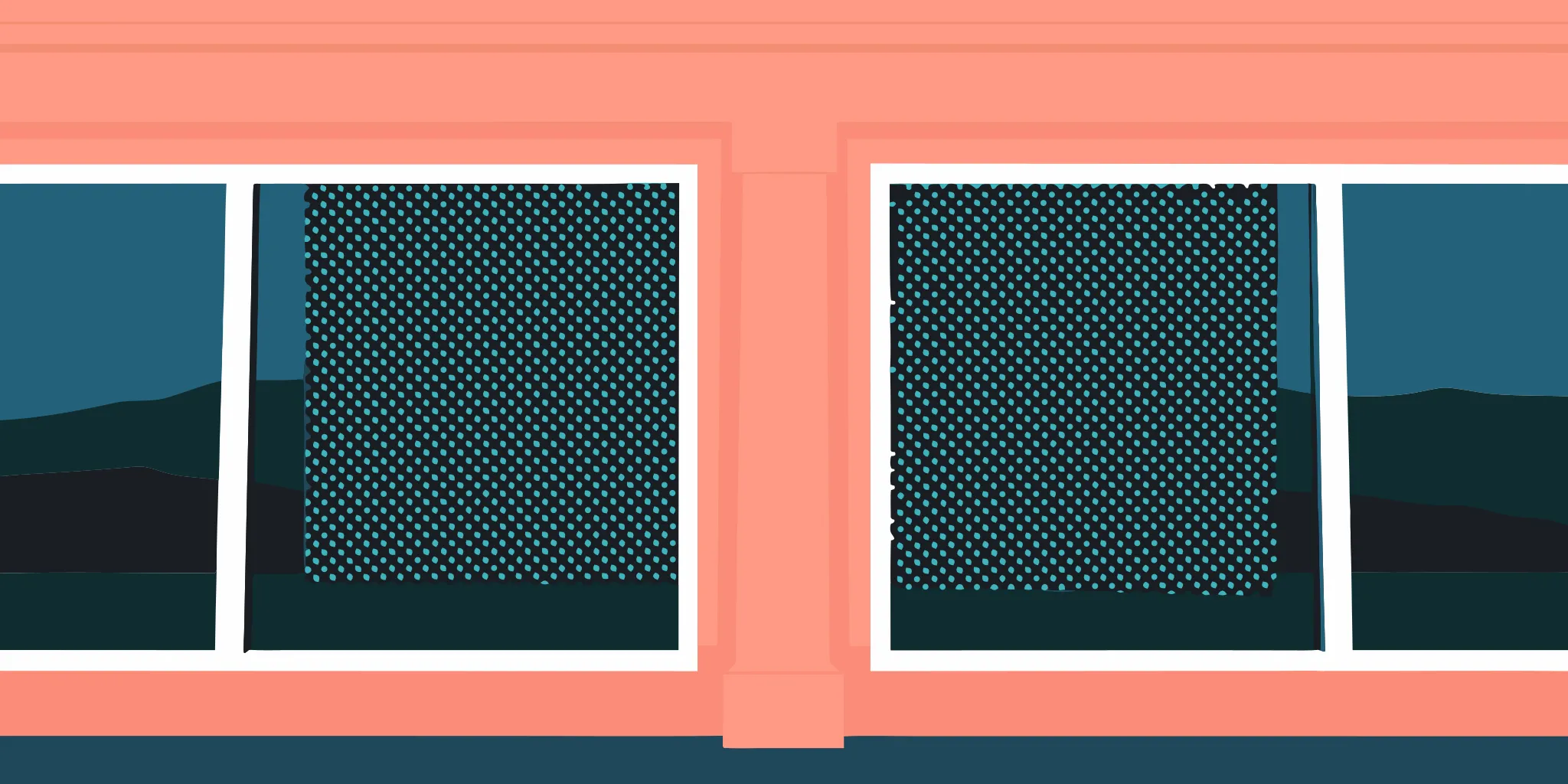
Perforated film works by replacing part of the printable surface with a regular pattern of tiny openings. From the brighter side, viewers tend to see the printed image. From the darker side, the openings preserve a view through the glass. The effect is useful, but it depends on lighting. If a store interior is brighter than the street at night, people outside may see through the graphic more easily.
That lighting behavior should influence both design and placement. A high-contrast image with bold shapes will generally read better than artwork built around fine lines or small details. The holes reduce the printable area, so a design that looks sharp on a monitor can lose impact when it is enlarged and viewed close up. For a storefront seen by traffic, design for the real viewing distance rather than the conference-room proof.
Use it for durable, large-area visibility
Perforated vinyl is a practical choice when a Portland business wants to turn several window panels into one coordinated display. It uses adhesive, so proper installation gives it a more secure bond than static cling in wind and rain. It can also help moderate glare and direct sunlight without fully closing off the view from inside.
APM PrintWorks notes that perforated window graphics showcase images while maintaining window functionality. Its large-format team can plan panel seams, produce full-size artwork, and coordinate installation. Review the company’s perforated window vinyl printing service for more detail about this application.
Plan for the one-way effect
Do not treat one-way visibility as a fixed feature under every condition. The printed side needs more light than the viewing side for the strongest effect. Before production, check the window during the hours when customers will see it. Account for interior lighting after sunset, nearby streetlights, overhangs, and shaded glass.
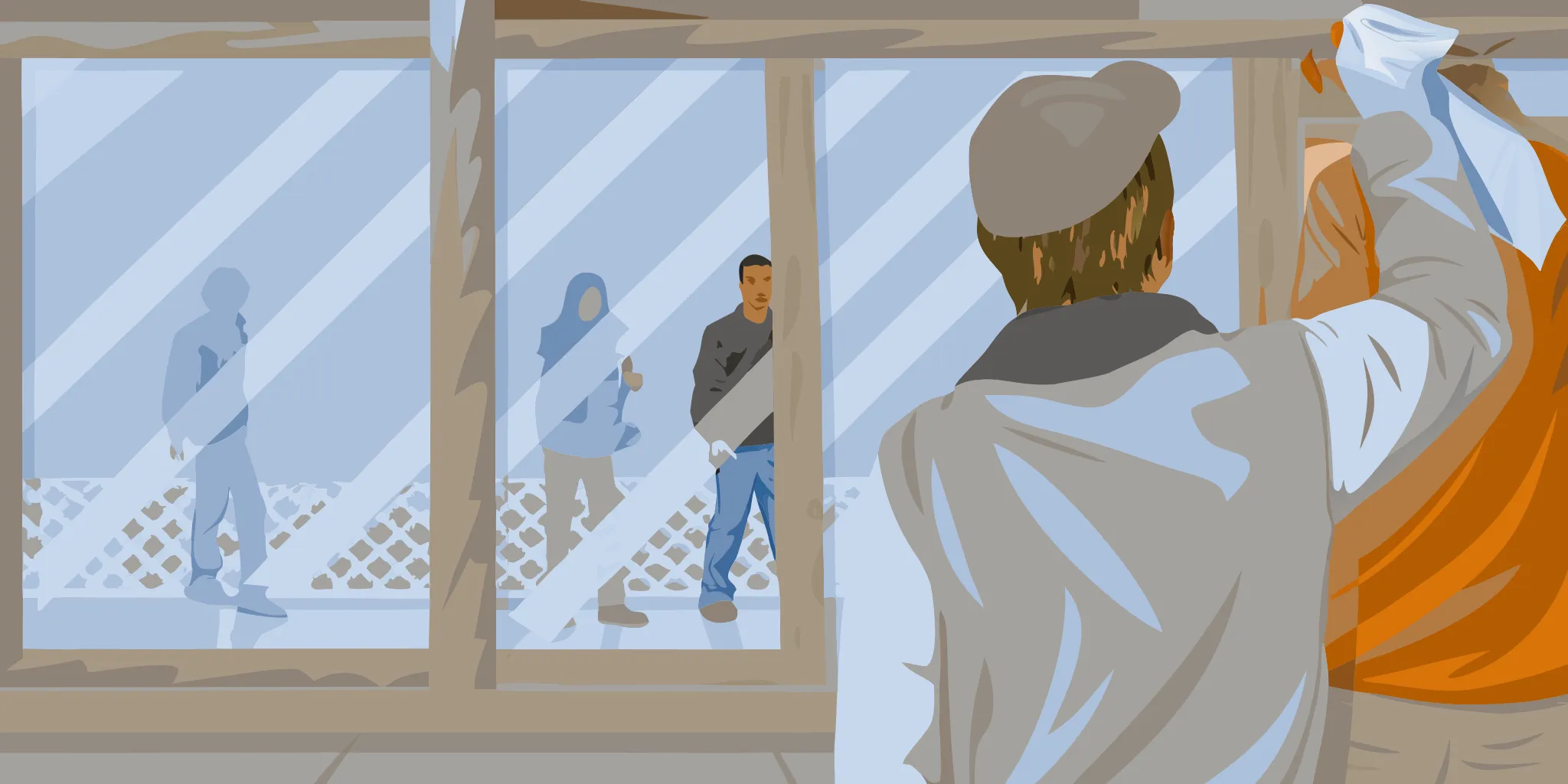
A real-world example is a street-facing retail location that wants a full-window brand image but needs employees to monitor the sidewalk. Perforated vinyl supports both goals during the day. By contrast, a solid opaque graphic would close the view, and a static cling would be less dependable on the exposed exterior surface.
When does window cling make more sense?
Window cling makes more sense for a short-term message placed on clean indoor glass. Because it has no adhesive, staff can reposition it during installation, remove it without adhesive residue, and store it for possible reuse. It is not the preferred choice for exposed outdoor glass or very large installations.
Static cling is useful when speed and flexibility matter more than outdoor durability. A store can change a campaign without scheduling adhesive-film removal, and an office can relocate a notice between smooth glass surfaces. That makes cling a practical operational tool for messages that change often.
It still requires preparation. Dust, grease, cleaning residue, and textured glass reduce contact between the film and window. Clean the surface, let it dry completely, and apply the cling from one edge while smoothing outward. If the piece will be reused, keep its liner and store it flat in a clean, temperature-controlled area. Folding or rolling it too tightly can create creases that remain visible later.
Use it for protected, frequently changed messages
Consider cling for a seasonal interior promotion, a temporary hours notice, or a recurring message that returns each year. These are situations where easy removal is an advantage. Because the material relies on static attraction rather than adhesive, it is more vulnerable to dirt, edge lift, moisture, and temperature changes than properly specified exterior vinyl.
Size matters too. A modest cling is easy for staff to handle. A very large piece becomes harder to align and smooth without trapping air or touching the face. For a multi-panel storefront transformation, adhesive vinyl and professional installation are usually the more controlled approach.
How should you choose the right material?
Choose the material by answering five questions: Will it be indoors or outdoors? How long must it stay up? Do people inside need to see out? How often will the message change? Who will install and remove it? These answers usually make the right option clear before artwork begins.
- Confirm the surface. Identify whether the glass is smooth, tinted, coated, textured, recently installed, or exposed to weather. The correct material and application method can depend on the glass.
- Set the campaign length. Separate short promotional use from longer-term branding. Do not choose a temporary material only because removal sounds easier.
- Define the visibility requirement. Decide whether staff need to see outside, whether privacy is important, and how much daylight the space should retain.
- Observe the lighting. Check the window during daytime and evening operating hours. Lighting can change the one-way effect of perforated film.
- Measure every panel. Record the visible glass area, gasket edges, mullions, hardware, and any obstructions. Large displays often require planned seams.
- Decide who will install it. Small indoor clings may be staff-installable. Large adhesive graphics benefit from professional production and installation planning.
Explore custom window graphics from APM PrintWorks before finalizing material, measurements, and artwork.
This process prevents an expensive mismatch. For example, an operations team may initially request cling because it wants clean removal. If the graphic must cover an exposed exterior window for several months, however, cling’s easy removal becomes a liability. A removable adhesive option or perforated vinyl may serve the actual requirements better.
Design and installation details that change the result
Good window graphics depend on more than material selection. Accurate measurements, clean glass, planned seams, strong contrast, suitable viewing distance, and controlled installation all affect the final appearance. Perforated artwork should favor bold forms, while cling artwork can preserve finer detail when viewed at close range.
Design for the holes, glass, and viewing distance
Perforation gives the material its see-through function, but it also reduces the surface available to carry ink. Use clear focal points, large type only when necessary, and contrast that remains readable from the sidewalk or road. Avoid placing critical details directly across panel seams or hardware.
Cling provides a more continuous print surface, which can support closer viewing and finer details. The tradeoff is that it does not provide perforated film’s one-way viewing effect. Clear cling can also make colors appear less opaque than they do on a white background, so material samples and proofs are valuable before a full run.
Prepare the glass and installation plan
Measure the glass rather than relying on architectural drawings alone. Existing frames, seals, and field conditions can change the usable area. Clean the glass with a method compatible with the selected film, remove residue, and allow the surface to dry. An installer should also confirm acceptable temperatures and weather conditions before applying exterior material.
For a large perforated graphic, plan seams before production so important visual elements remain aligned. Professional installers use controlled pressure to limit bubbles, wrinkles, and edge lift. They also know how to trim near seals without compromising the graphic or window system. APM PrintWorks offers design support and nationwide installation capabilities for projects that extend beyond one Portland location.
Which option fits common Portland business applications?
Portland storefronts usually benefit from perforated vinyl when they need lasting exterior visibility and an outward view. Indoor service counters and offices often benefit from cling when the message changes frequently. Weather exposure, shaded windows, nighttime lighting, and the size of the glass should guide the final recommendation.
Retail storefront branding
For a street-facing retail storefront with several glass panels, perforated vinyl is usually the stronger starting point. It turns unused glass into a large-format display, withstands exterior conditions better than cling, and maintains useful visibility from inside. A coordinated design can connect multiple panels while accounting for frames and doors.
Temporary interior promotion
For a message displayed inside the glass for a limited period, cling can reduce changeover effort. Staff can apply and remove smaller pieces without adhesive residue. Confirm that the window is smooth, clean, and protected from moisture or temperature swings before relying on static attraction.
Office privacy and wayfinding
Neither perforated vinyl nor cling is always the best answer for an office that needs consistent privacy. Frosted vinyl can create the look of etched glass while identifying rooms, offices, or departments. APM PrintWorks can help compare that option with other custom vinyl window graphics.
Multi-location rollout
For a program across several locations, start with a site survey and a repeatable specification. Document glass dimensions, placement, material, artwork scale, and installation instructions for each site. APM PrintWorks combines large-format production with nationwide installation, which helps keep a rollout consistent while addressing location-specific field conditions.
Frequently asked questions
Buyers most often ask whether perforated window vinyl provides privacy, whether window cling can go outdoors, and which option removes cleanly. The short answer is that lighting affects perforated privacy, cling performs best indoors, and cling is easier to reuse. The questions below explain the practical limits.
Can people see through perforated window vinyl?
Yes. People on the darker side can usually see through the perforations toward the brighter side. During daylight, that often means employees can see out while people outside see the printed image. The effect can weaken or reverse when the interior is brighter than the exterior, especially at night.
Can window cling be used outside?
Window cling may attach to outdoor glass briefly under favorable conditions, but it is not the dependable choice for exposed applications. Wind, rain, dirt, and temperature changes can loosen the edges or cause it to fall. Use a material specifically selected for exterior conditions when reliability matters.
Does perforated window vinyl block all light?
No. The small holes allow a portion of daylight through the graphic. The amount depends on the film specification and lighting conditions. It will reduce some light and glare, but it does not behave like a fully opaque covering.
Can window cling be reused?
Often, yes. Remove it carefully, keep the face and attachment surface clean, replace it on its liner, and store it flat. Dirt, creases, edge damage, and poor storage can prevent it from attaching smoothly the next time.
Will either material leave adhesive residue?
Static cling has no adhesive, so it should not leave adhesive residue. Perforated vinyl uses adhesive and should be removed with the method recommended for the material and glass. Professional removal is useful for large or older installations.
Choose the right window graphic with APM PrintWorks
The best material is the one that fits the surface, campaign length, visibility goal, and installation environment. APM PrintWorks helps businesses move from idea to finished large-format display through its Dream. Plan, Create process, with fast turnaround and installation support available for local and nationwide projects.
Bring measurements, photos of the glass, the intended display period, and your visibility requirements to the first conversation. Those details help the team identify whether perforated window vinyl, cling, frosted vinyl, or another window graphic will deliver the cleanest and most durable result.
Contact APM PrintWorks to plan and quote your next window graphics project.