
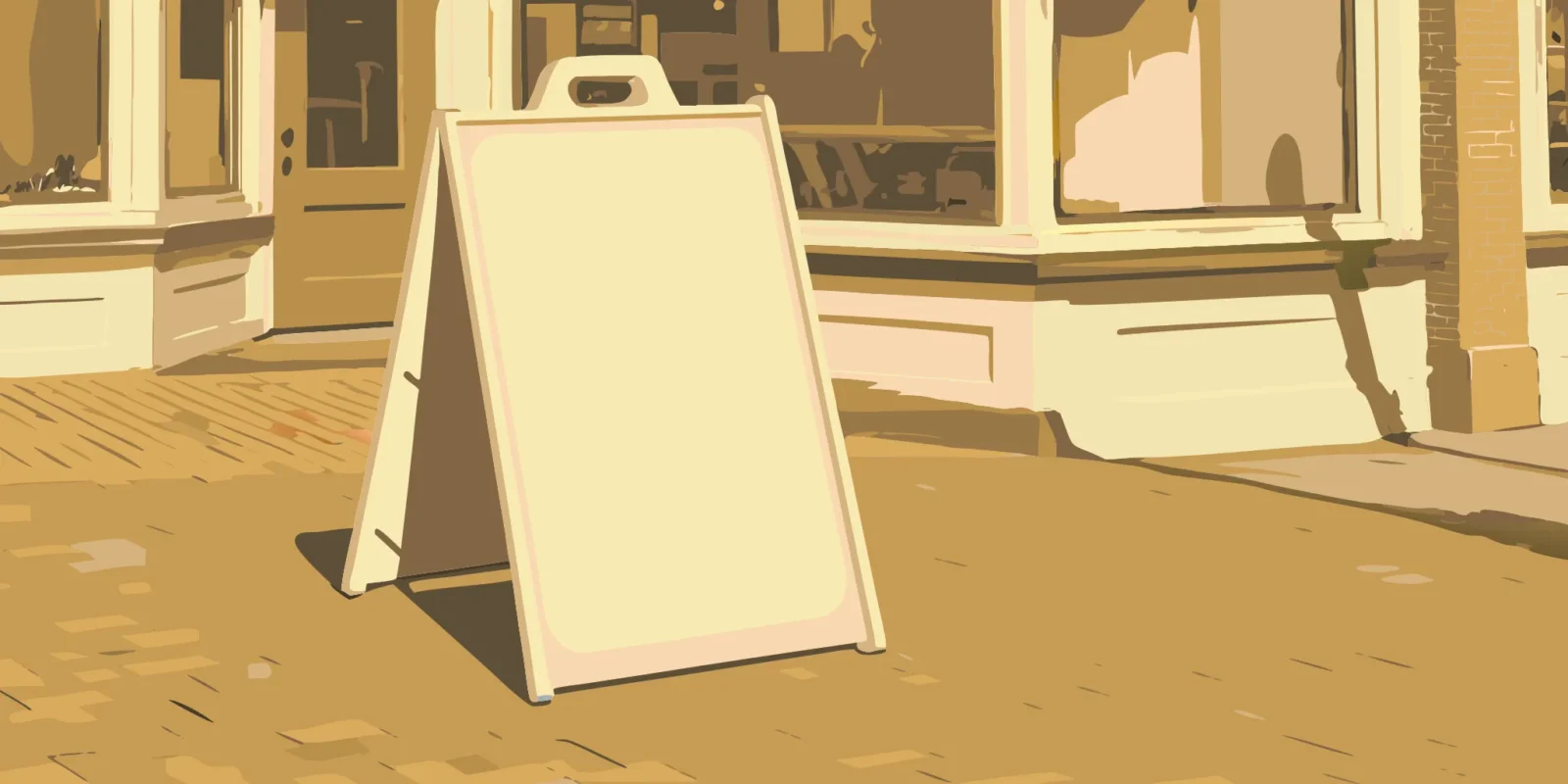
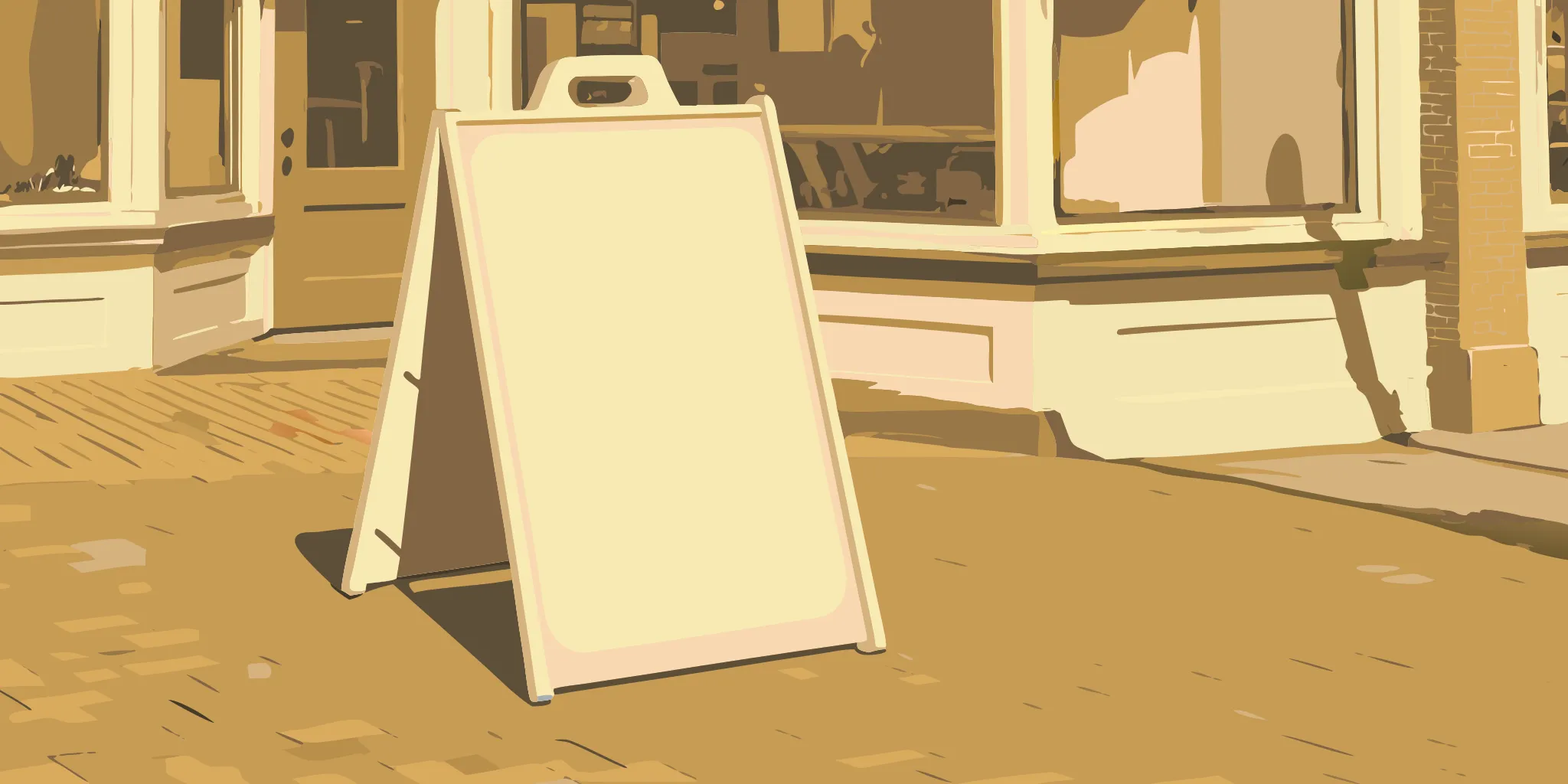
High foot traffic on a Portland sidewalk only turns into revenue if pedestrians notice your business is there. Custom A-frame signs from a local printer offer a flexible way to capture attention and guide shoppers through your door.
Get a quote for custom A-frame signs in Portland today. Our team at APM PrintWorks can print durable, weather-resistant sidewalk signs that help your business stand out on any street.
Custom A-frame signs, often called sandwich boards or sidewalk signs, are portable, two-sided displays made to catch the eye of people walking past your local business. These units often feature a standard 24-by-36-inch size and use durable frames that hold weather-resistant panels like UV-printed vinyl. The printed panels slide into the frame easily, which makes it simple to swap your message as often as needed. According to placement experts at eSigns, placing signs parallel to foot traffic helps people see them from both ways. This increases the chance of stopping a new customer and driving them inside. Whether you need to show a sale or manage a line, these signs help local shops drive more sales through the front door.
Choosing the right style and material is only the first step in a good marketing plan. To help you plan, we will start by looking at what these signs are and how businesses use them.
What Are Custom A-Frame Signs and How Do Businesses Use Them?
Custom A-frame signs are freestanding, two-sided sidewalk displays with foldable frames that hold interchangeable printed panels. Businesses use them to catch pedestrian attention, announce promotions, guide wayfinding, and reinforce brand presence at entrances and events throughout Portland and the surrounding metro area.
Get a local quote for your custom A-frame signs today. Custom A-frame signs, often called sandwich boards or sidewalk signs, are freestanding, two-sided displays. They feature a foldable frame that stands alone on sidewalks or near shop entrances. At APM PrintWorks, we can print these in a standard 24″x36″ format to help your brand stand out to people walking by. These signs are portable and easy to move, which makes them a top choice for local shops in the Portland area.
Common Business Uses for Sidewalk Signs
Most shops use these signs to catch the eye of people on the street. Retail stores often show off new sales or items that just arrived. Restaurants use them to list daily lunch specials or happy hour deals. Because the printed panels slide in and out of the frame, you can change your message in seconds. This flexibility is great for events like the Waterfront Blues Festival or local real estate open houses.
Many firms also use custom yard signs alongside A-frames for full coverage. While yard signs work well on grass, A-frames provide a professional look on hard pavement. They help with wayfinding by showing people where to enter or where to find guest parking. This keeps foot traffic moving and helps guests find their way without stress.
Top Benefits of Custom A-Frame Signs
- Two-sided visibility: People approaching from both directions can see your brand as they walk past your door.
- Weather resistance: Durable materials like corrugated plastic and UV-cured ink keep your message safe through Portland rain and sun.
- Wind stability: Frames with ballast ports allow you to add sand or water to prevent tipping on breezy days.
- Easy storage: Fold the frame flat at closing time and bring it inside to prevent theft or overnight damage.
- Fade-resistant graphics: UV ink resists sun damage so your message stays bright and clear for months.
Design Tips for Maximum Readability and Impact
Readable A-frame signs follow three rules: use large high-contrast lettering, keep your message under seven words on the headline, and choose UV-resistant materials for outdoor durability. Applying these design fundamentals helps your sign capture attention from a distance and convert sidewalk traffic into foot traffic.
Making custom A-frame signs work well means you must think about how people see them. A sign that looks good on a screen might fail on a busy Portland street if the text is too small or the colors are dull. To get the best results, you should use design rules that help people see your message fast. We use these rules to help your brand stand out in the local area.
Use the right letter size
A big mistake in sign design is using small text. The standard rule for viewing distance is one inch of letter height for every ten feet of distance. So, if you want people to see your sign from thirty feet away, your main headline must be at least three inches tall.
Pick high contrast colors
Color choice is not just about looks. High-contrast pairs, like dark text on a light white or yellow back, help people read your sign at a glance. Do not use colors that are too close in tone, like red on blue, as they are hard to see in bright sun. For shops open late, reflective panels can help people see your sign at night. This is key for parking lots and dim spots where light is low.
Keep the message short
People read sidewalk signs while they walk. You should keep your main message under seven words so people can read it fast. A short, clear note is more likely to bring in a guest than a sign with too much text. If you have more to say, you can use our outdoor banner finishing options for large signs that can hold more info without looking messy.
Select tough print types
Outdoor signs in Oregon must stand up to rain and sun. Using UV ink on vinyl or plastic gives the best protection from weather and scratches. This ink stays bright and does not fade fast in the light. These strong parts make sure your custom A-frame signs stay clean and bold. This helps you keep a professional look for your business while you serve the local community.

Where Should You Place an A-Frame Sign for Best Results?
Position A-frame signs parallel to foot traffic, a few steps before your entrance, and maintain a 36-inch clearance path to comply with ADA requirements. Ballast your frame with sand or water in windy conditions, and check local Portland-area permits before placement to avoid fines.
Positioning your custom A-frame signs correctly is just as vital as the design itself. A sign that sits in the wrong spot will fail to catch the eye of your target audience. To get the best return on your spend, you must place your signs where they meet people at their decision points. For businesses in the Portland area, this often means finding the right balance between high visibility and clear pedestrian paths.
Maximize Visibility with Parallel Placement
One common mistake is placing a sign flat against a shop wall. This makes the sign hard to see until a person is right in front of it. Instead, you should place your sign parallel to the flow of foot traffic. This layout lets people see your message from both directions as they walk down the sidewalk. By using both sides of the frame, you double your chances of catching a new customer’s eye before they reach your door.
You should also think about the timing of your message. It is best to place the sign a few steps before your entrance. This gives people time to read your offer and decide to walk in. If the sign is too close to the door, they may already be past it before the message sinks in. Our storefront window graphics planning guide offers more tips on how to coordinate your outdoor signs with your glass displays.
Navigate Different Environments
The best spot for your sign depends on where your business is located. On a busy city sidewalk, you want to stay near the funnel where people walk. If you are in a shopping center with a large parking lot, use your sign to guide drivers. You can place signs where cars slow down to point them toward pick up spots or specific entries. For safety, always make sure your sign does not block the view of drivers or people crossing the street.
Weather is another factor for local Portland businesses. High winds can tip over light frames, so use ballast to keep them steady. Many frames have ports you can fill with water or sand to add weight. The SmartSign placement guide notes that adding about 13 pounds of sand can help prevent tipping in breezy conditions. This small step keeps your signs safe and professional throughout the day.
Stay Safe and Legal
You must follow local rules and safety laws when you put out a sign. The Americans with Disabilities Act has strict rules for sidewalk use. You must keep a clear path at least 36 inches wide so that people in wheelchairs can pass easily. Failing to do this can lead to fines and may create a hazard for your neighbors. Before you set out your sign, check the ADA Title III regulations to ensure your placement is legal.
Local permits also matter in the Portland metro area. Different towns have their own rules for how long a sign can be out and where it can sit. We suggest you check with your local city office to see if you need a permit for sidewalk signs. Staying within these rules helps you avoid trouble while still getting the most out of your custom signs.
Materials and Durability: Choosing the Right A-Frame Sign
The ideal A-frame sign combines a durable frame (plastic or metal) with weather-resistant printed panels. Coroplast and aluminum are the top choices for outdoor use, while reflective panels improve nighttime visibility. Frame ballast and UV-cured ink further extend the life of your sidewalk sign in Pacific Northwest conditions.
Picking the best parts for your custom A-frame signs helps them last through Portland’s rain and wind. At APM PrintWorks, we use tough materials that keep your message clear in any weather. Choosing the right frame and sign type depends on your shop’s spot and how often you move the sign. Good signs should be easy to see and tough enough for daily use.
Get a custom quote for your A-frame signs today. Our team in Beaverton can help you find the best material for your local business needs. We offer fast turnarounds and high-quality prints to ensure your brand stands out on the sidewalk. We take pride in helping our neighbors in the Portland area grow their sales with great signs.
Plastic and Metal Frames
Most 24″x36″ A-frame signs use a strong frame with a sign that slides inside. Plastic frames are light and easy to carry. This makes them a great choice for shops that put signs out each morning and take them in at night. Metal frames are heavier and last longer in busy areas. You can see more about Coroplast vs aluminum vs PVC sign materials in our full guide.
Metal frames often have a coat that stops rust. This is vital for signs that sit out in the damp air of the Pacific Northwest. Plastic frames will not rust and are easy to clean with a damp cloth. Both types work well, but your choice should match how much wind or foot traffic your sign will face each day. High-traffic spots often need the extra weight of a metal frame.
Common Sign Materials
Corrugated plastic, or Coroplast, is the top pick for outdoor signs. It is light, waterproof, and costs less than other types. For a sleek look, PVC or vinyl panels have a smooth feel and resist fading. We use UV-cured inks so your art stays bright for a long time. These inks stand up to sun and rain without losing their color. This means your sign looks new even after months of use outside.
Reflective panels are a great choice for parking lots or spots with low light. These signs catch the light from cars and street lamps. This makes them much easier to see at night or during the dark days of a Portland winter. If your shop is open late, a reflective sign can help more people find your door safely.
| Material | How Tough | Weight | Best Use |
|---|---|---|---|
| Coroplast | Good | Light | Low cost outdoor ads |
| Aluminum | Best | Heavy | Long-term sidewalk use |
| PVC / Vinyl | High | Medium | High-end retail look |
| Reflective | High | Medium | Night use in lots |
Wind and Safety Rules
A light sign might tip over in a strong breeze. Many of our frames have ports that you can fill with sand or water. This adds weight to the base and keeps the sign in place. Adding weight helps the sign stay upright even when the wind picks up. This keeps your sign safe and helps it last longer. It also prevents the sign from sliding into the street or blocking the walk.
You must also follow local rules for sidewalk signs. Most towns require that you leave a clear path for people to walk. This path must be at least 36 inches wide to meet ADA accessibility standards. Keeping the path clear keeps everyone safe and helps you avoid fines from the city. Checking these rules before you buy can save you time and money.
Message Hierarchy: What to Put on Your A-Frame Sign
A well-structured sidewalk sign uses three layers of information: a bold headline (3-7 words), a mid-sized detail line with context, and a clear call to action. This hierarchy lets pedestrians absorb your message in seconds and directs them toward the next step, whether that means entering your shop or calling for details.
A sidewalk sign must tell a clear story in just a few seconds. To catch the eye of someone walking by in Beaverton or downtown Portland, your layout needs a simple order of info. This plan makes sure your custom A-frame signs work well for your business. Experts suggest a three-part look: a bold headline, one detail line, and a clear call to action.
Visit our Beaverton shop or call (503) 924-6168 to start your design today.
- Headline: The largest element on your sign. Use 3-7 words with high-contrast colors so pedestrians can read it from a distance. Examples include “Today’s Lunch Special” or “50% Off Sale.”
- Detail line: Mid-sized text below the headline that adds quick context. Keep it to one specific offer or detail, like “Open House 11-2” or “Live Music Tonight.” This helps readers decide if the offer fits their needs.
- Call to action: The smallest element but the most important for conversion. Tell readers what to do next: “Come In,” “Order Here,” or “Call for Details.” For local large format printing in Portland, a strong CTA turns a viewer into a customer.
When you place your sign, put it a few steps before your front door. This helps people see your offer before they walk past. You should also set the sign parallel to the sidewalk so people can see both sides. The ADA requires a clear path of at least 36 inches for pedestrians. Keeping your sign in a safe spot makes it more helpful for everyone.
Pre-Order Checklist for Custom A-Frame Signs
Ordering custom A-frame signs starts with measuring your space, choosing a two-sided layout, selecting weather-resistant materials, crafting a short headline, and verifying local placement rules. APM PrintWorks offers standard 24″x36″ sizes starting around $120 with fast turnaround for Portland-area businesses.
Ordering custom A-frame signs is a fast way to get more people into your Portland shop. These standing displays are light and easy to move. They work well on sidewalks or near your front door. Before you start, look at our commercial printing project timeline to make sure your signs arrive on time. Our prices for a full set start at about $120, and we offer quick turnaround for local orders.
Ready to start? Contact APM PrintWorks to get a quote on your new sidewalk signs.
Pick the Right Style
At APM PrintWorks, our regular sign size is 24 inches by 36 inches. This large size gives you lots of room for big words and bright art. The printed signs slide into the frame with ease. This lets you change your message as often as you want. We use strong frames that are easy to set up and handle the local rain. We can often have your signs ready in as little as two business days.
You can pick a regular plastic frame or a deluxe model. Deluxe frames have wheels or spots to add sand or water for extra weight. This helps keep your sign still when the wind picks up. Since we make everything near Beaverton, we can give you a fast turnaround on your order.
Plan for Local Impact
When you plan your message, keep it simple. Your main headline should have fewer than seven words. This helps people read it as they walk by. We suggest using three levels for your text. Put the most important news at the top in big letters. Add small details in the middle and a call to action at the bottom.
Our team can help you pick the best colors and fonts. High contrast helps your sign stand out in the grey Portland light. We use UV ink that stops scratches and rain from hurting your print. This keeps your brand looking fresh. Once your art is ready, we can print your signs on light, waterproof plastic or thick vinyl.
- Measure your space. Check the size of your entrance to make sure the frame fits.
- Choose the sides. A two-sided sign works best if people walk by from both ways.
- Pick your material. Corrugated plastic is a low-cost choice that handles the rain well.
- Plan your message. Use a short headline and focus on one clear goal.
- Make your art. Work with our local team to make a look that is easy to read from a distance.
- Check local rules. Follow all ADA accessibility rules to keep a clear path of at least 36 inches on the sidewalk.
- Place your order. Reach out to APM PrintWorks to start your print run and get your signs in as little as two business days.
Frequently Asked Questions
This section answers common questions about A-frame sign letter sizing, weather durability, placement strategy, and single-sided versus double-sided options. Use these answers to plan an effective sidewalk sign program for your Portland-area business.
How tall should the letters be on custom A-frame signs?
Your letter height depends on the distance from which pedestrians will read the sign. The standard rule is one inch of letter height for every ten feet of viewing distance. For a sign that needs to be readable from 30 feet away, use at least three-inch-tall letters on the headline. This ensures people can catch your message as they walk toward your entrance without slowing down.
Can custom A-frame signs stay outside in the rain?
Yes, when built with the right materials. Corrugated plastic (Coroplast) is naturally waterproof, and UV-cured ink resists moisture and fading. Frames with ballast ports let you add sand or water for wind stability. Bring the sign inside at closing time to extend its life, but a well-constructed A-frame sign handles Portland’s rainy weather without losing its print quality or structural integrity.
Where is the best place to put a custom A-frame sign?
Position the sign parallel to the flow of foot traffic, a few steps before your shop entrance. This lets pedestrians see both sides of the sign as they approach. On a busy sidewalk, place it near the pedestrian funnel without blocking the path. Always maintain at least 36 inches of clear walkway to comply with ADA requirements. In a parking lot, position the sign near the driving lane to guide visitors toward your door.
What is the difference between single and double-sided signs?
A single-sided sign shows your message on one face, which suits placement against a wall or window. A double-sided sign lets people see your message from both directions, which is the standard for sidewalk placement where foot traffic flows in two directions. Double-sided signs cost slightly more but double your exposure for the same footprint, making them the recommended choice for most Portland-area businesses.
Ready to order custom A-frame signs for your Portland business?
A well-designed custom A-frame sign is one of the most cost-effective ways to turn sidewalk traffic into paying customers. From the right letter height and color contrast to durable materials and safe placement, every detail matters when your sign competes for attention on a busy street. APM PrintWorks has served Portland-area businesses for years with fast turnaround, local expertise, and high-quality large-format printing.
Whether you need a single sidewalk sign for a weekend event or a fleet of A-frames for multi-location retail, our team in Beaverton is ready to help. We handle everything from design consultation to printing and delivery, so your brand looks professional from the sidewalk to the front door.
Request your custom A-frame sign quote today. Call us at (503) 924-6168 or visit our Beaverton shop to get started. Our team will help you choose the right size, material, and design to make your message stand out on every Portland sidewalk.