
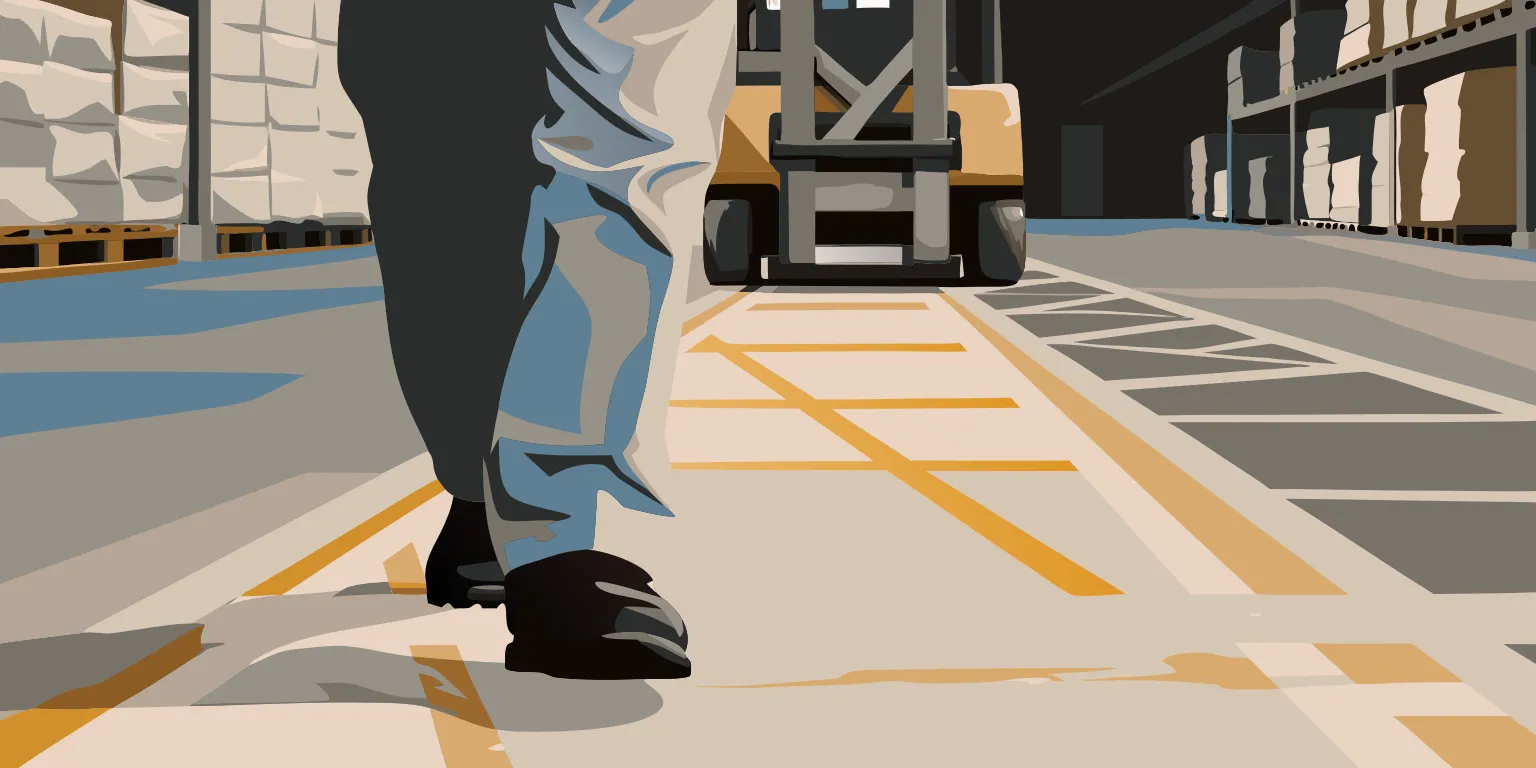
In a warehouse, a few seconds of uncertainty at an aisle intersection, loading area, or restricted zone can create unnecessary risk. Clear floor markings help workers and visitors understand where to walk, where equipment moves, and which areas require caution without relying on verbal reminders alone.
Well-planned safety floor graphics improve visibility, guide people through high-traffic areas. And help protect employees and visitors when the design, materials, placement, and maintenance match the conditions of the workplace.
That planning starts with the way people actually move through a facility. APM PrintWorks, Portland’s local printer serving the greater metro area from Beaverton, can help organizations evaluate traffic patterns and create durable, high-visibility graphics for their operational needs. The right approach balances practical guidance with responsible safety communication, then carries that standard through surface preparation, slip resistance, and replacement planning.
Why Warehouses and Workplaces Need Safety Floor Graphics
In a warehouse, distribution center, or busy workplace, workers and visitors need to understand where to walk, pause, turn, and stay clear of operating equipment. Clear floor-level communication supports the safety program already in place by putting guidance where people make movement decisions. High-visibility graphics can help protect employees and visitors while making busy industrial spaces easier to navigate.
Call APM PrintWorks for a free quote on safety floor graphics designed for your facility.
Well-planned custom floor graphics can support safer movement without competing with overhead signs or wall-mounted instructions. They can identify pedestrian paths, point workers toward designated routes, and make boundaries around hazard zones easier to recognize.
- Help prevent accidents: Graphics can guide workers through high-traffic areas and reinforce where foot traffic should move, reducing confusion near aisles, intersections, and equipment.
- Improve navigation: Directional arrows, pathway markers, and location cues can help employees and visitors move through large industrial spaces with less hesitation and fewer wrong turns.
- Keep hazard zones visible: Distinctive floor markings can call attention to restricted areas, loading zones, changes in workflow, and locations where extra caution is needed.
- Support consistent safety communication: clear wording, symbols, and color choices add another layer to the facility’s broader safety messaging.
Make the message visible where movement happens
Floor graphics are especially useful when the risk or decision occurs below eye level. A worker approaching a shared aisle may see a directional marker before reaching a crossing. And a visitor entering a production area may recognize a pedestrian route before asking for directions. These cues do not replace barriers or required safety signs, but they can reinforce them where people move.
Plan for the facility and the budget
APM PrintWorks is Portland’s local printer, serving the greater Portland metro from Beaverton for more than 20 years. The team can help plan safety materials around your facility’s traffic patterns and can produce floor decals priced from $12 to $18 per square foot. With a typical 5-7 business day turnaround.
Where to Place Safety Floor Graphics for Maximum Impact
Placement determines whether a floor graphic becomes a useful visual cue or blends into the facility. Start with a walkthrough of employee routes, forklift movement, visitor access, and recurring hazard points. OSHA’s directive on marking aisles and passageways supports using clear floor markings to define travel areas. But the markings should also reflect how your team actually moves through the building.
Custom safety floor signs can identify hazards, guide pedestrian traffic, and organize aisles. Plan them where people make decisions or need to slow down, rather than covering every open surface. The following zones are usually the strongest starting points:
- Aisle boundaries: Use durable lines, arrows, or edge markers to separate storage aisles, work areas, and equipment lanes.
- Intersections and corners: Place directional cues before blind turns and at aisle crossings, where pedestrians and vehicles may converge.
- Hazard perimeters: Outline loading docks, machine safety zones, spill-prone areas, and temporary work zones so the boundary is visible before someone enters it.
- Pedestrian walkways: Mark designated walking routes with consistent symbols or directional graphics, especially where they cross vehicle traffic.
- Doors and egress paths: Keep door approaches, exits, and emergency routes visually clear. Graphics should guide movement without narrowing or obstructing the path.
Pedestrian Walkways vs. Vehicle Aisles
Pedestrian walkways and vehicle aisles should not rely on the same visual language. Use a consistent color, symbol, or arrow system for walking routes, then use separate boundary markings for forklifts, carts, and other equipment. At crossings, repeat the cue on both approaches so it is visible before a person or operator reaches the conflict point.
For a deeper planning checklist, review these warehouse safety signage tips and consider broader facility wayfinding solutions. APM PrintWorks can provide consultative planning for custom safety floor graphics, helping Portland-area facilities match placement, materials, and visual cues to actual workplace traffic.
Surface Preparation: The Key to Long-Lasting Safety Floor Graphics
Adhesive floor graphics perform best when the surface is clean, dry, smooth, and stable. Preparation is not a cosmetic step. Dust, oil, moisture, and cleaning residue can prevent complete contact between the adhesive and the floor, leading to lifted edges, bubbles, or premature wear. Match the preparation plan to the flooring and the traffic the graphic will receive.
- Identify the floor type. Confirm whether the installation area is sealed concrete, unfinished concrete, tile, or carpet. Check for coatings, wax, polish, grout lines, cracks, flaking paint, and other conditions that could affect adhesion. A smooth, sound substrate is the best starting point.
- Remove loose dust and debris. Sweep or vacuum the full installation area, including edges and joints. In a warehouse, fine dust can settle quickly, so schedule final cleaning close to installation and keep forklifts, pallets, and foot traffic away while the surface is prepared.
- Degrease areas exposed to oil. Loading zones, maintenance areas, and production aisles may have oil, grease, or tracked-in residue. Use a floor-safe degreaser appropriate for the substrate, then remove the cleaner completely.
- Clean without leaving moisture or residue. After removing soil and residue, use the floor-cleaning method recommended for the surface. Allow concrete, sealed floors, and tile to dry fully before application. Do not apply graphics over damp flooring, fresh coatings, wax, or polish unless the product instructions specifically allow it.
- Address surface defects. Repair or avoid loose material, deep cracks, rough patches, and damaged grout. A graphic may conform to minor texture, but severe irregularities can create voids and increase edge wear.
- Confirm the material and traffic match. Review the selected graphic with the installer before placing it. High-traffic aisles and turning points may need a more durable construction than a low-traffic employee walkway.
Choose Material for the Floor and Traffic Pattern
Material selection must match both the flooring type and expected traffic. APM PrintWorks can provide UL-listed, pressure-sensitive vinyl floor decals with a matching-component laminate. Rated for smooth interior floors and available for applications lasting up to 12 months under standard conditions. These products are intended for hard, smooth interior surfaces. Thicker materials are for hard floors only, not carpet.
For related workplace identification needs, review APM PrintWorks durable custom industrial labels. Portland-area facilities can work with APM PrintWorks to select a surface and material combination that supports clear communication in the conditions where the graphic will be used.
Slip Resistance and OSHA Color Standards for Floor Markings
Safety floor graphics need to communicate clearly without creating a new walking hazard. Many products are engineered with textured overlaminates and slip-resistant finishes that help them perform in demanding commercial environments, including warehouses with frequent foot traffic. The right construction depends on the floor surface, traffic pattern, cleaning routine, and whether the graphic will be used indoors or outdoors.
Choosing the Right Finish
Ask about the intended walking conditions before selecting a material. APM PrintWorks can produce floor graphics with textured overlaminates and slip-resistant finishes for commercial applications, including warehouse pathways, work zones, and hazard areas. The finish should fit the flooring and expected traffic rather than be selected only for appearance. Surface preparation and careful application matter too, because lifting edges, trapped debris, or poor adhesion can affect how safely people walk across the graphic.
Color conventions provide another layer of visual communication. Under OSHA 29 CFR 1910.144, yellow is the basic color for caution and for physical hazards such as stumbling, falling, tripping, and being caught in between. The same standard identifies red for danger and for fire protection equipment. These colors can help facilities organize floor marking systems, but choosing a color alone does not make a graphic compliant. Review the complete application, wording, placement, and site-specific requirements with the responsible safety professional.
OSHA also distinguishes between the messages conveyed by caution and danger signs. 29 CFR 1910.145 states that caution signs warn about potential hazards or unsafe practices, while danger signs identify immediate danger. A floor graphic should use language and color that match the actual risk, so employees are not asked to interpret an ambiguous warning during a busy operation.
Physical construction is part of that communication system. OSHA says signs should have rounded or blunt corners and be free from sharp edges, burrs, splinters, and other sharp projections. Specify rounded corners when ordering and inspect the installed graphic periodically, especially at edges and corners.
Floor Decals vs. Printed Mats vs. Painted Markings
The right floor treatment depends on the surface, traffic level, operating schedule, and how often the message may need to change. A removable graphic can support a short-term campaign or directional update, while a printed mat or painted marking may make more sense for a defined, long-term zone.
| Option | Best For | Lifespan | Key Features |
|---|---|---|---|
| Floor Decals. | Smooth interior floors, wayfinding, campaigns, and changing messages. | Up to 12 months under standard conditions. | UL-listed pressure-sensitive vinyl, matching-component laminate, starting at $12-$18 per sq ft, 5-7 business day turnaround. |
| Custom Printed Floor Mats. | Lobbies, retail entrances, reception areas, and branded indoor zones. | Depends on traffic, cleaning, and mat construction. | Dye-sublimation onto carpet tile, vibrant color, seamless widths up to 10 feet, and resistance to fading, crushing, and moisture. |
| Pavement and Sidewalk Decals. | Stadium concourses, warehouse approaches, sidewalks, and outdoor zones. | Depends on exposure, traffic, and surface conditions. | Aggressive-tack adhesive, textured slip-resistant laminate, and UV stability for exterior applications. |
| Painted Markings. | Permanent aisle lines, boundaries, and zones that rarely change. | Long-term, with wear and maintenance over time. | Durable and permanent, but requires downtime to apply and is difficult to update. |
Answer capsule: Floor decals are usually the most flexible choice when a facility needs high-visibility safety floor graphics that can be installed quickly and replaced without repainting. Printed mats win where color, comfort, and a finished lobby appearance matter. Painted markings win when the layout is stable and the organization can schedule application downtime.
Choose floor decals for smooth indoor concrete, sealed floors, or other compatible surfaces where pedestrian traffic and messaging may change. Their pressure-sensitive vinyl and matching laminate create a finished graphic without committing the facility to a permanent treatment. APM PrintWorks can print the decals with a 5-7 business day turnaround, with pricing starting at $12-$18 per square foot.
Printed mats are practical at entrances and in lobbies because they add branded color while helping contain tracked moisture. For exterior walkways, pavement and sidewalk decals require a more aggressive adhesive and textured laminate suited to exposure. Painted markings remain the straightforward option for fixed warehouse lanes, but updates can interrupt operations and require another application cycle.
Durability, Maintenance, and Replacement Planning
A maintenance plan keeps floor markings readable, firmly attached, and useful in the areas where employees and visitors depend on them. Lifespan varies with foot traffic, cleaning practices, flooring conditions, and material thickness, so high-traffic zones need more frequent review than lightly used corridors.
How Long Do Safety Floor Graphics Last?
Material thickness provides a useful planning baseline. A 3 mil floor graphic may last roughly 1 to 3 months under demanding traffic, while an 8 mil material may last about 6 to 12 months. Under standard conditions, APM floor decals can carry a functional lifespan of up to 12 months. These are planning ranges, not guarantees, because pallet traffic, carts, footwear, spills, and cleaning chemicals can accelerate wear.
Professional installation also improves durability. Correct preparation, careful edge adhesion, and a material selected for the floor type help reduce premature lifting. Before delivery, APM PrintWorks inspects every project for color accuracy and adhesion quality.
Signs It Is Time to Replace
Inspect graphics routinely, especially at aisle intersections, dock approaches, entrances, and other high-traffic zones. Look for:
- Faded colors or reduced contrast that make the message difficult to read.
- Lifted edges, curling corners, bubbles, or sections that no longer adhere.
- A damaged or worn slip-resistant finish that changes the surface feel.
- Scratches, tears, residue, or distortion that obscures a symbol or instruction.
Replace a graphic before these conditions create confusion or a trip concern. The CDC’s slips, trips, and falls resource emphasizes the importance of maintaining workplace surfaces as part of hazard prevention.
Building a Replacement Schedule
Record the installation date, material thickness, location, cleaning conditions, and observed wear during each inspection. Review heavily traveled graphics weekly or monthly, depending on site activity, and use the observed condition to set the next replacement date. Include employees in the review process and explain that caution markings identify potential hazards requiring proper precautions, while danger markings indicate immediate danger. Under 29 CFR 1910.145, employees should be instructed on that distinction.
A planned replacement cycle is more reliable than waiting for a graphic to fail. Portland-area facilities can work with APM PrintWorks to match material, installation, and inspection timing to actual traffic conditions.
Frequently Asked Questions
Where should safety floor graphics be placed in a warehouse?
Place them where employees and visitors make decisions or encounter hazards, including aisle entrances, pedestrian intersections, loading and dock areas, equipment boundaries, and transitions between work zones. Review traffic flow at eye level and on the floor, then use graphics to reinforce marked aisles and clear pathways. OSHA provides requirements for marking aisles and passageways, so coordinate the graphic plan with your facility’s safety program: OSHA’s aisle-marking directive.
How long do floor graphics typically last?
Service life depends on foot traffic, cleaning routines, surface conditions, installation quality, and material thickness. As a planning range, 3 mil materials may last 1 to 3 months, while 8 mil materials may last 6 to 12 months in suitable conditions. Inspect high-traffic graphics regularly and replace them when edges lift, surfaces lose traction, or the message is no longer clearly visible.
Are safety floor graphics slip-resistant?
Many are made with textured overlaminates or slip-resistant finishes, but performance varies by product and location. Select a finish for the actual floor, traffic, moisture, and cleaning conditions, and confirm the intended use with your graphics provider. Slip resistance does not replace housekeeping, hazard correction, or a documented workplace safety program.
Can safety floor graphics be used on carpet?
Some products can work on carpet, but not all floor graphics are suitable for it. Thicker materials are typically intended for hard floors, where they can achieve the required adhesion and lie flat. Share the flooring type, texture, and traffic pattern before production so the material and adhesive can be matched to the site.
How should a facility prepare its floor before application?
The surface should be clean, dry, and free of dust, grease, wax, loose coatings, and other contaminants. Repair or smooth problem areas before installation, and allow recently cleaned surfaces to dry fully. Proper preparation supports long-term adhesion, while professional installation can improve durability in demanding warehouse environments.
Ready to Plan Safer Floor Graphics?
A clear floor-marking plan can help facility managers guide movement, highlight hazards, and choose materials suited to each work area. APM PrintWorks is Portland’s local printer, serving businesses and organizations throughout the greater Portland area. Call APM PrintWorks for a free quote on custom safety floor graphics for your facility. We can discuss your placement goals, floor surfaces, and project requirements.