
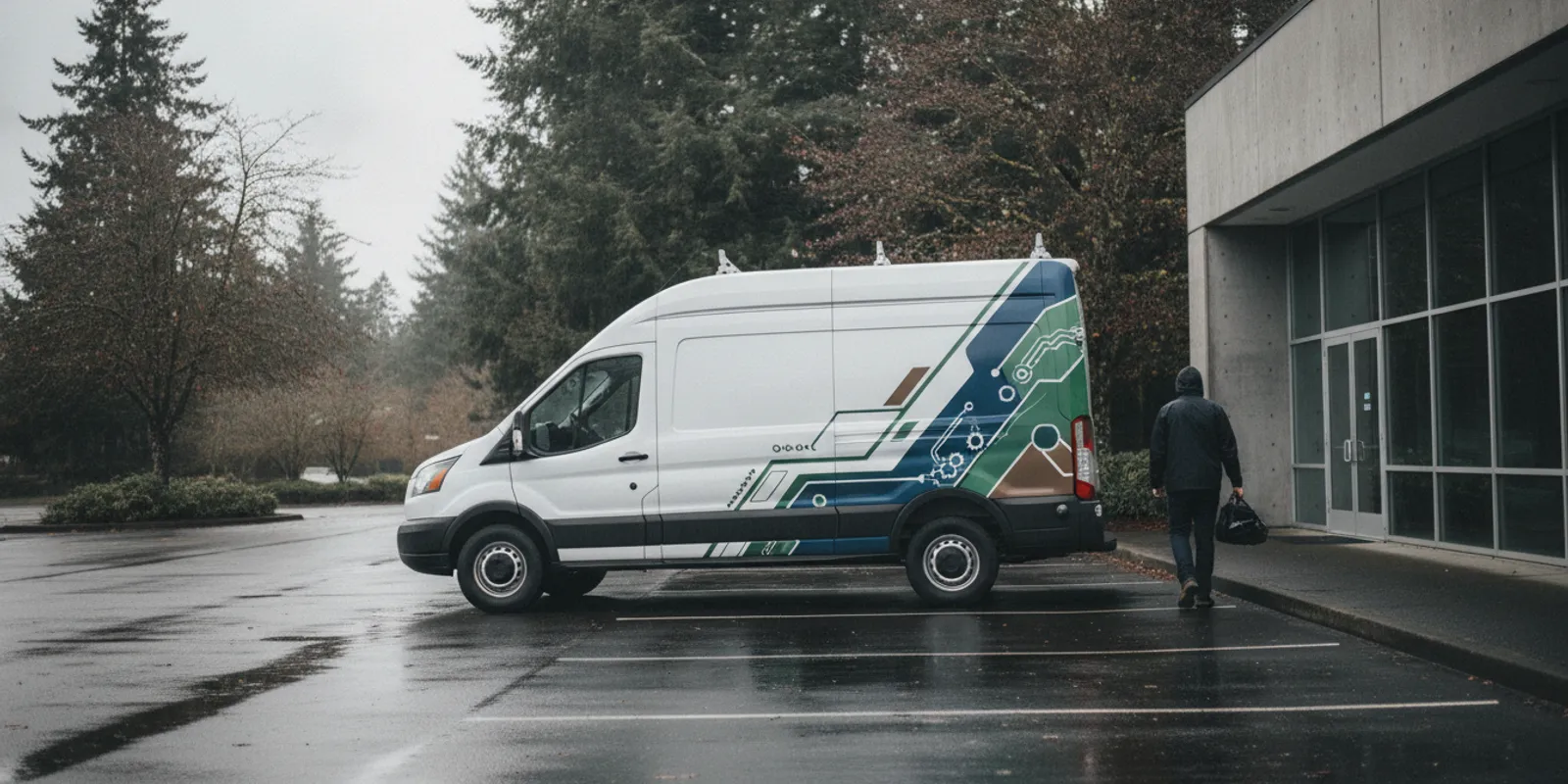
Choosing vehicle wraps Portland businesses can rely on involves more than approving an eye-catching design. Before booking installation, clarify what the quote covers, whether the vehicle is ready, how artwork will be approved, and how the work fits your schedule. A few direct questions can help you compare proposals fairly and reduce avoidable surprises.
Discuss your vehicle wrap project
APM PrintWorks is Portland’s local printer, based in Beaverton and serving businesses and organizations across the Greater Portland area. Use this guide with any prospective provider, and ask for written answers before approving artwork or reserving an installation date.
What exactly does the proposed wrap include?
Start by defining coverage. The word “wrap” can describe different amounts of graphic coverage, so ask the provider to show the plan on a vehicle-specific proof or marked-up image. A clear scope lets everyone see what will be produced and what will remain untouched.
- Which panels and surfaces are included? List the sides, hood, rear doors, roof, or other requested areas. Ask how handles, mirrors, trim, seams, and deep contours are treated.
- What is excluded? Confirm the treatment of windows, lights, sensors, hinges, and areas that should stay visible or accessible.
- Is this full coverage or partial graphics? Ask for a plain-language description and views that show every relevant side.
- Are existing graphics included? If removal may be needed, request an inspection and written clarification about whether it is included or separately scoped.
- What work is included in the quote? Check whether design preparation, printing, finishing, installation, and any agreed follow-up are itemized or bundled. Ask how a change after approval affects the proposal.
Compare the written scope with the proof. If a proposal says “complete coverage,” ask which surfaces that means for this vehicle. A diagram or labeled mockup is more useful than an informal description. Review APM’s vehicle wraps and graphics service to see the relevant offering and start a project discussion.
How will the design fit the actual vehicle?
A layout on a flat screen may not translate cleanly to a vehicle. Doors open, panels curve, and trim interrupts available space. Provide the make, model, year, and configuration, then ask whether the actual vehicle needs inspection or measurement before artwork is finalized.
- Will you verify this exact configuration? Mention racks, accessories, body variations, modifications, and unusual features.
- How will the design cross panel breaks? Ask where text, logos, and key visuals will fall in relation to seams, handles, and door edges.
- How are windows and hardware handled? Confirm which areas remain unobstructed and how the layout accounts for them.
- Can I review every relevant view? Request side, front, and rear views as appropriate. One attractive side view cannot confirm the whole layout.
- How will supplied brand files and colors be represented? Provide the best available logo and artwork files, plus brand guidance. Ask about any limitations in how the proof represents the final output.
Review the proof for spelling, contact details, proportions, panel alignment, and visual hierarchy. Check phone numbers and web addresses character by character. Ask the person responsible for your brand to approve the identified final version in writing. If the project also includes signs, APM’s custom sign options may be relevant to discuss alongside vehicle graphics.
What should you disclose about vehicle condition?
Tell the provider about repainting, repairs, peeling clear coat, rust, dents, adhesive residue, and existing graphics. Ask whether the vehicle needs an inspection before a quote is final. Do not assume graphics will conceal or correct a surface issue. Ask the installer to explain what they observe and whether it changes the proposed plan.
- Ask what condition is acceptable for the planned work and what needs separate attention.
- Request the shop’s cleaning and arrival instructions. Do not improvise with cleaning products or preparation steps.
- Ask whether removable equipment, accessories, or personal items should be taken out before drop-off.
- Photograph the exterior before handoff and note visible damage or unusual conditions.
- Agree on whom the provider will contact if inspection reveals a concern, and who may approve a change in scope or quote.
Sharing repair history and current photos early can prevent a surprise at the appointment. If the vehicle was recently repainted or repaired, give the provider the dates and details you know. Ask them to document any assumption that affects the proposal so you can decide what to do before production or installation proceeds.
Who installs the graphics, and where?
Printing and installation are separate stages. Ask who is responsible for each, where installation will happen, and whom you should contact with questions. Confirm whether you bring the vehicle to a shop or coordinate another arrangement, and ask about parking, access, and drop-off instructions.
- Who performs the installation: the provider’s team or another party?
- What location and work-area conditions are required?
- What access or site details are needed for a larger vehicle or multiple vehicles?
- How long should this particular vehicle be unavailable, based on its condition and scope?
- For a fleet, can vehicles be scheduled in phases or one at a time?
Do not assume a standard installation duration applies to every vehicle. Share which vehicles are essential, when they are needed, where they are based, and which dates are difficult for downtime. For several vehicles, APM’s fleet vehicle graphics guide can help you structure early planning. Bring a vehicle list and operating constraints to the conversation.
What rules and visibility questions should you confirm?
Before approving a layout, ask the provider which areas must remain clear for the driver’s view, lights, mirrors, registration details, or vehicle equipment. Requirements can depend on the vehicle and the specific placement. Do not treat a design proof as a legal determination. If you have a question about local requirements, confirm it with the appropriate authority. The Oregon Department of Transportation is an official state resource for transportation information; ask the agency or relevant motor vehicle authority where to find the current rule for your situation.
Put any layout limitations in the proof notes. For example, if a side window or a particular panel must stay clear, identify it before design approval. That gives the designer a defined boundary and allows your team to check the final proof against it, rather than relying on memory at installation.
How should you handle proof review and approval?
A proof is your opportunity to catch errors before production. Ask who prepares it, how revisions are handled, and what your approval signifies. Review each view, not just the most prominent side.
- Verify information. Check names, spelling, phone numbers, web addresses, and other details.
- Inspect the whole layout. Look for important elements that may land near a seam, handle, wheel, or door opening.
- Confirm the brand presentation. Compare the logo, colors, and style with approved materials.
- Ask what the proof omits. Confirm whether a roof, window, or other area is excluded or simply not shown.
- Record the final version. Make sure the provider identifies the proof being approved and records your approval before production.
When several people need to review, collect their feedback and send one consolidated set of revisions. Keep the approved proof with the written scope. If a change comes after approval, ask whether it affects artwork, production, or the quote, and approve the revised version before work continues.
How can you compare provider proposals fairly?
Compare actual deliverables rather than totals alone. Two proposals may cover different panels, design work, preparation, or installation arrangements. Use a comparison table and follow up on blank or vague answers. The goal is not to force every provider into identical wording; it is to understand exactly what each proposal assumes.
| Item | Question to ask | What to record |
|---|---|---|
| Coverage | Which surfaces and panels are included? | Full or partial coverage, specified sides, exclusions |
| Vehicle review | What details or inspection are needed? | Configuration, condition, measurements, inspection status |
| Artwork | What proof views and revisions are included? | File needs, review steps, final approval process |
| Preparation | What condition and cleaning steps are expected? | Shop instructions and issues to resolve |
| Installation | Who installs, where, and what access is required? | Location, handoff, and site requirements |
| Schedule | What is needed to confirm an appointment? | Estimate, downtime, and fleet sequence |
| Quote terms | What is included, excluded, or subject to change? | Written scope, assumptions, approval for changes |
| Aftercare | What care instructions will be provided? | Written guidance and contact for questions |
For example, one proposal might list “installation included” while another names the panels, inspection assumptions, and handoff location. Ask the first provider to clarify those details before comparing. A quote based on photographs may rely on assumptions that an inspection could change. Request the assumptions in writing so you understand what each figure covers without guessing.
Also separate confirmed facts from open questions in your notes. Mark each line “confirmed,” “pending inspection,” or “not included.” This simple record helps avoid comparing a confirmed scope with another provider’s preliminary estimate as if they were equivalent.
What should you ask about care after installation?
Before booking, ask what instructions you will receive when the vehicle is finished, when it can return to normal use, and how to clean and care for the graphics. Follow guidance appropriate to the materials and installation used rather than assuming generic advice applies.
- Ask whether any special handling is needed immediately after installation.
- Confirm which cleaning methods or products are appropriate and which to avoid.
- Ask how to inspect the finished work and whom to contact if you have a concern.
- Ask how a repair or future graphic change would be assessed.
- Keep care instructions with vehicle records and share them with drivers or fleet managers.
At handoff, compare the finished work with the approved proof and scope. Note any questions while the vehicle and project details are easy to review. For a fleet, give each driver or maintenance contact the same written care instructions and a clear contact path for questions.
What information should you prepare before asking for a quote?
You do not need finished artwork to start a useful conversation. A concise project brief helps a provider understand the job and identify what remains to be decided. Gather these details before you request proposals:
- Vehicle make, model, year, and configuration.
- Current photos of each relevant side, plus notes about modifications or existing graphics.
- Your communication goal and the audience the graphics need to reach.
- Brand files, color guidance, and the exact information to include.
- Your initial idea about full or partial coverage, while staying open to a provider’s questions.
- Number of vehicles and whether layouts should match or relate.
- Vehicle locations, access limits, and periods when downtime is difficult.
- Target dates and the person authorized to approve artwork and quote.
If your creative direction is still developing, explain what the graphics should accomplish rather than prescribing every detail. APM PrintWorks describes its approach as Dream, Plan, Create: understanding the idea, planning the project, and moving into production. You can explore the company’s creative services and bring an early concept to the discussion.
How can you plan a fleet project without disrupting work?
For more than one vehicle, decide how the vehicles will be grouped before setting dates. Start with a simple inventory that lists each unit, its configuration, home location, primary use, and any condition notes. Then identify which vehicles can be taken out of service first and which must remain available.
- Group similar vehicles. Note models and configurations that share a layout, and flag exceptions that may need their own proof.
- Choose a practical sequence. Consider vehicle availability, operating priorities, and where the vehicles can be handed off.
- Assign one approval lead. Give the provider a clear contact for consolidated feedback and decisions.
- Confirm dates in stages. Ask what must be complete before each appointment, including proof approval and vehicle inspection.
- Keep a status record. Track each unit’s scope, proof version, approval, appointment, and handoff notes.
A small fleet might start with one representative vehicle, then use the approved design as a reference for the remaining units. Before doing that, ask how differences in body style or equipment will be checked. A pilot can make the approval process clearer, but it does not remove the need to confirm each vehicle’s configuration and condition.
How can you make the design useful on the road?
Before artwork begins, agree on the main job the graphics should do. A vehicle may need to identify a business, make a service easy to remember, or create a consistent look across a fleet. Trying to give every detail equal prominence can make the design difficult to scan. Tell the provider what a passerby should notice first and what action, if any, the message should invite.
Prepare a short content hierarchy. Put the essential identity or message first, then decide which supporting details are necessary on the vehicle itself. Verify every contact detail and use only information your organization wants to make public. If the layout includes a web address or phone number, check that it is current and legible in the proof. Consider whether the vehicle will be viewed while parked, moving slowly, or mainly at a work site; describe the real use rather than assuming one layout fits every setting.
- Identify the primary audience and the places or situations where they will see the vehicle.
- Choose one main message and separate it from details that can be omitted or presented elsewhere.
- Provide current, approved brand files and identify any elements that must remain unchanged.
- Ask how the design will adapt if vehicles have different body styles or equipment.
- Review the layout at the scale and angles shown in the proof, not only as a close-up on a screen.
This discussion does not replace the provider’s design process. It gives the team a clear brief and makes proof feedback more specific. Instead of saying that a layout “does not feel right,” you can point to a practical issue: the main message is split by a door seam, the contact detail is too prominent, or a required part of the brand is missing. If you want a broader understanding of how vehicle graphics can fit a fleet program, see APM’s vehicle fleet graphics planning resource.
Which quote assumptions should you resolve before approval?
A proposal is easier to compare when it distinguishes what is confirmed from what still depends on inspection, artwork, or coordination. Ask the provider to identify the assumptions behind the scope and quote. This is especially useful when you are working from photos or have not yet decided how much of the vehicle to cover.
- Vehicle details: Confirm which make, model, year, body configuration, and accessories the proposal is based on.
- Condition: Ask whether the provider has inspected the surface or is relying on the information and photos supplied so far.
- Artwork: Clarify what design preparation and proof review are included, and how you should request revisions.
- Coverage: Identify included panels, excluded areas, and any surfaces that require a separate decision.
- Installation: Confirm who will do the work, where it takes place, and what must be ready at handoff.
- Changes: Ask how an added vehicle, revised design, newly discovered condition, or changed schedule will be reviewed and approved.
These questions are not a request for a guaranteed outcome before the details are known. They help you understand what the current proposal does and does not establish. For instance, a quote based on one vehicle configuration may need a separate review if a second unit has a different roof, rack, or door arrangement. Record what will trigger a revised scope, who may approve it, and how the provider will communicate before proceeding.
Keep the current quote, proof, vehicle notes, and approval messages together. If several people at your organization participate, give them the same version to review. This reduces the chance that someone approves an outdated proof or works from a different understanding of the included coverage. For an initial discussion with the local team, APM’s contact page is the direct route to share project details.
When are you ready to book installation?
Before reserving a date, confirm that the essential decisions are recorded. You should have a written scope identifying the vehicle and coverage, an approved proof, an agreed quote, and a clear understanding of preparation and handoff.
- The provider has accurate vehicle details and knows about condition issues.
- The proof shows the relevant views and the correct approved design.
- The proposal describes coverage, production, and installation responsibilities.
- The schedule accounts for vehicle availability, location, and access.
- You know what to do before drop-off and which care instructions to follow afterward.
- The right person has approved the final proof and quote.
If a point remains unclear, ask before booking. A short clarification is easier than resolving different expectations after the vehicle arrives. When you are comparing local options, APM PrintWorks is a Portland-area printer based in Beaverton, with vehicle graphics among its large-format services.
Ask APM PrintWorks about your wrap plan
Frequently Asked Questions
What should I send a vehicle-wrap provider first?
Send the vehicle’s make, model, year, configuration, and clear exterior photos. Include your goals, brand artwork if available, number of vehicles, preferred timing, and notes about repairs, modifications, existing graphics, or access limits.
Should I approve a design before the vehicle is inspected?
You can discuss ideas and review an early concept, but ask whether the actual vehicle needs inspection or measurement before final artwork approval. Configuration and condition can affect the layout and plan, so confirm which proof is final and approve it in writing.
How long will installation take?
There is no single schedule for every vehicle and scope. Ask for an estimate based on your vehicle, coverage, condition, and installation arrangement, then confirm how long you should plan to be without the vehicle.
What should a vehicle-wrap quote include?
Ask it to identify the vehicle and coverage, design and proof process, preparation expectations, installation responsibilities, schedule assumptions, and exclusions. Any condition or inspection assumption should be clear in writing.
How do I choose a local provider in Portland?
Compare written scopes and proofs, ask who installs the graphics, and confirm how the provider will coordinate the vehicle and schedule. APM PrintWorks is a Portland-area local printer based in Beaverton; contact the team to discuss vehicle graphics and project details.
Start a conversation about your vehicle graphics
With a clear scope, a vehicle-specific proof, and an agreed installation plan, your team can make an informed decision and keep the project organized from the first conversation through handoff.