
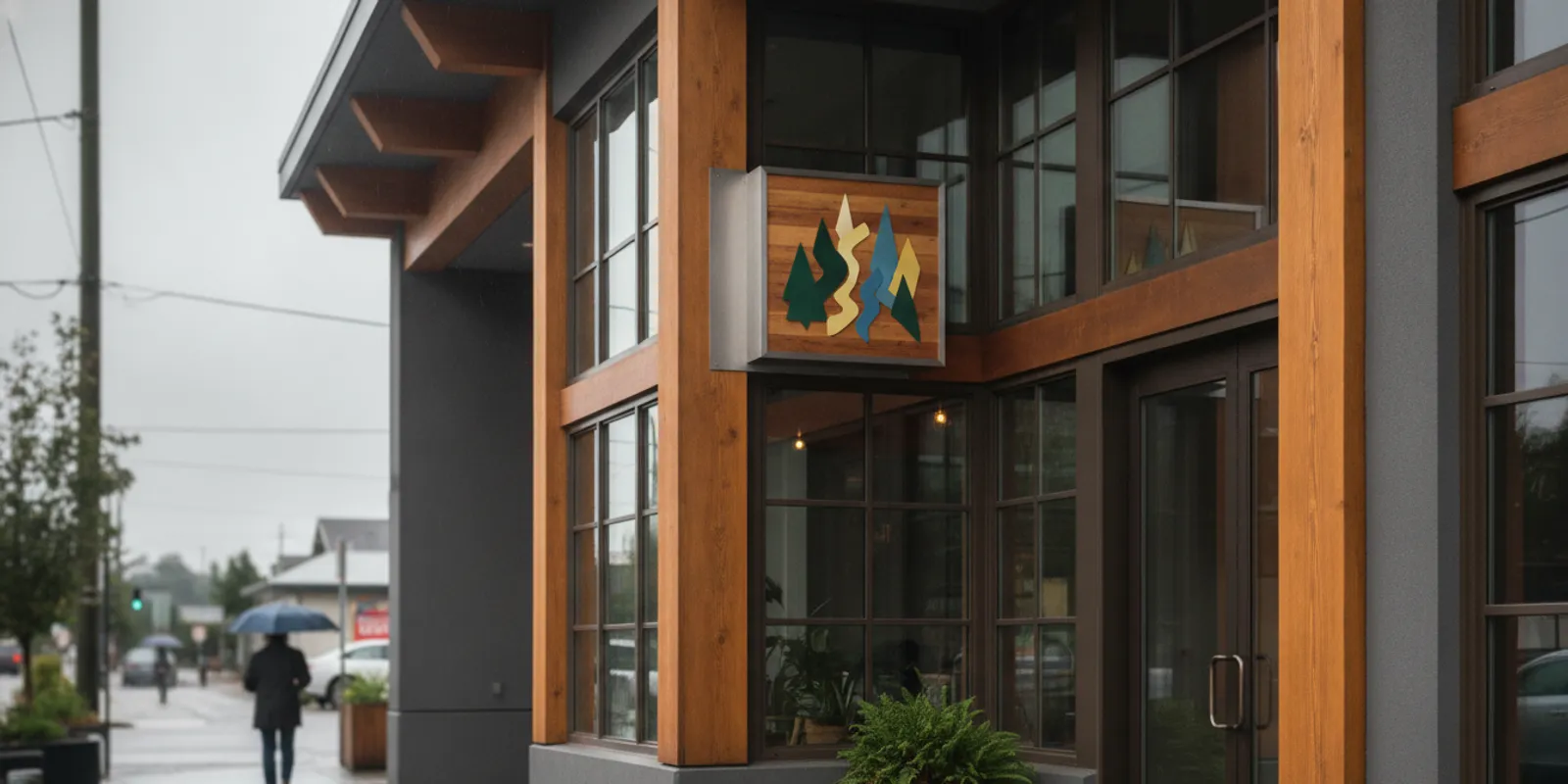
Planning custom signs Portland businesses can use starts with a question: what should a person understand or do when they see the sign? A new location may need identification, directions, safety information, or a way to introduce a service area. Define that job first, then match the format, message, placement, and installation plan to it.
Talk through your sign project
APM PrintWorks is a local Portland-area printer based in Beaverton. Its sign and large-format capabilities can support a project from early planning through production, with installation support available for large-scale work. The guide below is for business owners, property teams, and organizations preparing a new location or extending service into another area. It is not a substitute for checking site permissions, applicable codes, or property requirements.
What should a custom sign do at a new location?
Start by writing one plain-language purpose for each sign. A sign may identify a business, help visitors find an entrance, point drivers toward a destination, communicate a safety instruction, or make a temporary campaign visible. These are different tasks. Combining too many into one sign can make the message hard to scan, especially when people are moving.
Think about the audience and its situation. A first-time visitor approaching on foot has more time to read than a driver passing a property. A delivery person may need an entrance or loading direction, while someone standing near a service counter may need a short instruction. Describe who needs the information, where they will be, and what they should do next.
For a new location, list the moments when people might need help:
- Before arrival: recognize the business or turn toward the property.
- At the property edge: identify an entrance, parking area, or route.
- At a decision point: choose between two paths or find a specific area.
- At the destination: confirm they have reached the right place or see an important notice.
That sequence helps reveal whether you need one prominent sign or a coordinated group. A single sign may be enough when the entrance is obvious. A site with several buildings, access points, or visitor groups may benefit from a small system with consistent wording and visual treatment. Browse APM’s custom signs and sign solutions as a starting point for discussing the right format.
How should you map the location before choosing a format?
Walk the site as if you had never been there. Note the approaches people use, the point at which the sign first becomes visible, and the places where a person must make a choice. If the project covers a service area rather than one property, map the places where a sign can be seen and the audience that encounters it. A basic sketch or annotated site photo can make a conversation with a print partner more concrete.
Record conditions that can affect the sign’s job. Consider viewing distance, direction of approach, likely viewing time, lighting, nearby objects, and competing visual information. A wall sign may be hidden by landscaping from one direction. A window graphic may be clear from the sidewalk but difficult to see through reflections at a particular time of day. An outdoor sign may face wind or weather and need a material and mounting discussion suited to the site.
Do not assume that a sign can be placed wherever it looks most visible. Identify who controls the property and ask about permitted sign locations, attachment methods, and review or approval steps. For a leased space, ask the property manager about sign criteria before developing final artwork. If the site is within a jurisdiction or property type with specific requirements, contact the appropriate local authority or owner to confirm them. Rules can depend on the exact location and sign type, so avoid basing a production decision on a general online summary.
When signs guide people through a facility, make the route usable for the people who need it. Consider clear wording, legible contrast, consistent names for destinations, and whether the information is visible along the actual path. Accessibility requirements depend on sign purpose and setting; consult the relevant authority or qualified professional for project-specific direction. The U.S. Access Board provides federal accessibility information that can help you identify topics to investigate.
For outdoor properties where a freestanding or directional format may fit, compare the needs of site signs and yard signs with the actual viewing location and property conditions. The sign type alone does not settle placement, permission, or mounting questions; include those details in the project brief.
Which sign format fits the job?
Choose a format after you know the purpose, viewing conditions, and likely duration. A permanent exterior identification sign has different demands from a temporary event message or an interior directional sign. A sign on a window, wall, post, or portable support also interacts differently with the site. Use this comparison to organize the conversation, not as a guarantee that a format is suitable for every property.
| Sign option | May fit when | Plan around | Useful details to bring |
|---|---|---|---|
| Site sign | Visitors need to identify or navigate a property | Approach, viewing distance, site conditions, placement permission | Site photo, dimensions, location, intended message |
| Yard sign | A compact message needs to be seen outdoors at a specific place | Visibility, placement approval, exposure, support or mounting needs | Quantity, locations, display period, artwork |
| A-frame sign | A portable sign is needed near a business or activity | Where it can stand, pedestrian clearance, storage, and who moves it | Use schedule, site rules, message on each side if applicable |
| Window graphic | A storefront window can identify, inform, or add visual treatment | Glass area, visibility from each side, existing graphics, light and reflection | Window measurements, photos, desired coverage, viewing direction |
| Banner | A temporary or campaign message needs a broad display area | Attachment points, display period, wind exposure, and removal | Mounting location, size range, dates, artwork |
APM’s A-frame sign options, window graphics, and banner printing are useful pages to review when comparing these approaches. Each project still needs a conversation about its particular environment and requirements.
How should you plan the message and artwork?
Give the sign one main message. A person should be able to tell what matters without sorting through a paragraph. Use a short headline or identifier, then add only the supporting information needed for the sign’s purpose. If you need to explain a service in detail, use the sign to direct people to a person, location, or next step rather than cramming the explanation into the design.
Organize content in order of importance. Business or location identification usually needs to be immediately recognizable. Directions should make the destination and action clear. A safety or facility notice should present the essential instruction without distracting secondary copy. Review every line and ask whether removing it would make the sign less useful. If not, consider removing it.
Artwork should be designed for its viewing conditions, not merely enlarged from a layout made for another use. Consider how the scale, type, contrast, color, and surrounding environment work together. Provide the designer with the intended size or a size range, viewing distance, placement photo, and any required brand assets. If you do not have final dimensions, say so and ask what measurements are needed before production.
Be deliberate with logos, phone numbers, web addresses, and other details. Confirm that the information is current and that you have permission to use supplied artwork. Provide a clean, high-quality file when available, and tell the print partner if you have only a low-resolution preview or a file that may need review. Do not rely on a screenshot as final art without checking whether it can support the intended output size.
For a group of signs, make a small content schedule. Record each sign’s location, purpose, wording, size, and version. This reduces the chance of inconsistent names or outdated contact details appearing across the site. It also makes the proof review more systematic: instead of asking whether the artwork looks attractive in isolation, you can check that each sign serves its assigned purpose.
What should you prepare for material and installation planning?
Material choice depends on where a sign will be displayed, how it will be used, how long it needs to serve, and how it will be attached. There is no single material that suits every exterior, interior, temporary, or permanent application. Describe the environment and intended use to the print provider, then compare suitable options rather than choosing on appearance alone.
For outdoor work, report exposure to weather, direct sun, wind, moisture, or frequent handling as relevant. For indoor signs, explain whether people will view them close up or at a distance and whether the surface is a wall, glass, door, or another location. For signs that may be moved, reused, or replaced, explain who will handle them and how often. These details help the production team discuss durability and installation considerations with you.
Installation planning begins with the surface and the people responsible for access. Identify whether the sign will be mounted on a wall, window, fence, post, vehicle, or another structure. Share site photos and any known restrictions. If the work requires access equipment, coordination with a property owner, or a scheduled installation window, raise that early. Do not assume that a sign provider or property manager has already secured permissions on your behalf.
For a project involving several locations, create a location list and name a contact at each site. Check that each address, placement, and version is correct. If installation needs to happen in stages, note the preferred order and any operational constraints. APM PrintWorks provides installation support for large-scale projects, so tell the team whether the request is production only or includes installation planning.
Businesses planning safety communication can also review APM’s safety labels for facilities. Describe the exact instruction or hazard information you need to communicate and seek the appropriate internal or regulatory review for the specific setting. Printing a sign does not by itself establish that its content satisfies a particular code or workplace requirement.
How can you plan a new service area or multiple locations?
When a business expands beyond one address, begin with a simple map of the area and a list of locations or audience touchpoints. For each location, identify the sign’s role: identification, direction, promotion, or information. Then separate the elements that should stay consistent from those that may vary. A shared name, visual treatment, and tone can help signs feel connected, while directions and site details need to match each place.
Group locations by practical conditions, not just by geography. One site may need a storefront graphic, another a directional sign, and a third a temporary banner. A uniform format can be efficient only when it works at each site. Capture measurements, photos, access constraints, property contacts, and timing for every location before asking for a consolidated quote.
Set a version-control method before artwork review. Use a clear identifier for each location and keep the approved copy and art together. Decide who can approve changes, and make sure the person reviewing knows whether they are checking wording, placement, colors, or all three. If there are multiple reviewers, collect feedback in one place to reduce conflicting revisions.
For a campaign or rollout, plan what happens after the initial installation. Will locations open on different dates? Might hours, services, or contact details change? Does the sign need to be reused, updated, or removed at a defined point? Answers can influence the format, quantity, production schedule, and installation sequence. Avoid assuming that every location needs the same quantity or the same message.
Keep a record of sign dimensions, artwork versions, and placement notes after the project is complete. If a location changes or a sign needs replacing, those records can make it easier to explain what should be updated and what should remain consistent. Confirm that the saved version reflects the approved final art.
What should you include when requesting a quote?
Custom sign projects vary by dimensions, materials, quantity, artwork, site conditions, and installation needs. A clear brief helps a print provider understand the scope and identify what still needs to be decided. It can also help you compare options on the same basis. Prices and schedules should be confirmed for the actual project rather than inferred from a generic example.
Before requesting a quote, gather the following:
- Purpose: What should the sign help someone see, know, or do?
- Audience and viewing context: Who will see it, from where, and while moving or standing?
- Location: Address, site photos, intended placement, and property contact.
- Format and size: Preferred type if known, actual measurements, or a request for guidance.
- Quantity: Number of signs and any differences among versions or locations.
- Environment: Indoor or outdoor use, exposure, surface, handling, and anticipated duration.
- Artwork: Logo and brand files, draft copy, preferred colors, and any required review.
- Installation: Production only or installation support, access constraints, and preferred sequence.
- Timing: The date the signs need to be ready and any milestones that affect it.
- Approvals: Who confirms property permission, content, design, and final proof?
Mark unknowns as unknowns. If you have not measured the wall or confirmed a landlord’s criteria, say that in the brief. A consultative planning process can help surface decisions before production, but estimates and recommendations depend on the project details. APM PrintWorks follows a “Dream, Plan, Create” approach: share the goal, work through the requirements, and then move into production planning.
To start a project discussion, send the available details through the APM PrintWorks contact page. Include the location, purpose, quantity, desired timing, and photos if you have them. You do not need to have every design decision settled to ask what information would help move the project forward.
What should you check before approving the proof?
A proof review is a chance to catch errors before production. Check the content against the approved brief, not from memory. Confirm spelling, names, addresses, dates, directions, phone numbers, and web addresses. Verify that each version is assigned to the correct site and that the quantity and size match the order details.
Review the design in context. Compare the sign’s intended placement and viewing distance with the proof. Is the main message easy to find? Is the hierarchy clear? Will nearby objects or existing signs compete with it? If the sign is part of a series, compare the versions side by side for consistent identity and accurate location-specific information.
Confirm the production details that matter for your project: dimensions, material, finish where relevant, orientation, quantity, and any installation scope. If a detail is not visible on the proof, ask the provider to confirm it in writing. Check the final file and instructions from the print partner, and do not assume a visual approval automatically confirms every commercial or installation detail.
Assign one person to provide final approval where possible. That person should have authority to confirm the wording, design, locations, and project details. Keep the approved proof and the final sign list together. This gives the team a reference if questions arise during a multi-location rollout or if a replacement is needed later.
Request help planning your sign specifications
Frequently Asked Questions
How do I start planning signs for a new business location?
Write down what visitors need to recognize or do, then walk the site and note approaches, decision points, and possible placements. Take photos, measure the available areas if possible, and check property sign requirements before finalizing the design. A brief with purpose, location, quantity, timing, and artwork is a useful basis for a quote conversation.
Can one sign work for identification and directions?
Sometimes, but the messages need a clear hierarchy and enough space to remain easy to scan. If the sign must serve people at different points or explain several routes, separate signs may be clearer. Map the visitor journey and test whether the main action remains obvious at the intended viewing distance.
What information affects the quote for custom signs?
Dimensions, quantity, sign format, material, artwork readiness, location conditions, and installation needs can all affect a project quote. Timing and the number of versions or locations may also matter. Provide what you know and identify what remains undecided so the provider can explain what additional details are needed.
Do I need approval before putting up a business sign?
Requirements depend on the property, sign type, and jurisdiction. Ask the property owner or manager about site rules and contact the relevant local authority for applicable requirements. Confirm permissions and approvals before production or installation rather than assuming a general rule applies to your location.
Can a printer help with sign design and installation?
Available support varies by provider and project. APM PrintWorks has an in-house creative and design team and installation capabilities for large-scale projects. Share your goal, site details, and the kind of support you need so the team can discuss what fits the request.
Start a conversation about your Portland sign project
With a clear purpose, site information, and review plan, Portland businesses can make better-informed decisions about custom signs for a new location or service area.