
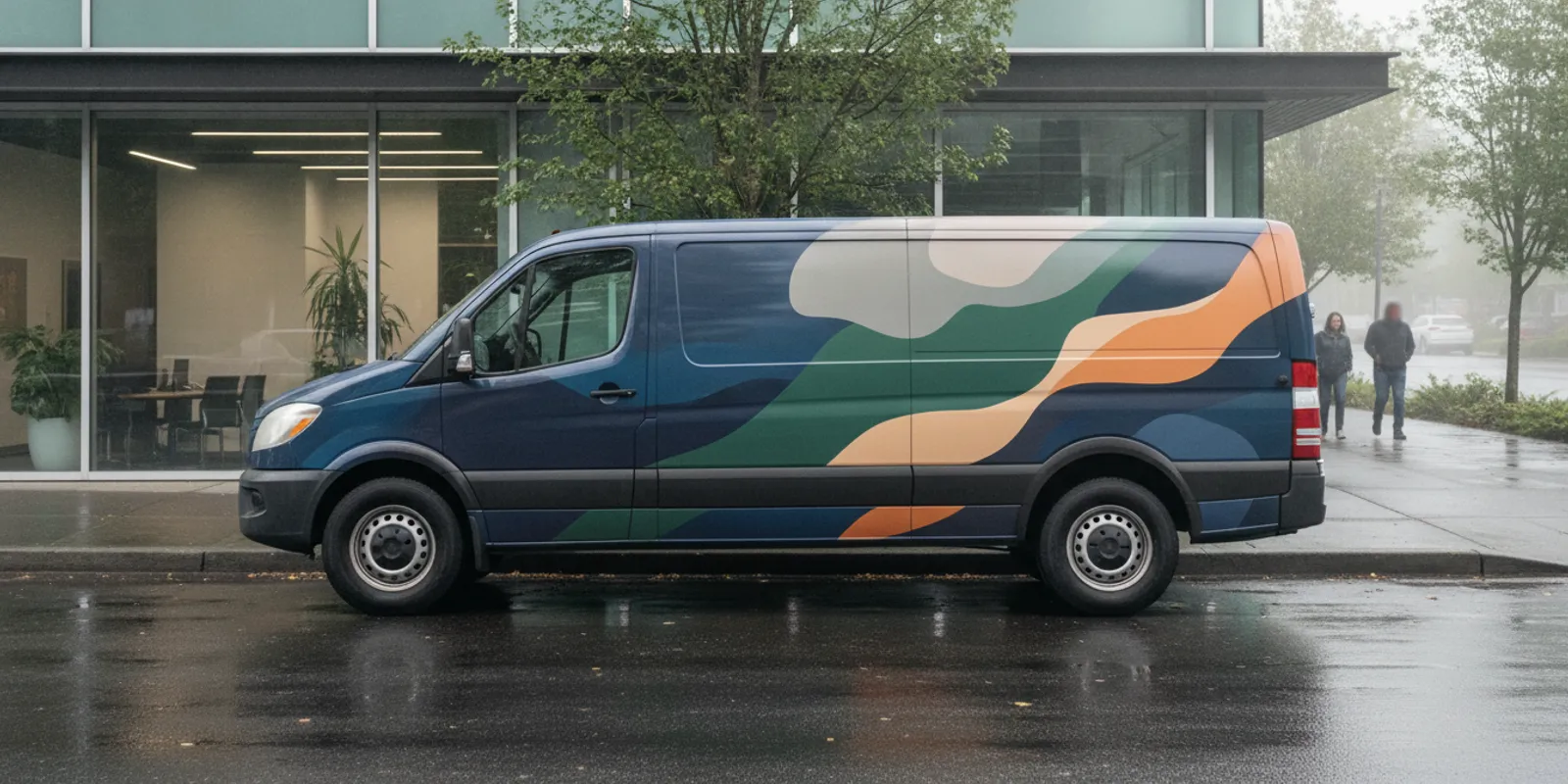
Do vehicle wraps damage paint? In many cases, a professionally installed wrap can be removed without harming sound, original factory paint. But a wrap is not a guarantee against damage: the vehicle’s condition, film selection, installation, care, and removal all matter. Fleet owners can reduce avoidable risk by checking the paint before work begins and agreeing on a careful process with an experienced vehicle graphics provider.
Discuss your vehicle graphics project
Can a vehicle wrap damage paint?
A wrap is a film applied over a vehicle’s exterior panels. On a vehicle with sound, well-bonded factory paint, the film usually sits on the paint surface and can be removed later. The United Application Standards Group’s overview of vehicle-wrap paint effects says professionally installed wraps generally do not damage factory paint in normal conditions and can provide a barrier against some exposure, including UV rays. That is a general statement, not a promise about every vehicle or every removal.
Risk increases when paint is already failing, a panel has been repainted, or the film is installed or removed improperly. A wrap may cover a flaw temporarily, but it cannot repair weak paint or make an unsuitable surface safe. If paint lifts when film is removed, the cause may be an existing adhesion problem, prior bodywork, age, or the removal method. It is important to assess the specific vehicle rather than assume that either all wraps are harmless or all wraps cause damage.
For a fleet, assess each vehicle individually. Two vans from the same model year can have different paint histories and storage conditions. A vehicle’s service records, body repairs, and visible condition can be more useful than its age alone.
What does the vehicle’s paint condition tell you?
Film adheres to the surface it is applied to. Paint that is clean, intact, and firmly bonded is a more appropriate starting point than paint that is peeling or visibly compromised. Before approving a wrap, look closely at the hood, roof, door edges, bumpers, and any areas that have been repaired. Bring concerns to the installer before the vehicle is scheduled.
- Original factory finish in good condition: This is generally the most predictable surface. The installer should still inspect it and explain any limitations.
- Repainted panels: Ask when and how the repair was completed and whether the paint has fully cured. Repaint quality and adhesion can vary, so the installer may recommend a test or may advise against wrapping that section.
- Peeling, flaking, or bubbling paint: These are warning signs. Film removal can pull away paint that is not firmly attached. Address the surface problem before considering a wrap.
- Rust, dents, deep scratches, or rough repairs: These can affect how film lays and adheres. They may remain visible beneath the graphic, and the surface may need repair first.
- Existing decals, residue, or coatings: Tell the provider what is on the vehicle. Different surface treatments may affect cleaning, adhesion, or removal.
| Surface condition | What it may mean for a wrap | What to do before approval |
|---|---|---|
| Sound original factory paint | Often the most predictable surface, though inspection is still important. | Ask the installer to check the full vehicle and explain any limits. |
| Repainted panel | Adhesion and cure can vary with repair quality and timing. | Share repair details; ask whether the panel needs a test or should be excluded. |
| Peeling or bubbling paint | Film removal may lift paint that is already loose. | Resolve the surface issue or get professional guidance before applying film. |
| Rust, deep scratches, or rough repairs | Surface texture and damage may show through or affect adhesion. | Ask whether repair is needed before wrapping. |
| Unknown coating or residue | Contamination or a surface treatment may interfere with adhesion. | Identify what is on the vehicle and let the installer assess it. |
Take dated photographs before the vehicle enters production, especially around existing chips, scratches, repaired panels, and edges. A written condition review helps everyone distinguish pre-existing issues from changes noticed later. For a group of vehicles, use the same inspection checklist and retain a separate record for each one.
Use a repeatable pre-wrap inspection
A simple, consistent inspection makes it easier to discuss exceptions before the design and installation plan are locked. Start with a clean, well-lit vehicle. Walk around it in the same direction each time, then review areas that are easy to overlook: door jamb edges, around handles, mirror housings, bumper corners, and the transitions between painted and unpainted trim. Photograph both the full panel and a closer view of each concern. Label the images by vehicle and panel so the provider can match them to the inspection notes.
- Record the vehicle identity. Note its unit number, make and model, and any known paint or collision work. Do not rely on fleet age as a substitute for an individual review.
- Mark concerns by location. Describe whether you see a scratch, chip, rough patch, bubbling, peeling, rust, adhesive residue, or a repaired area. Avoid trying to conceal or scrape away a questionable spot before the assessment.
- Share repair history where available. If a panel was repainted, provide the approximate date and any repair documentation. The installer can use those details to decide whether to inspect further, test a small area, exclude the panel, or recommend that a bodywork professional assess it.
- Agree on exceptions in writing. Identify panels that are approved, excluded, or pending evaluation. This is particularly useful when a fleet has several similar vehicles with different paint histories.
This process does not predict the outcome with certainty. It does create a clear record and gives the installer an opportunity to flag a risk before film is applied. If a concern cannot be assessed from photographs, arrange an in-person review rather than treating the photo as approval.
How do film, installation, and removal affect the result?
Film is not one uniform material. Products differ in construction, intended use, conformability, and removal characteristics. The right choice depends on the vehicle, the graphic, the expected service conditions, and the project plan. Ask the provider which film is proposed and whether it is intended for the particular application. Avoid choosing based on appearance alone.
Installation takes preparation and control. The vehicle should be cleaned and the surface checked before application. Dust, wax, oils, and other contamination can interfere with adhesion. Applying film across complex curves, seams, recesses, or damaged paint also requires judgment. Skilled installation helps limit avoidable problems, but it cannot correct a weak substrate or guarantee that every panel will be suitable.
Removal is a separate stage, not simply the installation process in reverse. Film that has been in place for a long time, exposed to weather, or applied to a repaired surface may behave differently from newer film on original paint. The removal professional should select a method appropriate to the film and vehicle, work carefully, and pause if paint appears to be lifting. Do not assume that a single technique is right for every panel.
Plan removal before installation
It is useful to discuss removal when the project is being planned, not only when the fleet is ready for a refresh. Ask who should perform the removal, what the provider recommends for the particular film, and how the vehicle’s condition or exposure could change the process. Keep the film product details, installation date, and care instructions with the vehicle records. These details give a future service provider useful context if the original project team is not handling removal.
Before removal begins, review the original condition photos and inspect the wrap for lifting, cracking, or areas that have been repaired since installation. Confirm which panels are in scope and whether any known repaint or paint failure needs special attention. A professional may work in sections, checking the exposed surface as the film comes away. If paint starts to lift or the surface behaves unexpectedly, stopping to reassess is safer than continuing with the same approach across the whole vehicle.
After the film is removed, inspect the finish under good light and compare it with the earlier documentation. Residue, color differences between covered and uncovered areas, or a previously hidden blemish can become visible. Those observations do not automatically prove that the film caused damage; they need to be considered alongside the prior condition and the panel’s history. If the result is unclear, document it and ask the removal provider or a qualified bodywork professional to evaluate the surface before attempting a repair.
APM PrintWorks provides vehicle wraps and custom graphics as part of its commercial printing work. A useful project conversation starts with the vehicle’s condition and intended use, not only the artwork. The team can review the scope and discuss the production and installation considerations for the project.
What can a wrap protect, and what can’t it do?
A wrap can act as a layer between the original finish and some day-to-day exposure. Depending on the film and coverage, it may reduce direct contact with sunlight, minor surface abrasion, or routine grime. The protection varies with material, installation, coverage, exposure, and maintenance. A wrap does not make a vehicle immune to rock impacts, deep scratches, corrosion, collisions, or damage from neglect.
Coverage matters too. A full wrap covers more painted surface than a partial graphic, but neither option protects every edge or hidden area. Areas left uncovered remain exposed. Film can also show wear, staining, lifting, or damage over time. Treat it as a finish with its own care needs, not as permanent armor.
It is also not a substitute for paint repair. If a panel has failing paint, applying film may hide the appearance temporarily without fixing the bond beneath it. When that film is later removed, the underlying issue may be more noticeable. Ask for a recommendation on whether a panel should be repaired, excluded, or evaluated by a bodywork professional before the wrap proceeds.
How should a fleet owner care for wrapped vehicles?
Follow the film manufacturer’s care guidance and the installer’s instructions. They should explain when the vehicle can be washed after installation, which cleaning methods are suitable, and what to avoid. As a general habit, remove dirt and contaminants before they remain on the surface for an extended period, and inspect the wrap periodically.
- Use a gentle cleaning method recommended for the film, with clean materials that will not scratch the surface.
- Avoid directing high-pressure water at seams, edges, or lifted areas unless the installer confirms the method is appropriate.
- Do not use abrasive tools or harsh chemicals without checking product guidance first.
- Pay attention to edges, corners, and high-contact areas. Ask the installer how to handle a loose edge rather than pulling at it.
- Record damage or lifting promptly and contact the provider for advice before attempting a repair.
- When possible, park in a sheltered area to limit prolonged exposure to the elements.
For a fleet, make care instructions part of the vehicle handoff. Give drivers a short, consistent checklist and tell them where to report damage. Early attention to a small lifting area may prevent it from spreading, while unapproved repairs can complicate later service.
Make upkeep workable for drivers
A care plan only helps if drivers can follow it during a normal workday. Keep the instructions brief and specific to the chosen film. For example, tell drivers what to do after noticing a lifted corner: photograph it, record the vehicle number and location, and notify the fleet contact. Make clear that they should not pull at the film or apply an unapproved adhesive. This turns a vague instruction to “look after the wrap” into an observable, repeatable action.
Choose a practical inspection rhythm based on vehicle use and the provider’s recommendations. A vehicle used on dusty work sites may need more frequent attention than one used for short urban routes. During routine fleet checks, note visible edge lifting, tears, stains, or impact damage and compare issues over time. Keep records of cleaning guidance and any service actions with the vehicle file. A record can help the fleet manager spot recurring trouble areas and ask a more focused question of the installer, without assuming every mark points to a paint problem.
What should you ask a vehicle graphics provider?
Before authorizing production, ask questions that uncover assumptions about surface condition, materials, care, and removal. A reliable discussion should make clear what is included, what needs attention, and what the provider cannot guarantee.
- Will you inspect each vehicle? Ask how the provider records paint condition and what findings could change the plan.
- What film is being recommended, and why? Ask whether it fits the intended vehicle, coverage, and use, and request the relevant manufacturer care information.
- How will you handle prior repairs or failing paint? Get a clear answer about whether to test, exclude, repair, or decline work on an affected panel.
- What does installation include? Confirm surface preparation, coverage boundaries, treatment of edges and recesses, and who performs the work.
- What removal approach do you recommend? Ask how age, exposure, or repaired paint could affect removal and whether any areas carry added uncertainty.
- What care instructions and support will we receive? Clarify how to clean the wrap, report a concern, and arrange an evaluation if an edge lifts.
- What is the project price and schedule? Request a written quote based on vehicle count, condition, coverage, artwork, materials, and installation needs. Ask when the provider can confirm production timing.
A local conversation can make vehicle access, inspections, and installation coordination easier. APM PrintWorks serves businesses and organizations in the Greater Portland area from Beaverton, and its broader commercial printing solutions include large-format projects. For other coordinated visual needs, review its custom signs and window graphics offerings.
What affects wrap pricing and turnaround?
There is no dependable universal price or schedule for a vehicle wrap. A quote depends on the vehicle’s size and shape, how many vehicles are involved, full or partial coverage, film choice, artwork readiness, surface condition, and installation requirements. Repairs, removal of an existing graphic, or special coordination can change the scope. Ask for the estimate to separate the major project assumptions so your team can compare options on the same basis.
Turnaround also depends on the design and approval process, material availability, vehicle inspection, production, and installation scheduling. A multi-vehicle fleet may need a phased plan to keep vehicles available for operations. Share any dates that matter early, and ask the provider to identify milestones for artwork approval, vehicle drop-off, installation, and pickup. Do not treat a broad estimate as a confirmed completion date until the project details and schedule are agreed.
APM PrintWorks works on custom projects, so contact the team with vehicle details and goals for a project-specific quote and timing discussion. Include make and model, vehicle count, photos of the paint, desired coverage, and any existing graphics. That information supports a more useful initial conversation than asking for a single price without a defined scope.
Request a vehicle wrap project discussion
Frequently Asked Questions
Will removing a wrap pull off factory paint?
On sound, properly bonded factory paint, professional removal is generally intended to leave the finish intact. No one can guarantee that outcome for every vehicle: prior repairs, paint failure, film age, exposure, and removal technique can affect the result. Have the vehicle inspected and discuss known paint issues before work begins.
Can a wrap be installed over a repainted panel?
Possibly, but the answer depends on the quality, age, and condition of the repaint and whether it has cured fully. Tell the installer about the repair and ask whether the panel needs an inspection or test. A provider may recommend leaving that area uncovered or addressing the paint first.
Does a wrap prevent scratches?
A wrap may reduce some minor surface contact on covered areas, but it is not a guarantee against scratches or impact damage. Deep scratches, chips, collisions, and damage to uncovered areas can still reach the paint. Ask what protection is realistic for the chosen material and coverage.
How can I tell whether my fleet vehicles are ready?
Inspect the paint for peeling, bubbling, rust, deep scratches, and previous repairs, then share clear photos and vehicle histories with the provider. A professional inspection can help determine which vehicles or panels are suitable, but a quick visual check is not a substitute for reviewing questionable paint in person.
How much does a fleet wrap cost, and how long does it take?
Price and timing depend on the vehicles, coverage, artwork, materials, condition, and installation plan. There is no single figure that applies to every fleet. Request a written quote and schedule after the provider reviews those details and confirms the production plan.
Plan your vehicle graphics project with APM PrintWorks
For the best chance of preserving a vehicle’s finish, begin with an honest condition assessment, choose an appropriate film and experienced installer, and follow the care and removal guidance for that specific project.