
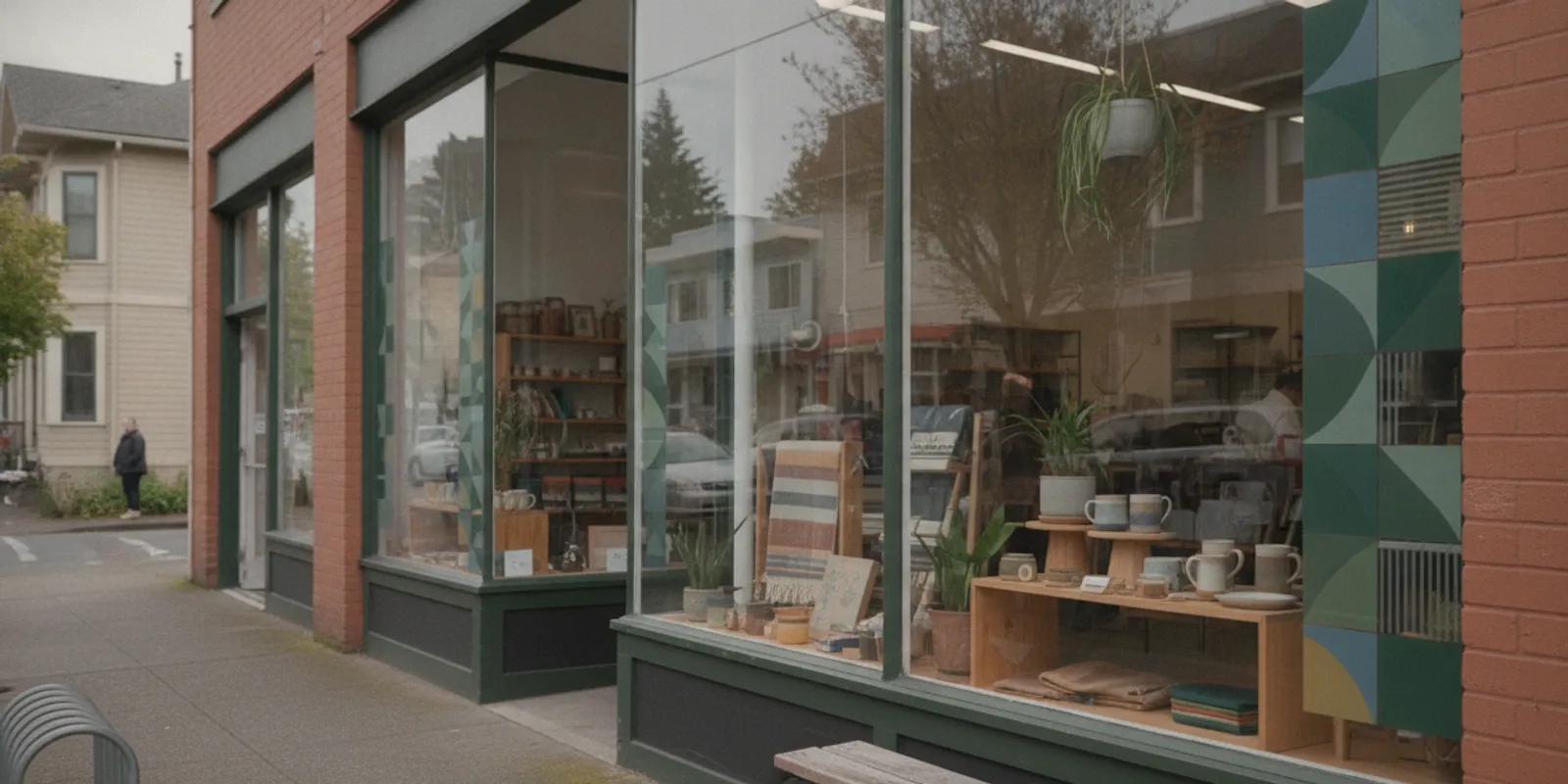
Good store window design helps a passerby understand what a business offers and gives them a reason to look closer. For a Portland-area business, the right window treatment starts with a clear goal, a realistic view of the storefront, and a plan for how the display will change over time. Before choosing graphics or requesting a quote, consider the audience, message, glass, sightlines, and installation conditions.
Talk through your window project
What should store window design accomplish?
Begin by deciding what a person should notice or do. A window might introduce a new location, identify a service, highlight a seasonal offer, reinforce a brand, or make a storefront easier to find. Trying to make one graphic do all of those jobs can leave the viewer with no clear takeaway.
Write the goal in one sentence before you think about colors or materials. For example: “Help people walking past recognize that this is a neighborhood bakery,” or “Make the entrance and current opening hours easy to spot.” That sentence becomes a useful test for every later choice. If an element does not support the goal, it may not belong in the window.
Think about the viewing situation, too. A graphic seen by people walking past at close range has different needs from one viewed across a parking area or from inside a vehicle. Note the main approaches to the storefront and where people naturally pause. A clear visual focal point and an arrangement that can be understood quickly are good starting points. The City of Boroondara’s window display guidance recommends keeping a layout simple and considering a focal point at eye level.
It can help to distinguish the window’s primary job from its supporting jobs. A business might want people to recognize its name, see a featured product, and find the entrance. Choose one of these as the main purpose; the others can support it only if they do not compete. For a simple planning test, show the storefront photo to someone unfamiliar with the business for a few seconds. Ask what they noticed first and what they think the business wants them to know. If their answer differs from the goal sentence, simplify or reorganize the design.
How do you assess the storefront before choosing a format?
Look at the window from both sides of the glass. From outdoors, notice reflections, nearby signs, lighting, trees, and the distance from which the display first comes into view. From inside, check what the graphic might cover, where staff or customers need visibility, and whether merchandise or interior features are part of the presentation.
Take a few reference photos from the sidewalk and from inside the space. Include a wider view showing the entrance and neighboring surroundings, plus closer views of each pane and any frames or mullions. Record approximate pane widths and heights, but treat measurements as planning notes rather than final production dimensions. A print professional should confirm the usable area and account for the exact layout before production.
- Map the glass: Identify each pane, door, frame, handle, and fixed obstruction. Mark which sections are available for graphics.
- Check the viewing angles: Note common pedestrian and vehicle approaches, as well as the distance at which a message should become recognizable.
- Observe light and reflections: Look at the window at different times of day if possible. The conditions can affect how a display appears from outside and inside.
- Protect essential views: Decide whether customers, staff, or passersby need a clear view through particular areas.
- Ask about site rules: Check lease terms, property-management requirements, and any local sign or building restrictions that could affect a window display.
Do not assume every pane should receive the same treatment. A narrow sidelight might be useful for a short identifier, while a broad pane could carry the primary message or remain open to reveal the interior. A coordinated layout can use glass selectively rather than filling every available surface.
Document practical conditions that may affect the work. Is the entrance used throughout the day? Will the installer need access from inside, outside, or both? Are there display fixtures that move seasonally, or a security system that must remain unobstructed? Note the answers beside the photos. Even a short site checklist helps separate design decisions from access and scheduling questions, which can otherwise surface late in the process.
Which window graphic approach fits the goal?
“Store window design” can mean a physical merchandise display, a printed graphic applied to or positioned behind glass, or a combination of the two. Decide which role the window needs to play. A design intended to make a brand visible from the sidewalk is not necessarily the same as a display meant to showcase products inside.
| Approach. | Can suit. | Plan for. |
|---|---|---|
| Open glass with a focused interior display. | Businesses that want passersby to see products, people, or the space inside. | Interior arrangement, lighting, reflections, and a clear focal point. |
| Selective window graphics. | A short message, brand element, or specific information on chosen panes. | Exact placement, readability at the viewing distance, and the amount of glass to keep clear. |
| Larger graphic coverage. | A campaign or visual treatment that needs to be prominent across a broad window area. | Pane dimensions, viewing conditions, sightlines, and how the display affects views through the glass. |
| Combined graphic and merchandise display. | A storefront that needs both an exterior-facing message and an interior presentation. | Coordination between the printed elements, products, and the space behind the glass. |
This comparison is a planning aid, not a specification. The right material and application depend on the artwork, window conditions, intended use, and installation needs. Discuss those details with a print provider before settling on a production approach. APM PrintWorks offers custom window graphics as part of its large-format services; the project conversation can help clarify what fits a particular storefront.
Use the table to narrow the conversation, not to select a product from a description alone. For example, a retailer that wants merchandise to remain visible may favor open areas and a few well-placed graphic elements. A service business with little to display might need a stronger exterior-facing identity or concise information. A temporary promotion may require a different replacement plan than a long-term identifier. Share the intended duration and the role of the window before discussing a production specification.
How can you make the message easy to understand?
Choose a primary message and give it visual priority. A person passing the storefront may only glance at the window, so the main point should not depend on reading a dense block of copy. Keep the most important information prominent, use a clear contrast between foreground and background, and avoid placing critical content where a frame, door handle, or display will interrupt it.
Consider a simple hierarchy:
- Identify: Make it clear what the business is or what the window is promoting.
- Emphasize: Give the principal offer, product, or idea the strongest visual position.
- Direct: If an action matters, show the next step in a way that is easy to find, such as where to enter or how to learn more.
Use the storefront’s existing identity as a starting point. Consistent brand colors and visual elements help connect the window to the rest of the business, but consistency does not require using every brand element at once. Prioritize what a new visitor needs to recognize. If you have a logo or existing campaign artwork, share the original files and any usage guidance during planning.
Check the proposed design at more than one scale. A mockup viewed on a computer can make details seem more legible than they will be on glass. View a scaled preview from the approximate sidewalk distance, and check whether the important information remains apparent. Confirm how the composition aligns with individual panes rather than considering the window as a single uninterrupted rectangle.
Before approval, walk through a practical review. First, check the primary message and make sure it is accurate. Then compare the mockup with the storefront photo: do the panes, doors, frames, and sightlines line up? Next, look at the hierarchy at a reduced scale that approximates the viewer’s distance. Finally, ask another person to describe the message after a brief glance. This does not replace a production proof, but it can reveal an unclear focal point or a line of copy that is doing too much.
What production and installation details should you plan?
Window graphics are part of a real storefront, not just a flat design file. The team preparing the project needs to understand the dimensions, glass layout, intended placement, and conditions at the site. If the graphic is meant to be temporary or to change with a campaign, say so at the beginning. If the design should preserve visibility through certain areas, mark those areas clearly in the reference photos or mockup.
Gather the following before a planning conversation:
- Photos of the complete storefront and individual panes, taken from relevant viewing angles.
- Approximate measurements for each pane, including doors and fixed divisions.
- The project goal, audience, desired message, and any required dates.
- Existing brand artwork, preferred colors, and examples of displays that match the intended feel.
- Notes about visibility, merchandise, interior features, access, and any property requirements.
- A rough budget range and whether the work is a one-time display or part of a recurring campaign.
Also discuss who will confirm final measurements, what artwork preparation is needed, and whether the project requires on-site installation. A clear division of responsibilities reduces last-minute uncertainty. If site access is limited to certain hours or the storefront has operational constraints, mention them early so they can be considered in planning.
Ask what the approval sequence looks like. A typical planning sequence may include sharing project information, reviewing a proposed layout, confirming details and scope, and approving the final proof before production. The exact steps depend on the project. Make sure the person who can approve artwork and the person who can coordinate access are both involved early enough to avoid a stalled decision.
For a Portland storefront, working with a nearby print provider can make it easier to discuss the physical space and coordinate local production. APM PrintWorks is based in Beaverton and serves the Greater Portland area. Its creative services can support design planning, while its custom signs and banner services cover other large-format needs that may be part of a broader storefront or campaign plan. APM PrintWorks is a Portland-area local printer for businesses and organizations planning large-format work.
How should you think about budget and timing?
There is no single price or turnaround that applies to every store window design project. Cost and timing depend on the size and number of panes, artwork and design needs, selected materials, production details, and whether installation is included. A project involving multiple locations or a coordinated campaign may need a different plan from a single display.
For a useful estimate, send clear project information rather than asking for a number based only on a rough idea. Include your measurements, photos, desired outcome, preferred timing, artwork status, and whether the window needs to retain clear sightlines. If you have options under consideration, ask for a comparison of the relevant choices and what each one changes. A custom quote can establish the actual scope and cost; do not treat a generic online price as confirmation for a specific storefront.
Turnaround should be confirmed for the particular project. Allow time for discovery, design review, proof changes, production, and installation coordination if needed. Share any target opening, promotion, or seasonal date early. If timing is tight, ask what information is needed to assess the schedule and which decisions must be approved before production can begin. APM PrintWorks emphasizes fast turnaround, but the schedule for an individual project depends on its confirmed scope and details.
When comparing proposals, look beyond the total. Check whether the scope covers artwork preparation, production, and installation, and make sure the quantities and panes match your plan. Confirm what is included, what decisions remain open, and how a change in size, material, or installation plan could affect the quote. This makes it easier to compare like with like and avoid surprises later.
A simple way to compare options is to ask the same questions about each proposal: Which panes are included? Is design or artwork preparation part of the scope? What assumptions were made about final measurements and access? Is installation included, and if so, what does the site need to provide? What is the expected schedule after proof approval? Writing the answers next to each quote makes differences visible without assuming that the lowest initial total covers the same work.
How can a window display stay useful after launch?
Plan for the next change as well as the first installation. A storefront may need updated seasonal information, a new campaign, or a different product focus. Before production, decide whether the design is intended to stay in place or be refreshed, and identify which components may need to change. A modular visual plan can make future updates easier to consider, although the practical options depend on the selected material and installation.
After the display is in place, observe it from the customer’s point of view. Is the primary message visible from the approach people actually use? Does the graphic compete with reflections or interior clutter? Can visitors still identify the entrance? Ask staff what questions customers have and whether the window seems to direct attention as intended. These observations help inform the next revision without relying on guesswork.
Keep a simple record of the final pane layout, artwork version, installation date, and any notes about visibility or site conditions. When planning a later update, those details can shorten the briefing process and help maintain consistency. For additional storefront planning, compare the window project with other options such as floor graphics where wayfinding or an interior campaign is also part of the customer experience.
For businesses whose needs extend beyond one storefront, APM PrintWorks also provides a range of advertising and media solutions. You can review the company’s printing and custom media services or contact the team to discuss how a window project fits alongside other large-format work.
One useful follow-up is to revisit the display after a representative operating period, rather than judging it only on installation day. Note whether the intended audience notices it, whether any information has become outdated, and whether changing merchandise or sunlight creates a new obstruction. If the display needs revision, keep the effective elements and adjust the specific issue. This gives the next project a concrete brief instead of starting again from memory.
Request a window project consultation
Frequently Asked Questions
What is the first step in planning store window design?
Define the main purpose and audience. Then photograph the storefront, note the pane layout and viewing angles, and identify what needs to remain visible. These basics help a designer or print provider recommend a suitable direction.
Should a window be fully covered with graphics?
Not necessarily. The best coverage depends on the goal, the glass, and whether people should be able to see into or out of the space. Selective graphics, open glass, or a combined display can each make sense in different conditions.
What should I provide to get a window graphics quote?
Share storefront photos, approximate pane measurements, your goal and message, artwork if available, timing, and any visibility or installation requirements. The print provider can use that information to clarify the scope and prepare a project-specific quote.
How long does production take?
Timing varies with the design, materials, project scope, approvals, and installation needs. Ask for a schedule after the project details are reviewed, and allow time for proof approval and any required site coordination.
Can a Portland business work with a local printer on a storefront project?
Yes. APM PrintWorks is a Portland-area commercial printer based in Beaverton. A local project discussion can account for the storefront setting, production requirements, and installation coordination when needed.
Ready to Plan Your Store Window Design Project?
Start planning your storefront display
A thoughtful store window design connects the business’s message to the way people actually see the storefront. Begin with the purpose, confirm the site details, and request a quote based on the real scope of work.