
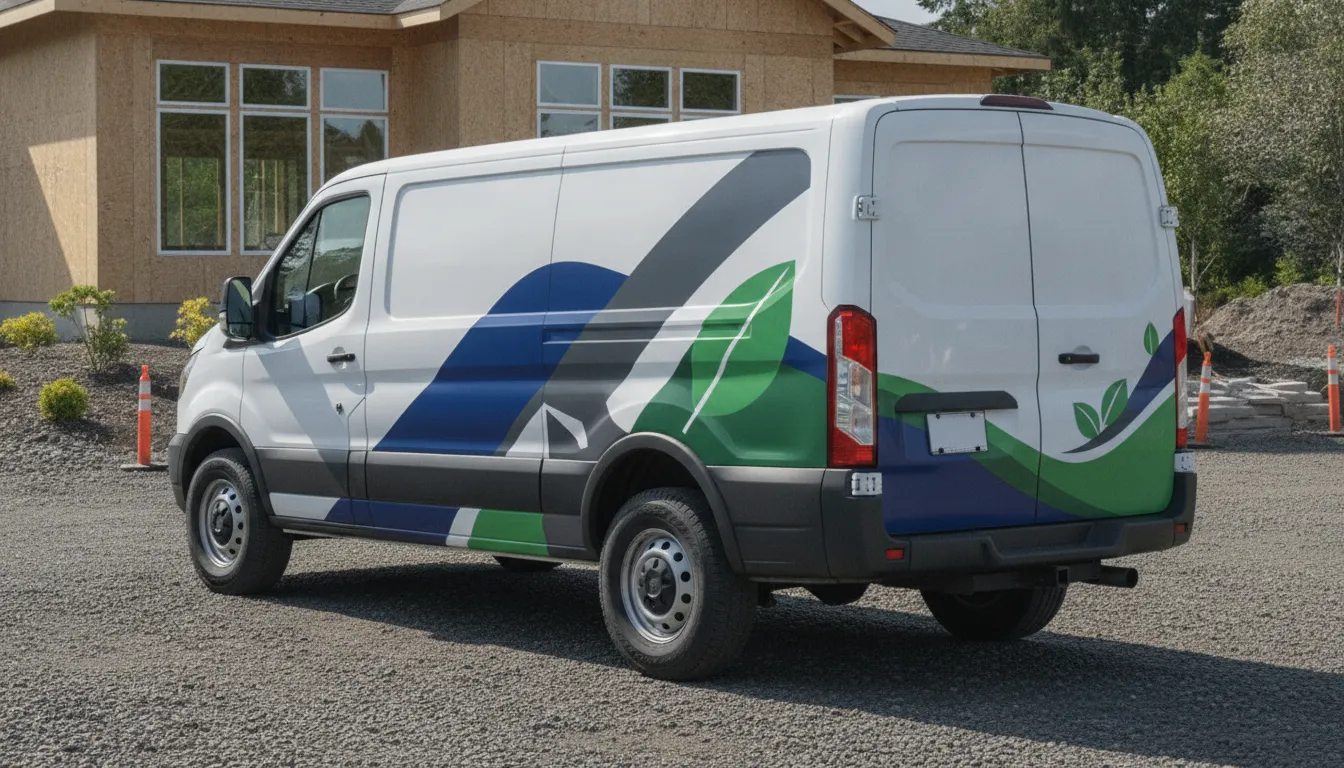
Custom commercial vehicle wraps start with a real vehicle, not a generic brand board. Picture a Beaverton service company with one cargo van that parks at job sites all week. A second van is still on order. The first van needs a name people can read from the sidewalk. The second needs the same logo, colors, and service line, even if its doors and windows sit in different places.
That is the planning job this guide covers. You will map each vehicle, choose coverage, prepare artwork that fits the panels, and hand a complete brief to a professional installation team. APM PrintWorks is a Portland-area printer in Beaverton with a full creative staff and an installation team. Review the commercial vehicle wraps page while you shape the scope. Pricing is quoted by project, so the brief should describe the work instead of guessing a package price.
Request a quote for your vehicle wrap project.
Start Custom Commercial Vehicle Wraps With One Real Vehicle
Use one vehicle as the working example before you scale the idea. For the Beaverton cargo van, write down the year, make, model, and what the van does on a normal day. Note whether it parks at job sites, sits in a customer driveway, or moves between stops. Those facts decide which panel should carry the name and which panel can carry a shorter service line.
Then list the second vehicle even if it is not ready. A van still on order can share the brand rules without sharing the exact layout. Doors, windows, handles, and wheel arches change from one body to the next. Planning both now keeps the first approval from becoming a template that fails on the next unit.
Build the brief in this order:
- Name the business result, such as a readable service name at a job site.
- List every vehicle in phase one, including units that arrive later.
- Note where each vehicle is seen most often.
- Collect the logo, colors, and the one service line that must stay.
- Name who approves the mockup and who releases each vehicle.
The live vehicle wraps page asks for vehicle types, quantities, locations, artwork or logo files, and preferred timing before a project conversation. Those are the same facts a useful quote needs. APM PrintWorks can start from that list. A vague request for a bold look cannot.
Match Coverage to the Panels People Actually See
Coverage is a panel decision, not a slogan. On the example cargo van, the side doors face the sidewalk when the crew is inside a job. That is the panel for the business name. The rear doors face traffic at a stop, so they can carry a short service line and a web address. The hood and roof rarely help a parked service van, so they do not need ink just to make the project look complete.
A full wrap still has a place when the goal is a color change or one continuous surface. A smaller graphic can be the better first step when only a few panels do the talking, or when the second van has a different body. The vehicle wraps and graphics page is the source for what APM PrintWorks offers. It lists permanent vehicle wraps or temporary wraps, color vinyl for a color change, custom cut decals sized to a panel or a vehicle type, and car magnets as a removable option.
| Choice on the example van | What the live page supports | Ask before you approve |
|---|---|---|
| Full wrap | The page offers graphics for an entire vehicle, including a color change with color vinyl. | Does the mockup follow doors, handles, and window breaks? |
| Partial wrap | The page says cars, SUVs, vans, trucks, and buses may need different coverage. | Which panels must stay readable at a job site? |
| Custom cut decal | The decals section says custom cut decals can fit a panel size or a vehicle type. | Will the same cut still fit the second van? |
| Temporary wrap or car magnet | The page offers temporary wraps and lists car magnets and signs as a separate option. | Which vehicles need a message that can come off? |
If you are still weighing full coverage against a smaller graphic, read the partial versus full vehicle wrap comparison. Then come back to the vehicle list. That page owns the coverage comparison. This guide uses the answer to build the rest of the brief.
Bring the choice back to the two vans. Approve a side-door name and a rear-door service line for van one. Mark van two as the same brand system with a new panel map once the body style is known. That gives the production team enough detail to quote the project. A request for something bold does not.
Prepare Artwork for Doors, Windows, and Seams
A vehicle graphic is read in a parking lot or from the next lane, not on a laptop. For the cargo van, put the business name on the side doors at a size that still reads when someone walks past. Keep the service line to a few words. Leave the logo intact instead of stretching it across a door seam.
Ask the creative team to place the art on a vehicle-specific mockup before anyone talks about final files. The mockup should show how the name clears the door handle, how the rear line clears the windows, and what happens at a body seam. If a phone number or web address is required, put it on a panel people can study. Do not put it on a curve they only glimpse.
Some commercial vehicles also carry legal marking rules. Operators covered by the federal identification rule should read the vehicle marking requirements in 49 CFR 390.21 before the proof is signed. The rule describes the name and USDOT information those operators must display. APM PrintWorks can leave room in the layout. Your team still confirms whether the rule applies.
Send the creative team files it can actually use:
- Logo files and the approved brand colors.
- The one service line that must appear on every unit.
- Photos that you have rights to use, if the design needs them.
- Year, make, model, and notes on racks, ladders, or liftgates.
- A marked photo or sketch of the panels that should stay clear.
APM PrintWorks has a full creative staff, so a missing vehicle layout is not a reason to drop a desktop graphic onto a door. The design step is there to adapt the brand to the body. Once the layout direction is set, use the fleet wrap design checklist for the file and proof list. Keep the planning decisions in this article.
Turn the Van Plan Into a Quote Brief
A quote gets clearer when the request reads like a job, not a mood board. For the example, write one cargo van now, a side-door name, and a rear-door service line. Add the second van later with the same brand rules, Beaverton as the base, and the logo files attached. Say there is no fixed install date yet. That note tells the team what to mock up and what can wait.
Add the facts that change production. Say whether the van can come to the shop, whether a ladder rack stays on, and whether any panel is dented or freshly painted. Mention a phased arrival if the second vehicle is still on order. Leave material choices and day counts to the quote. APM PrintWorks prices this work by project and does not publish a fixed wrap price or a fixed production schedule.
Check the offer on the live page before you name a product in the brief. That page is where permanent wraps, temporary wraps, color vinyl, custom decals, and car magnets are listed. Use your brief to describe the vehicles, not to invent a package the page does not show.
Cost belongs in its own conversation. If budget is the open question, read the commercial vehicle wrap cost guide, then bring the vehicle count back to the quote request. Do not treat a general cost article as a price for your vans.
Keep a Shared System When the Second Van Arrives
A two-van program stays consistent when a few rules never move. Lock the logo, the colors, and the service line. Let the panel map change when the second body style is different. Write those rules on one sheet the approver and the installer can both read.
The sheet can stay short. One row per vehicle is enough. Record the unit, the body style, the coverage choice, the panels that carry the name, and the person who signs the proof. When van two arrives, you add a row instead of reopening the whole brand. APM PrintWorks can use that sheet to keep a Beaverton fleet on one visual system while each layout stays vehicle-specific.
This article only needs the sequence: van one first, van two when it is on site, and the same brand rules throughout. If several vehicles must come out of daily service, the commercial vehicle wraps scheduling guide covers that operations problem. Use it for the calendar, and keep the brand rules here.
For a larger fleet, the same sheet still works. Group rows by body style so a cargo van, a pickup, and a box truck do not inherit one stretched layout. The live page says a shared design direction should come first, then the vehicle count, locations, and installation sequence. The goal is a repeatable system, not one file dropped onto every door.
Hand the Brief to the Installation Team
Installation should be scoped while the artwork is still a proof. The installer needs the vehicle list, the panel map, and a day when the van is not on a route. For the example, the cargo van might stay at the Beaverton yard for the agreed window while the crew uses another unit. The exact window is part of the quote, not a number to invent in the brief.
Walk the vehicle before production. Point out racks, ladders, liftgates, fresh paint, and any panel that should stay clear. Those notes belong in the mockup so the name is not printed across hardware. APM PrintWorks has an installation team for this work and can coordinate projects beyond the local market when the fleet is not all in one yard.
Confirm these points before the van is released:
- The final vehicle and the layout approved for that body.
- Where the vehicle will be and who can hand over the keys.
- Hardware, damage, or new paint the installer should expect.
- The person who will look at the finished graphics.
- Whether van two is in this visit or a later phase.
Professional installation is how the approved art meets the real doors and windows. It is also the moment to compare the finished van with the proof, while the crew that installed it is still the right contact.
Record What Was Installed So the Next Van Is Easier
After the first van is done, file the proof, the vehicle, and the install date together. That record is what you hand back when van two arrives. It shows which logo and service line were approved, so the second layout starts from the system instead of from memory.
Clean and inspect the graphic the way the installation team instructs. Do not assume a household method is right for the film. During normal vehicle checks, look for lifting after body work or a new rack. If a panel is repaired, ask the wrap team before anyone tries to patch the graphic.
Lifespan, washing, and replacement timing live on their own page. When you need that detail, use the guide to how long vehicle wraps last. Keep this article focused on the planning record that makes the next vehicle faster to brief.
Send your vehicle list before you request a quote.
Frequently Asked Questions
What should a first vehicle wrap brief include?
Include the year, make, model, and daily job of each vehicle, plus the panels that should carry the name and the logo files. Add where the vehicles are based and whether a second unit is coming later. The live page also asks for quantities and preferred timing. That is enough to start a project quote.
Can two different vans share one design?
They can share the logo, colors, and service line. Each body still needs its own panel map, because doors and windows do not line up the same way. Approve the system once, then approve each layout.
Which wrap options does the live page list?
The vehicle wraps and graphics page lists permanent vehicle wraps or temporary wraps, color vinyl for a color change, custom cut decals, and car magnets. The creative staff and the installation team are named on that same page. Confirm the current offer there before you treat any option as part of your quote.
Who designs the wrap if we only have a logo?
APM PrintWorks has a full creative staff that can adapt a logo to the vehicle. Share the vehicle details and the message that must stay readable. The team can then place that message on a mockup before production.
How does a Portland business request the quote?
Send the vehicle list, the coverage choice, and the artwork you already have through the contact page. A Beaverton-based review can then confirm the layout and the installation plan. Contact APM PrintWorks when the brief is ready.
Request the Quote With Your Vehicle List
Bring the working example with you. Say which vehicle is first, which panels carry the name, and which rules the next vehicle must keep. APM PrintWorks can turn that note into a vehicle-specific mockup, a project quote, and an installation plan for businesses in the Portland area.