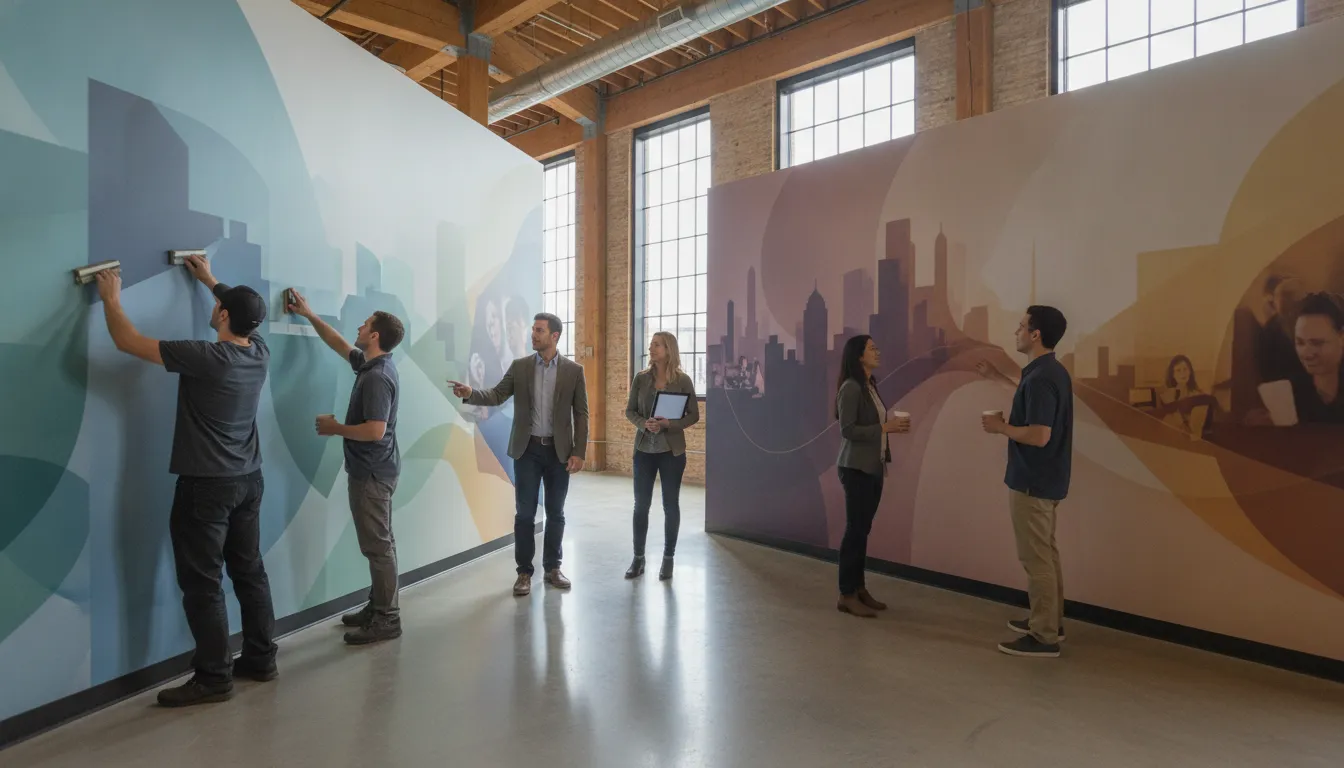
A wall graphic can shape how customers, employees, and visitors experience a commercial space, but the right material depends on more than appearance. Consider how long the graphic needs to stay, how often the message or brand may change, the wall’s paint and texture, and what removal or maintenance will involve.
Choosing between removable vs permanent wall graphics starts with the space’s lifecycle: removable options may suit campaigns. Leased spaces, or planned updates, while permanent options can fit established branding and long-term installations. Neither is automatically best, because adhesive, surface condition, installation, and future changes all affect suitability.
For Portland metro businesses, APM PrintWorks in Beaverton can help evaluate those conditions, develop a visual plan, and coordinate production and installation. The practical distinctions between these options provide a useful starting point for comparing materials and planning with confidence.
Talk with APM PrintWorks about your wall graphics project
How Do Removable vs Permanent Wall Graphics Compare?
| Planning factor | Removable graphics | Permanent graphics |
|---|---|---|
| Best starting point | Campaigns, planned updates, leased spaces, or evolving environments | Established identity walls, stable interiors, or long-term wayfinding |
| Future change | Designed around replacement or removal, subject to the wall and conditions | Designed to remain in place, so future changes need earlier planning |
| Surface review | Paint, texture, exposure, and installation time still affect the result | Bonding, finish, cleaning, and future removal requirements still matter |
| Decision question | How often will the message or environment change? | Will the artwork and location remain accurate over the project horizon? |
The most useful way to compare these options is to look at the life of the space, not to ask which material is always better. Removable graphics are planned for change. Permanent graphics are planned to remain part of the environment. The right choice depends on how often the message, brand treatment, or physical location may need to change, along with the wall surface and installation conditions.
Removable vinyl typically uses a less aggressive adhesive, which can make later removal easier within the recommended time window. That makes it a practical candidate for a seasonal retail campaign, a temporary office initiative, a hospitality promotion, or graphics installed in a leased space. It does not mean every removable graphic will leave a wall untouched. Surface type, exposure, and installation length can affect residue and cleanup, so the wall still needs to be evaluated before production. Material selection guidance should be treated as a starting point, not a substitute for reviewing the actual site.
Permanent vinyl is intended for durability and long-term placement. It can suit an established brand environment, a lasting interior identity, or operational graphics that are not expected to change with each campaign. Its stronger adhesive may also make future removal more involved. Tools, heat, or cleaners may be needed, and removal can damage a surface, cause discoloration, or leave residue. That is why a long-term decision should include the future condition of the wall, not only the appearance on installation day.
Think in terms of change frequency
For an office, ask whether leadership messaging, department names, or workplace layouts are likely to change. For retail and hospitality, consider whether promotions, menus, seasonal themes, or room concepts will be refreshed. A removable approach can provide more flexibility when updates are part of the plan. A permanent approach may be more appropriate when the graphic supports a stable identity and replacing it would create unnecessary disruption.
Multi-location organizations should apply the same logic across each site rather than selecting one material automatically. A consistent campaign may still require different recommendations when walls, paint, textures, cleaning routines, or installation access vary. Installation permanence is commonly considered on a spectrum, from temporary days or weeks to medium-term months and long-term years, while surface and environment also influence the media choice. Vinyl selection guidance from Vanderbilt highlights those factors together.
APM PrintWorks can review the intended duration, change schedule, wall condition, artwork, and installation plan before recommending a path. That planning matters in Portland metro commercial spaces, where a flexible campaign graphic and a lasting branded wall may call for very different specifications.
When Are Removable Wall Graphics the Better Fit?
Removable wall graphics make the most sense when the message, brand treatment, or space itself is expected to change. They can support a commercial environment that needs visual impact today without treating the current design as a permanent commitment. The right choice still depends on the wall surface, paint condition, exposure, installation method, and planned time in place.
Offices often benefit from a removable approach when teams are moving, rebranding, reorganizing departments, or testing a new visual direction. A reception wall, conference-room graphic, or culture display may need to evolve as the organization grows. Removable graphics can also be useful for leased offices where the tenant must plan for a future move-out. That does not mean removal will always be residue-free or damage-free. Surface type, exposure, and installation length can affect the result, so the wall and the material should be evaluated together.
Campaigns that change with the calendar
Retail and hospitality environments are natural candidates when promotions, seasonal themes, menu messaging, or featured products change regularly. A removable graphic can give a store, restaurant, hotel, or event-oriented venue a way to refresh a branded area without rebuilding the entire wall treatment for every campaign. Promotions and operational signage may call for different vinyl strategies, which is why the intended use should be part of the material conversation from the beginning.
For a retail team, that may mean planning a graphic around a launch window and a defined replacement process. For hospitality, it may mean updating a lobby, dining area, or guest-facing wall as the property refreshes its identity. The graphic should be designed with installation access, cleaning practices, traffic, and the next change in mind. A removable label describes the intended removal option, not a blanket promise about performance on every painted or textured wall.
Multi-location updates and evolving brand systems
Removable graphics are also worth considering when a company manages several locations with recurring brand updates. A coordinated rollout can make it easier to replace campaign-specific messaging while retaining a broader environmental design system. Before production, teams should document each site’s wall type, dimensions, condition, access, and local installation requirements. A standard artwork package paired with site-specific checks helps avoid applying one material assumption to every location.
APM PrintWorks can help Portland metro businesses plan wall displays around the message, surface, and change cycle. Review how to choose commercial wall mural materials for a deeper look at material selection, environment, installation, and maintenance. If the project involves masonry or another textured substrate, begin with textured wall decal planning before selecting a removable system.
When Should a Business Choose Permanent Wall Graphics?
Permanent wall graphics may be the right fit when the visual message is part of the space itself, rather than a campaign that will change with the calendar. A company logo, core brand treatment, signature mural, or established interior design can support a consistent experience for employees, customers, and visitors over an extended project horizon.
This approach can make sense for an office reception area, a facility entrance, a hospitality environment, or a property where the identity and layout are already well established. It may also suit long-term wayfinding when room names, department locations, and visitor routes are unlikely to change. The goal is not simply to keep a graphic on the wall as long as possible. It is to match the material and installation plan to a space that has a clear, enduring purpose.
Choose permanence when the brand experience is established
Permanent graphics deserve consideration when the artwork expresses a foundational part of the business. Such as a primary identity wall or a visual element that is central to the interior design. They can help create continuity across customer-facing areas when the brand system, color palette, and messaging are settled. For a professional services office or a developed commercial property, that consistency may be more valuable than the flexibility to replace the graphic frequently.
Review the decision with the future in mind. If a rebrand, remodel, tenant change, or department move is reasonably likely, a removable approach may preserve more options. A long-term intent is not an unconditional guarantee about lifespan, removal, or surface results. Surface type, paint condition, texture, exposure, cleaning practices, and installation conditions all affect suitability. Adhesive vinyl must bond properly while remaining compatible with the project’s expected use and any future change or removal requirements. Media selection guidance likewise treats installation duration and surface conditions as core planning factors.
Plan permanent wayfinding around real operational stability
Long-term wayfinding can benefit from a permanent-minded solution when the building’s circulation pattern is stable and the information will remain accurate. Before production, confirm that entrances, offices, service areas, and safety routes are not scheduled for renovation or relocation. A graphic that looks appropriate today can become confusing if the business changes how people move through the building.
APM PrintWorks can help Portland metro businesses evaluate the wall, artwork, intended duration, and installation conditions before recommending a path. Its Beaverton team provides design support, mockup development, large-format production, and installation planning. That project-specific review is especially important for established interiors where the graphic needs to look intentional alongside existing finishes, not merely remain in place.
How Do Surface Condition and Installation Change the Decision?
The wall itself can narrow the options before the graphic is produced. A smooth, clean, fully cured painted wall presents a different installation question than textured brick, concrete, or a wall with an older coating. Surface type and condition are fundamental media-selection factors, alongside the intended environment and installation duration. Adhesive vinyl must bond appropriately to the substrate while still matching the project’s future change or removal requirements.
Start by documenting the paint condition. Freshly painted walls may need adequate cure time, while peeling, chalky, damp, dusty. Or heavily marked surfaces can create installation concerns regardless of whether the graphic is intended to be removable or permanent. Existing coatings, repairs, trim, corners, and wall damage also matter. A removable product is not a promise that every paint system will remain unchanged after removal. Surface type, exposure, and installation length can affect residue and the condition of the wall afterward.
Texture requires a closer material conversation. Graphics installed over a lightly textured surface may need a different approach from graphics applied to deep texture or masonry. APM PrintWorks offers textured wall decals made with specialized, conformable adhesive vinyl and a component laminate for medium to heavily textured surfaces. That offering should still be evaluated against the actual wall, artwork, access, and expected use rather than treated as a universal solution.
Cleaning expectations are part of the decision too. Consider how often the wall will be wiped, which cleaning products are used, and whether contact from customers, carts, furniture, or equipment is likely. A material and finish selected for a low-contact office wall may not be appropriate for a busy retail or hospitality environment. The application process also includes surface preparation, adhesive application, and cleaning. So the installation plan should account for the space’s operating conditions and any need to protect nearby furnishings.
Access can change the practical recommendation. Tall walls, narrow corridors, fixed fixtures, active work areas, and limited installation windows may require coordinated professional installation. APM provides large-format installation and has in-house installation teams for complex projects. Before production, a site review can document measurements, substrate, texture, paint condition, obstacles, cleaning requirements, and safe working access. It can also clarify how the graphic will be removed, repaired, replaced, or refreshed later. That review gives the removable vs permanent wall graphics decision a project-specific foundation instead of relying on an adhesive label alone.
How Should You Plan Graphics for Multiple Locations?
A multi-location graphics program succeeds when each site feels part of the same brand without forcing every building to use an identical solution. Start by separating the elements that must remain consistent from those that need local adaptation. Logo treatment, core colors, typography, messaging hierarchy, and accessibility requirements should be documented in a shared standard. Room names, directional information, campaign panels, and wall dimensions may vary by location.
Build the standard before producing the artwork
Create a master specification that identifies approved materials, finishes, color references, file formats, mounting expectations, and installation notes. Include a version-control process so every location works from the current artwork. A central approval step can catch changes to logos, legal language, photography, or directional information before files are released. For branded environments and navigation systems, review the principles in this business wayfinding signage planning guide.
Do not assume the same wall graphic material will suit every site. A smooth painted wall, textured masonry, concrete, glass, and other substrates can create different installation conditions. Record wall type, paint condition, texture, dimensions, access limitations, cleaning practices, and nearby fixtures during a site survey. The intended duration and expected change cycle should also be documented. Adhesive vinyl must bond properly while remaining compatible with the project’s removal or replacement requirements, so material selection should follow the survey rather than precede it.
Coordinate surveys, installation, and future changes
For each location, create a site packet with measured elevations, photographs, approved artwork, placement diagrams, contact details, access windows, and any protection requirements. Consistent naming and file conventions make it easier to compare sites and resolve questions. A location-by-location installation schedule can then account for operating hours, furniture movement, security access, and coordination with local teams. Confirm who approves final placement before installation begins.
Plan the replacement cycle at the same time as the first rollout. Removable graphics may be appropriate where promotions, seasonal messages, tenant information, or workplace communications change. More permanent treatments may fit established identity walls or long-term wayfinding, subject to the wall and installation conditions. Keep spare artwork and material specifications with the site packet, and define how a damaged or outdated panel will be measured, reproduced, removed, and replaced.
APM PrintWorks can coordinate commercial graphics from local production in Beaverton through regional and nationwide installation support. Its team can help evaluate project goals, material options, artwork, mockups, and installation requirements across a rollout. Share the locations, wall conditions, dimensions, intended duration, and change plan through the APM PrintWorks project team so the recommendation reflects the actual environment instead of relying on a one-size-fits-all specification.
A Practical Selection Checklist for Commercial Walls
Choosing between removable and permanent wall graphics is easier when the project is evaluated as a lifecycle decision, not just a material decision. Before artwork is finalized, work through the checklist below. The answers will help determine whether the graphic should support frequent change. Remain in place as part of the environment, or receive a more customized recommendation after the wall is reviewed.
- Define the intended project duration. Decide whether the graphic is for a short promotion, a medium-term installation, or a long-term brand element. A graphic planned for a defined campaign may call for a different approach than one intended to become part of the space’s established identity.
- Estimate how often the message will change. Consider seasonal campaigns, tenant turnover, product updates, and evolving brand standards. If the artwork may need regular replacement, prioritize a system that aligns with that change cycle rather than treating easy removal as an afterthought.
- Inspect the wall and paint condition. Identify whether the surface is smooth painted drywall, textured masonry, concrete, or another substrate. Note peeling paint, recent painting, cracks, dust, moisture, and heavy texture. Adhesive vinyl must bond properly to the specific surface, and no option is universally suitable for every wall.
- Describe cleaning and traffic conditions. Record how often the area is cleaned, whether carts or furniture pass nearby, and whether people may touch or brush against the graphic. Traffic and maintenance requirements can influence the media, finish, placement, and installation approach.
- Plan for brand updates. Ask whether logos, colors, service information, or wayfinding may change during the graphic’s planned use. For broader environmental applications, review wall displays as part of the planning process, then match the visual system to the brand’s expected lifespan.
- Confirm installation access. Check ceiling height, furniture, operating hours, loading access, lift requirements, and the amount of wall that must be prepared. Professional installation can be especially valuable for large-format graphics or complex spaces where alignment and surface preparation matter.
- Document the removal plan. Decide who will remove the graphic, when removal will occur, and what condition the wall must be in afterward. Removable does not automatically mean residue-free. Surface type, exposure, and installation length can affect cleanup, while a permanent graphic may require tools, heat, or cleaners and could affect the underlying surface.
- Request a professional review before production. Share wall dimensions, substrate details, paint condition, artwork, intended duration, cleaning expectations, and installation conditions. APM PrintWorks can assess those details through its Dream, Plan, Create process and recommend a practical path for a Portland metro project from its Beaverton production base.
Request a project recommendation from APM PrintWorks
Frequently Asked Questions
Is removable or permanent vinyl better for commercial walls?
Neither is better for every project. Removable vinyl is generally the more flexible choice when a business expects campaign updates, tenant changes, or later removal. Permanent vinyl is intended for durable, long-term placement. The right selection depends on the planned installation duration, wall surface, environment, and future change requirements, as outlined in Vanderbilt’s media-selection guidance.
How long will removable wall graphics last?
There is no reliable universal lifespan. Removable vinyl may last from a few weeks to several months, depending on the surface, exposure, installation conditions, and care. Treat that range as a planning reference, not a guarantee. A site review can help determine whether the selected material fits the intended campaign or display cycle.
Is removable vinyl always residue-free?
No. Surface type, exposure, and installation length can affect whether adhesive residue remains after removal. Paint condition and texture also matter. Before production, confirm the wall substrate and removal expectations with your graphics provider, and test the proposed material when the surface or finish is particularly sensitive.
Can permanent vinyl be removed later?
It can often be removed, but the process may require tools, heat, or cleaners. Removal may also damage the surface, cause discoloration, or leave adhesive residue. If a future change is likely, discuss the removal plan before choosing a permanent application rather than assuming it can be reversed without repair or cleanup.
Is repositionable vinyl the same as removable vinyl?
No. Repositionable describes whether a graphic can be adjusted during installation, while removable describes whether it can be taken off later. Those are different performance considerations. Ask about both when planning a commercial wall graphic, especially if installation access is limited or the artwork needs careful alignment.
Get Started with a Site-Specific Wall Graphics Plan
The right choice depends on your wall surface, installation conditions, artwork, and how often your commercial space may change. APM PrintWorks can help you evaluate those details and plan a practical graphics solution for your Portland metro location.
Share your wall type, dimensions, intended duration, artwork, and installation conditions to request a site-specific recommendation and quote.